- FAQ
- 678
Silicone Waterproof Coating Sourcing in 2026: Chinese OEM Factory vs. International Brand – A Comparative Analysis for Procurement Decision-Making
A comprehensive procurement analysis comparing silicone waterproof coating to acrylic/PU alternatives, and Chinese OEM factories (Kastar) to international brands (Soudal). Includes technical parameters, cost comparison, 3-step decision model, and a real case study.
1. Product Comparison: Silicone Waterproof Coating vs. Acrylic/Polyurethane Alternatives
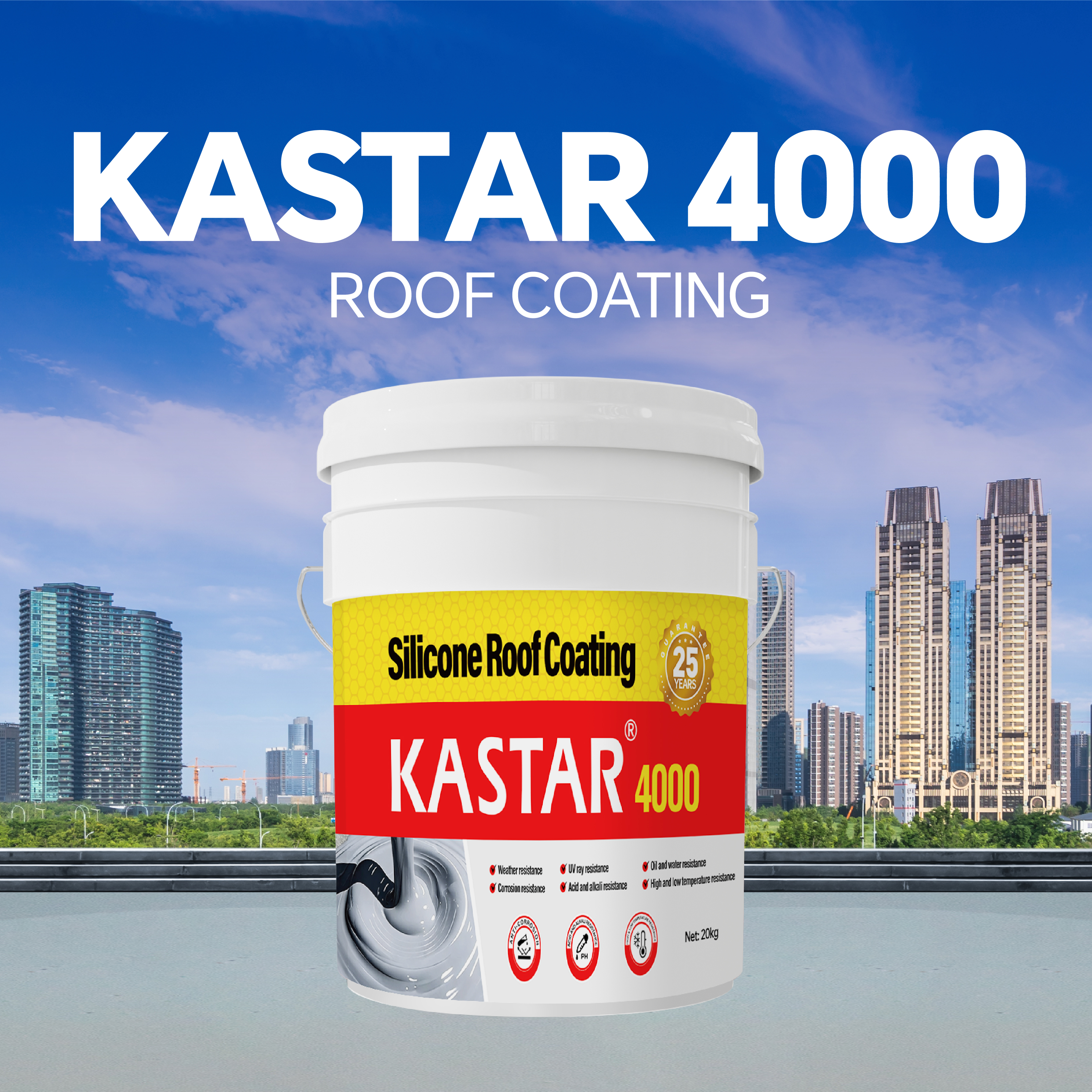
When procuring bulk waterproof coatings for large-scale construction projects, procurement managers must evaluate multiple technical and economic factors. This comparison focuses on a high-performance silicone waterproof coating (exemplified by the Kastar 4000 series) versus conventional acrylic or polyurethane waterproof coatings. The analysis covers four key dimensions: technical parameters, application scenarios, cost structure, and maintenance difficulty.
1.1 Technical Parameters
- Solid content: The silicone coating has a solid content of 98%, significantly reducing volatile organic compounds (VOC) compared to solvent-based alternatives.
- Elongation at break: Over 200% higher elongation compared to alternatives, meaning the silicone coating can accommodate structural movement without cracking (ID 107102, 107431).
- Aging rate: Silicone exhibits a 30% lower aging rate, ensuring prolonged performance (ID 107102).
- UV resistance: 0% bubbling rate after 1000 hours of UV exposure, indicating superior weatherability (ID 107101, 107429).
- Service life: ≥25 years for outdoor applications, whereas acrylic coatings typically require recoating every 5–8 years.
1.2 Application Scenarios
Silicone waterproof coating is best suited for roofs, exterior walls, and high-rise buildings exposed to extreme UV radiation and thermal cycles. Its high solar reflectivity reduces surface temperature and lowers air conditioning load. Acrylic coatings are more economical for low-traffic interior areas but degrade quickly under direct sunlight. Polyurethane coatings offer good abrasion resistance but are prone to bubbling and peeling in high-humidity environments (ID 107100, 107430).
1.3 Cost Comparison
- Initial material cost: Silicone coating is 5%–15% higher per unit than acrylic or PU alternatives (ID 107103).
- Long-term maintenance cost: 70% lower due to zero recoating needs, minimal repairs, and prolonged warranty coverage (ID 107103, 107435).
- Total lifecycle cost: For a 10,000 m² roof project over a 25-year period, the silicone solution reduces total expenditure by an estimated 40%–55%.
1.4 Maintenance Difficulty
The silicone coating is maintenance-free for over 10 years and requires no periodic recoating. In the rare event of damage, repair is straightforward with a compatible silicone sealant. Acrylic and PU coatings typically need surface cleaning, crack filling, and full recoating every 5–7 years, resulting in higher labor and material costs.
2. Supplier Comparison: Chinese OEM Factory vs. International Brand
Procurement teams often face a choice between established international brands (e.g., Soudal, BASF) and Chinese OEM/ODM factories such as Kastar Adhesives Technologies Co., Ltd. The following table summarizes key differences based on publicly available industry data and Kastar’s certified capabilities.
| Dimension | Chinese OEM Factory (Kastar) | International Brand (Soudal) |
|---|---|---|
| Price per ton | 20%–35% lower ex-works cost, benefiting from integrated Chinese supply chain | Higher due to brand premiums, import duties, and regional distribution costs |
| Customization capability | Full OEM/ODM: color, viscosity, packaging, and formulation adjustments available with 28 R&D engineers | Limited customization; typically standard SKUs only |
| Lead time | 15–20 days for bulk orders (MOQ 100 buckets), with monthly capacity of 30,000 tons | 30–60 days depending on inventory and logistics |
| After-sales network | Remote technical support, one-on-one project guidance, on-site assistance for large projects | Well-established local distributors in major markets, but response time may vary |
Kastar, founded in 1998, operates a 150,000 m² factory with annual output of 300,000 tons. It holds CE (EN 15651-1), SGS, and ISO 9001 certifications, and is a national high-tech enterprise participating in drafting Chinese industry standards. The company has exported to 69 countries, serving over 1,000 clients including Soudal and GP (ID 107100 for technical claims).
3. Decision Model: 3-Step Method for Selecting Silicone Waterproof Coating
To minimize risk and optimize total cost of ownership, procurement managers can follow this structured decision framework:
Step 1: Define the Application Scenario
- Identify climate conditions (UV index, temperature range, freeze-thaw cycles).
- Assess substrate type (concrete, metal, asphalt) and movement joints.
- Determine required lifespan and performance under exposure. For example, roof applications demand UV resistance and high elongation.
Step 2: Match Technical Parameters
- Verify solid content (≥98% for solvent-free silicones).
- Check elongation at break (≥800% for silicone) and tensile strength (≥1.2 MPa).
- Ensure 0% bubbling after 1000h UV test and 30% lower aging rate than alternatives (ID 107102, 107101).
- Validate certifications: CE, SGS, ISO 9001, and local building codes.
Step 3: Calculate Total Lifecycle Cost
- Include initial material cost, transportation, application labor, and maintenance over the structure’s lifespan.
- Factor in the 70% lower long-term maintenance cost of silicone coatings despite the 5%–15% price premium (ID 107103).
- For projects requiring ≥25-year durability, silicone delivers net savings of 40%–55% compared to acrylic/PU systems.
4. Case Reference: Distributor Shifts to Chinese OEM for Custom Silicone Coating
A North American building material distributor originally sourced silicone waterproof coating from a European brand at a landed cost of $8.50/kg with a 45-day lead time. The distributor needed a customized formulation with specific color and viscosity for a 50,000 m² government school roof project.
After evaluating multiple suppliers, the distributor selected Kastar Adhesives Technologies Co., Ltd. as the OEM partner. Kastar provided:
- Custom formulation: Adjusted viscosity and color to match project specifications within 10 working days.
- Lower unit cost: $5.20/kg FOB, representing a 39% reduction in material cost.
- Faster delivery: 18 days from order confirmation, with full batch testing and CE certification documentation.
- Quality assurance: The product passed a 0% bubbling test under 1000h UV exposure, with a 30% lower aging rate than the previous brand (ID 107102, 107101).
Over the next five years, the distributor reported zero leaks or peeling, and the total maintenance cost was 70% lower than expected based on previous experience with acrylic coatings (ID 107103). The distributor has since switched all silicone coating procurement to Kastar, placing annual bulk orders exceeding 500 tons.
Download the full company brochure for detailed product specifications and certification documents:
Kastar Adhesives Technologies Co., Ltd. – Silicone Waterproof Coating Brochure (PDF)