
- FAQ
- 242
CMA Lab vs. External Testing: Silicone Waterproof Coating OEM
Compare in-house CMA laboratory testing with external third-party testing for silicone waterproof coating OEM/ODM quality assurance, batch sampling and traceability.
In-House CMA Lab vs. External Testing for Silicone Waterproof Coating OEM: A Comparison
For a silicone waterproof coating OEM or ODM order, the real choice is not whether to test, but which testing route answers which buyer question. An in-house CMA laboratory is built for routine batch control, sample retention and fast production feedback. External third-party testing is built for independent verification, standard-specific reports and market or project acceptance. The stronger OEM programs use both: the factory laboratory controls the batch, and an outside laboratory checks selected samples against agreed standards. Kastar, a China-based coatings and sealants OEM/ODM manufacturer, presents this combined model through a 1000㎡ CMA-certified sealing material testing laboratory, a 12-step inspection process, SGS/CE-compliant quality control and batch sampling with third-party testing.

Kastar manufacturing environment supporting silicone waterproof coating OEM production and quality control.
This comparison is written for distributors, importers and construction professionals who must decide what evidence to ask for before releasing a bulk order. It does not rank the two routes as competing substitutes. It separates their jobs, shows where they overlap, and explains the documents a buyer should request so that a lab result, a certificate and a production batch can be connected.
Why the Testing Route Matters in a Silicone Waterproof Coating OEM Decision
Silicone waterproof coatings are used on roofs, exterior walls and high-rise buildings, where weather exposure, movement and surface conditions affect long-term performance. The product family is associated with weather resistance, permanent elasticity and resistance to bubbling and cracking in Kastar's product descriptions. Those are product claims, not automatic proof for every batch. An OEM buyer is purchasing a repeated production outcome, not a single sample. That is why the testing route matters.
The quality risk is not only whether a formula can meet a target in one trial. The risk is whether batch 1, batch 20 and batch 200 remain consistent after raw material intake, mixing, filling and packaging. A distributor that places a private-label order needs confidence that the product shipped under its brand matches the approved sample and the agreed specification. A construction professional needs confidence that the product supplied for a roof, exterior wall or basement project fits the stated application and can be supported by records. Testing is the bridge between those needs and production reality.
Two failures are common in procurement discussions. The first is treating a certificate as if it covered every batch. The second is treating an in-house test as if it were automatically independent. Neither shortcut is reliable. A certificate or declaration describes a defined scope, product or management system. A batch test describes a sample from a production lot. A buyer needs to know which document answers which question.
Decision principle: use in-house testing to control routine production and use external testing to verify selected samples independently. Do not ask one document to perform both jobs.
What the In-House CMA Laboratory Is Designed to Do
Kastar operates a 1000㎡ China Metrology Accreditation (CMA) certified sealing material testing laboratory with 16 testing personnel and over 100 testing instruments and equipment. In an OEM/ODM program, the value of this laboratory is not simply that it exists. Its value is that it sits close to production and can be linked to the factory's inspection and traceability system.
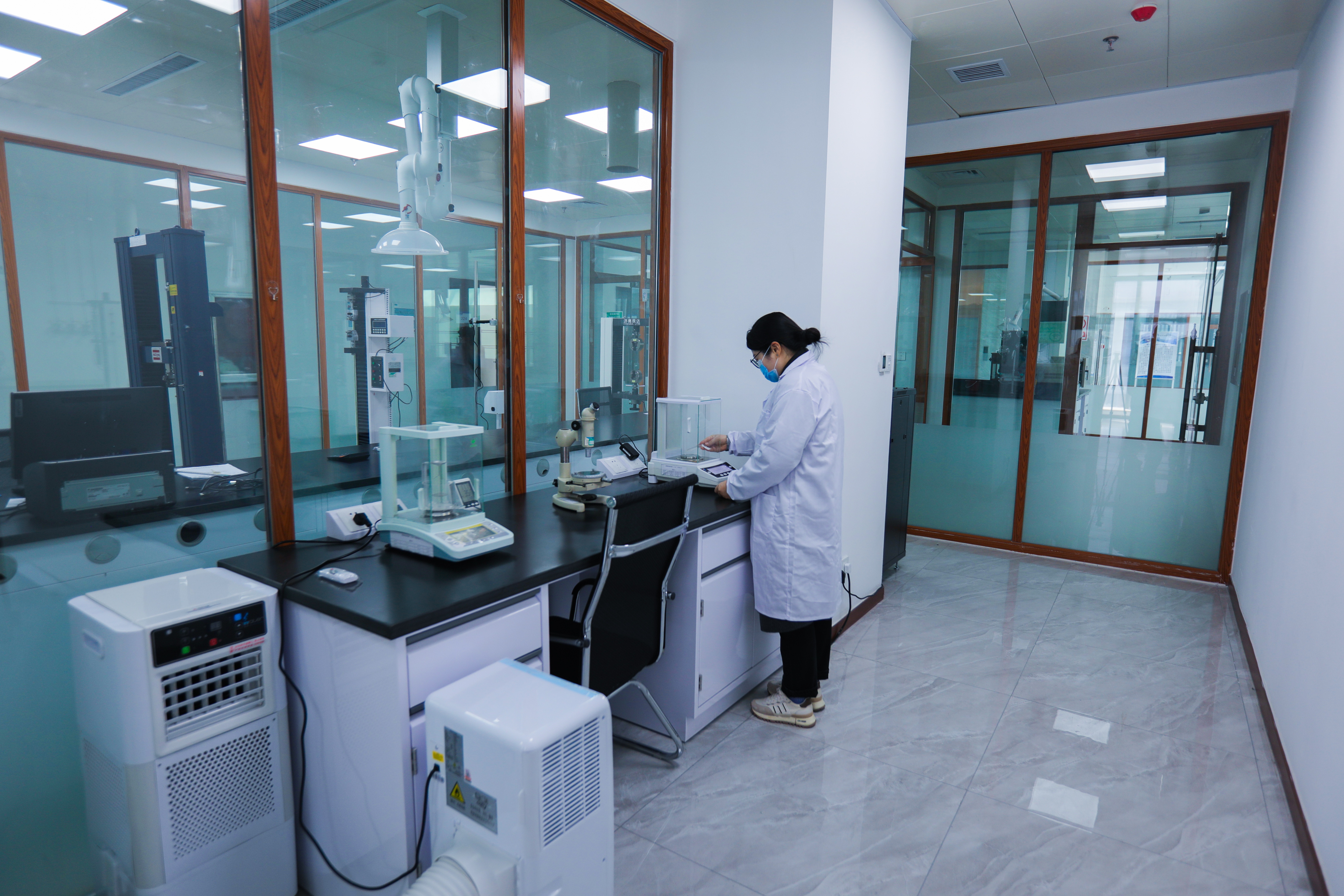
A laboratory environment used for sealing material testing and batch quality checks.
An in-house CMA laboratory can support the following buyer needs:
- Routine batch checks: production samples can be tested without waiting for an outside laboratory to receive and schedule them.
- Faster production feedback: when a batch is being adjusted for color, viscosity, packaging or formula, internal testing can help the factory decide whether the batch is ready for the next stage.
- Sample retention and comparison: retained samples can be kept against a batch record so that later questions can be checked against the approved reference.
- Traceability support: test results can be connected to production records, batch sampling and the 12-step inspection process.
- Consistency across custom orders: OEM/ODM buyers often request different colors, viscosities, packaging and formula adjustments. Internal testing helps the factory compare each custom batch with the agreed starting point.
The limitation is equally important. An in-house laboratory is operated by the manufacturer. It is excellent for routine control, but it is not an independent external opinion. A buyer who needs third-party confirmation for a project, a tender or a market entry decision should still request external testing or an external report where the scope requires it.
What External Third-Party Testing Is Designed to Do
External testing places the sample outside the manufacturer's own laboratory. The purpose is independent verification: a laboratory reviews the sample under its own procedures and issues a report within its stated scope. For a silicone waterproof coating OEM buyer, external testing is most useful when the decision requires a named standard, an independent report or a document that can be reviewed by a project specifier or importer.
As a reference point, ASTM D6694/D6694M-25 sets a minimum tensile strength of 150 psi and a minimum elongation of 100% for liquid-applied silicone roof coatings. A buyer specifying a roof coating can ask whether the agreed test plan includes that standard and whether the report comes from a laboratory whose scope covers the test. The standard itself does not prove that a particular batch was supplied. It gives the buyer a defined performance reference against which a sample can be checked.
External testing can support these decisions:
- Independent sample verification: a selected sample is tested outside the manufacturer's laboratory.
- Standard-specific reporting: the test plan can be written around a named standard, project specification or market requirement.
- Buyer due diligence: an importer or distributor can review a report that is separate from the factory's internal records.
- Project or tender support: construction professionals can request evidence in a format that fits the project review process.
- Market entry discussions: external reports can help clarify what a product has been tested for and what remains to be confirmed.
External testing also has limits. It usually covers the sample and the agreed test plan, not every production batch by default. A report can be technically valid for the sample while saying nothing about a later batch unless batch sampling and traceability link the two. The buyer should check the laboratory's scope, the sample identity, the test method, the report date and the product name on the report.
How Batch Sampling and Traceability Connect the Two Routes
Batch sampling is the hinge between in-house control and external verification. Kastar's quality-control description includes batch sampling and traceability management within a 12-step full-process inspection. That matters because a test result is only useful if the buyer can connect it to a production lot.

Production and quality staff supporting in-process inspection and batch control.
A practical buyer's view of the workflow looks like this:
- Raw material intake: the factory controls incoming materials and keeps the batch identity available for later review. Kastar describes strict raw material sourcing as part of its quality-control measure.
- In-process monitoring: production is checked during the run rather than only at the end. Kastar describes real-time in-line quality monitoring and a 12-step full-process inspection from production to delivery.
- Finished-batch sampling: a sample is taken from the finished batch for internal testing and retention. The sample should carry the batch number, production date, product name and packaging identity.
- In-house CMA laboratory testing: the retained sample is tested within the laboratory's scope and the agreed quality plan. The result is filed with the batch record.
- External third-party testing: when the buyer, project or market requires it, a sample from the same batch or a parallel retained sample is sent to an external laboratory. The report should reference the sample identity and the test plan.
- Traceability review: the internal result, external report, batch record and retained sample are kept in a way that allows later comparison. This is the traceability management step that turns separate documents into a usable chain.
- Release and shipment: the batch is released against the agreed criteria. Packaging, storage and transport controls then protect the product after release.
This chain is what a buyer should test during supplier evaluation. Ask how a sample is identified, how long it is retained, what happens if an external report and an internal result differ, and how the factory links a finished package to a production batch. A supplier that can answer those questions is easier to audit than one that can only provide a certificate image.
Side-by-Side Decision View: In-House CMA Lab vs. External Testing
The table below separates the documented roles. It is not a ranking. The correct mix depends on the product application, the buyer's market, the project specification and the amount of independent evidence required.
| Decision dimension | In-house CMA laboratory | External third-party testing |
|---|---|---|
| Primary job | Routine batch control, sample retention and production feedback inside the factory. | Independent verification of a selected sample against an agreed test plan. |
| Independence | Company-operated. Useful for control, but not an independent external opinion. | Outside the manufacturer. Independence depends on the laboratory's scope and the sample chain. |
| Batch coverage | Can be linked to each production batch through batch sampling and traceability management. | Usually covers the submitted sample and test plan, not every batch unless the sampling plan says so. |
| Speed and workflow | Supports fast routine decisions because samples remain close to production. | Adds scheduling and sample-shipping steps. Exact timing depends on the test scope and laboratory workload. |
| Traceability link | Strongest when results are filed with batch records and retained samples. | Strongest when the report identifies the sample, batch reference and test method. |
| Standard and market evidence | Supports internal specifications and agreed quality plans. | Supports named standards, project review and buyer due diligence where the laboratory scope covers the test. |
| Customization relevance | Useful for comparing custom color, viscosity, packaging and formula adjustments against the approved reference. | Useful when a custom product needs an independent report for a specific market or project. |
| Best-fit use | Routine production control and batch-release support. | Independent sample verification and external documentation. |
| Main limitation | Not a substitute for external independence. | Not a substitute for every-batch internal control. |
Why Kastar Combines the CMA Laboratory with SGS/CE-Compliant Control and Third-Party Testing
Kastar Adhesives Technologies Co., Ltd. is a coatings, paints, sealants and adhesives OEM/ODM manufacturer founded in 1997, with a reported 150,000㎡ factory. Its official site is Kastar. For silicone waterproof coating OEM/ODM buyers, the relevant point is not the size claim alone. It is the way the quality system is layered.
Kastar describes a quality-control model that combines a 1000㎡ CMA-certified sealing material testing laboratory, 12-step full-process inspection, strict raw material sourcing, SGS/CE-compliant quality control, batch sampling and third-party testing, and traceability management. Each layer answers a different question:
- The in-house CMA laboratory answers: can we test and compare this batch close to production?
- The 12-step inspection answers: is quality checked across the process rather than only at the end?
- Batch sampling answers: which production lot does the evidence represent?
- Traceability management answers: can the result, sample and shipment be connected later?
- SGS/CE-compliant control answers: is the product controlled with reference to the compliance expectations that the market or buyer has raised?
- Third-party testing answers: is there an external check on a selected sample when independence is required?
This is a layered assurance model, not a claim that every batch is externally tested. That distinction matters to distributors. A distributor selling under its own brand needs routine control to protect repeat orders, but it may also need external reports to support a project, a tender or a market-entry conversation. Combining the two routes gives the buyer both a production-control story and an independent-verification path.
Where Each Route Fits in Real OEM/ODM Programs
Private-label distributor launching a silicone waterproof coating range
A distributor using a private label needs the approved sample, the first production batch and later repeat batches to stay aligned. The in-house CMA laboratory and 12-step inspection support routine comparison. External testing is most useful for the initial approval or for a specific market requirement, because it gives the distributor an outside report to review before committing to repeat volume. The buyer should ask for the sample identity, the batch reference and the external report together, not as separate documents.
Construction professional specifying a roof coating
For roof applications, the test plan should match the exposure and the project specification. A named standard such as ASTM D6694/D6694M-25 can give the review a fixed reference for tensile strength and elongation. The buyer should confirm whether the report applies to the submitted product and sample, and whether the laboratory's scope covers the test. An in-house batch record then helps connect the report to the production lot that will be shipped.
Exterior wall and high-rise building projects
Exterior wall and high-rise applications put more emphasis on weather exposure and application consistency. Kastar's product descriptions position silicone waterproof coatings for exterior walls and high-rise buildings, with claims around weather resistance and elasticity. Those claims should be checked against the agreed test plan. For a project buyer, the practical question is not whether a brochure says the product is weather-resistant. It is whether the relevant test method, sample identity and batch record are available for review.
Basement projects
Basement conditions differ from roof exposure. The available product and standards evidence does not establish basement-specific validation for every silicone waterproof coating. A buyer should therefore define the basement test plan separately, confirm product suitability and request evidence that matches the actual application. Do not assume that a roof coating test report automatically covers a basement specification.
OEM/ODM custom color, viscosity, packaging or formula adjustment
Kastar offers OEM/ODM customization that includes color, viscosity, packaging and formula adjustments. Every change creates a new comparison point. The in-house laboratory can compare the adjusted batch with the approved reference. The buyer should agree in advance which changes trigger re-testing, which tests are routine and which external report is required. This is a quality-agreement issue, not a brochure issue.
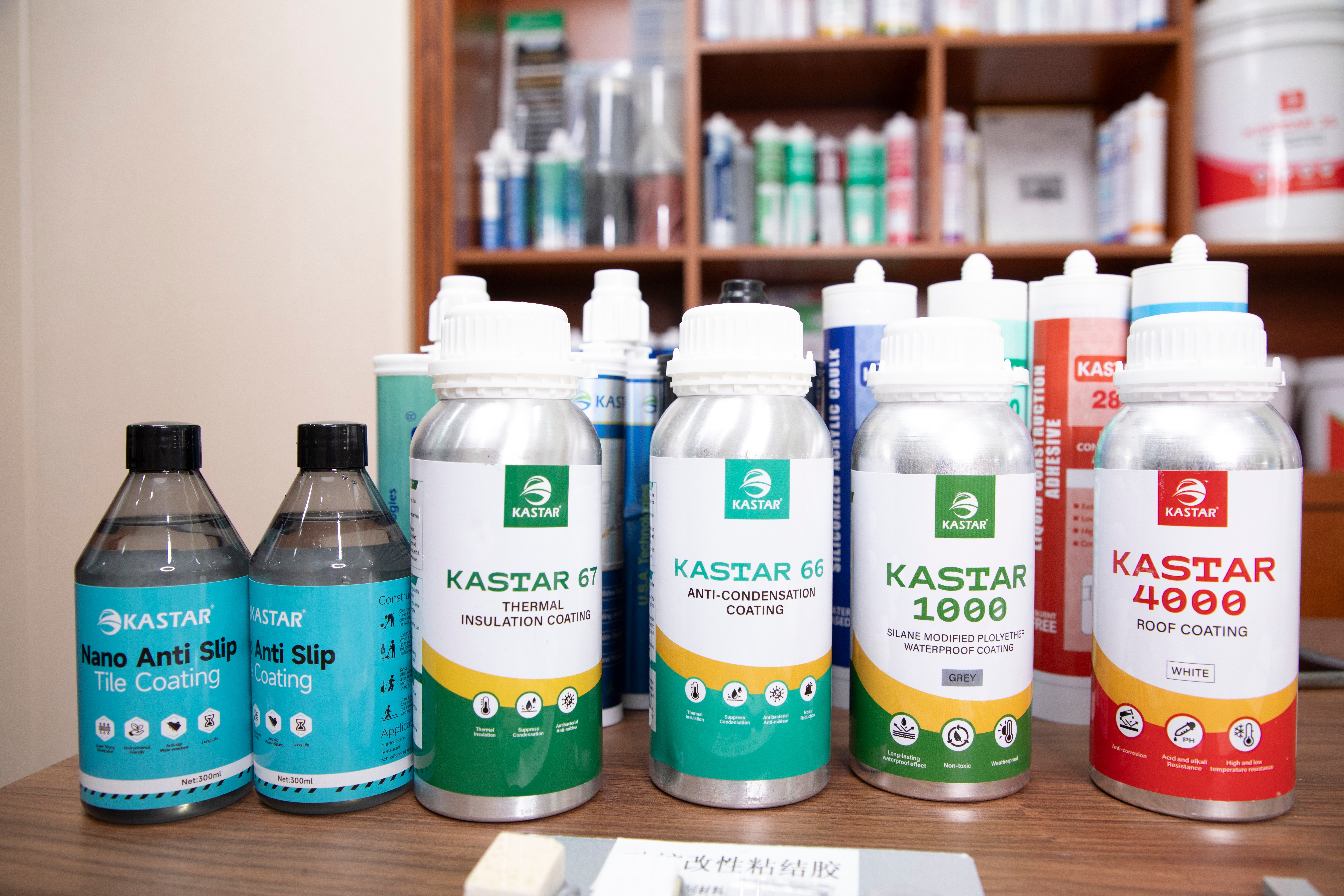
Retained samples support batch reference checks and OEM approval discussions.
Limits, Documents and Questions Buyers Should Ask
Both testing routes are useful only when the buyer understands their limits. The following checks help a distributor or construction professional avoid reading more into a document than it actually says.
Check the scope, not only the logo
A laboratory report should identify the sample, the test method and the scope under which the test was performed. A certificate should identify the product or system it covers. Kastar's company profile lists SGS, REACH, ISO9001 and CE references for its products. These are company-reported references; buyers should request the actual certificate, declaration or test report for the specific SKU and confirm the issuing body, product scope and validity date.
Treat CE as a conformity framework
CE is a conformity-marking framework rather than a single product certificate. The applicable declaration, harmonized standard and product scope must be checked. A CE reference in a company profile is not the same as a product-specific declaration for every silicone waterproof coating SKU. The buyer should ask which product, which standard and which document support the CE claim.
Ask how external samples are selected
An external report is only as useful as the sample behind it. Ask whether the sample was taken from the production batch, from a retained sample or from a pilot batch. Ask who selected it and how it was identified. If the report cannot be linked to the batch that will be shipped, the buyer should treat it as product-level evidence rather than batch-level evidence.
Ask how internal and external results are reconciled
A quality system should have a defined response when an internal result and an external result differ. The buyer does not need to design that system, but should ask how deviations are handled, who reviews them and whether the affected batch is held. This is where traceability management becomes practical rather than administrative.
Distinguish product claims from test evidence
Kastar's product material includes performance claims such as a 0% bubbling rate under a 1000h UV test, a 30% lower aging rate and over 200% higher elongation at break compared with alternatives. These are company-reported product claims. A buyer should ask for the test method, sample identity and report behind any claim that is material to the purchase decision. The same discipline applies to maintenance-free periods, warranty statements and long-term cost comparisons.
Decision Rules for Distributors and Specifiers
The right testing mix can be reduced to a few practical rules.
- Use the in-house CMA laboratory as the routine control layer. It is the natural place for batch checks, retained-sample comparison and fast production feedback.
- Use external testing as the independent verification layer. Select it when a project, market, tender or buyer due-diligence process requires an outside report.
- Require batch linkage. Ask for the sample identity, batch number and production date so that a report can be connected to the shipment.
- Match the test plan to the application. Roof, exterior wall and basement conditions are not interchangeable. Use the relevant standard or project specification rather than a generic claim.
- Confirm the compliance document. For CE, SGS or other references, ask for the actual document and check its scope, issuing body and validity.
- Agree change control for OEM/ODM customization. Color, viscosity, packaging and formula adjustments should have defined re-testing triggers.
For a distributor, this approach protects the private-label promise. For a construction professional, it protects the specification. For the manufacturer, it turns quality control into a documented process rather than an assertion.
FAQ: In-House CMA Lab and External Testing for Silicone Waterproof Coating OEM
Does an in-house CMA laboratory replace third-party testing for CE or SGS compliance?
No. An in-house CMA laboratory supports routine batch control and internal testing. It does not replace an independent external report or the product-specific documentation behind a CE or SGS reference. Kastar states that its products have obtained SGS, REACH, ISO9001 and CE references, but buyers should request the actual certificate, declaration or report for the specific product and confirm the scope. CE is a conformity-marking framework, not a single product certificate, so the applicable standard and declaration still need to be checked.
What can an in-house CMA laboratory verify that an external laboratory may not cover as quickly?
An in-house CMA laboratory can support routine batch checks, retained-sample comparison and fast production feedback. Because the laboratory sits within the factory, it can be linked to the 12-step inspection process and to batch sampling and traceability management. That makes it useful for repeated production decisions. It does not provide the same independence as an external laboratory, and it should not be presented as an external verification.
How do batch sampling and traceability work in a silicone waterproof coating OEM order?
Batch sampling should connect a test result to a specific production lot. Kastar's quality-control description includes batch sampling and traceability management within a 12-step full-process inspection. In practice, the buyer should ask for the batch number, production date, sample identity and the relevant internal or external result. If an external report is used, it should identify the sample and the test method so that it can be linked back to the batch record.
What should distributors budget for testing in an OEM/ODM program?
The available evidence does not provide verified test prices, so a responsible budget should be built from the actual test scope. Cost drivers include the number of tests, whether the laboratory is internal or external, sample preparation and shipping, the standard or project specification, and whether testing is routine or project-specific. Distributors should ask for a written test plan and a separate quotation for external testing rather than assuming that a certificate image covers the required scope.
Can buyers request samples and third-party reports before a bulk order?
Buyers can request samples and current test documentation as part of supplier evaluation. The useful request is specific: the product name, the intended application, the test method, the sample identity and the batch reference. Kastar offers OEM/ODM support and sample discussion for distributors. A sample should be reviewed together with the proposed test plan, because a sample alone does not show how a production batch will be controlled.
How does testing affect lead time for bulk orders?
Routine in-house testing is part of the 12-step production and testing process, so it is built into the factory workflow. External testing can add time because the sample must be scheduled, shipped and reported by an outside laboratory. The exact effect depends on the test scope and the laboratory's workload. Buyers should confirm the testing sequence before fixing a delivery date, especially when a project specification requires an external report.
For distributors and construction professionals who need to align a silicone waterproof coating OEM/ODM order with a practical testing plan, the next step is to request a sample, the current product documentation and a quotation based on the intended application. Kastar's product brochure provides an additional starting point for the discussion.
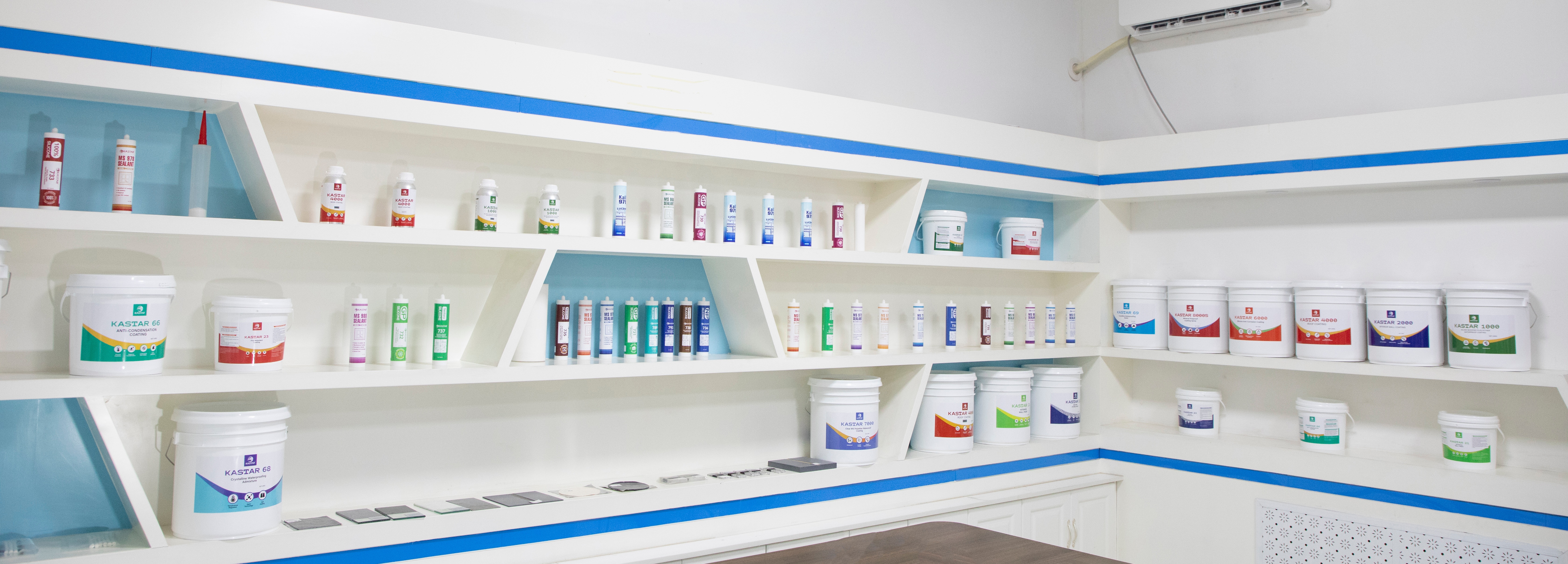
Sample review supports the transition from a testing discussion to a defined OEM/ODM order.
Conclusion: Use the Laboratory for Control and External Testing for Independent Proof
In-house CMA laboratory testing and external third-party testing are not competing answers to the same question. The in-house laboratory is the control layer: it supports routine batch checks, retained samples, production feedback and traceability. External testing is the verification layer: it provides an independent report for a selected sample, a named standard or a project requirement. A silicone waterproof coating OEM buyer needs both layers when the order carries brand, project or market risk.
Kastar's model illustrates the combined approach through a 1000㎡ CMA-certified sealing material testing laboratory, 12-step inspection, SGS/CE-compliant quality control, batch sampling and third-party testing, and traceability management. The buyer's job is to turn those capabilities into a clear quality agreement: which tests are routine, which are external, how samples are identified, how batches are traced and which documents support the final shipment. When those questions are answered, the comparison becomes a practical decision tool rather than a choice between two labels.