- FAQ
- 670
Ranking Epoxy Color Sand Floor Coating Bids by Purchasing Terms
Rank epoxy color sand floor coating bids by purchasing terms and acceptance criteria: acceptance first, commercial terms second, price last. Includes a four-tier bid ranking, a working evaluation sequence, and reference terms from Kastar.
Ranking Epoxy Color Sand Floor Coating Bids by Purchasing Terms

Ranking epoxy color sand floor coating bids by purchasing terms means sorting the bids by what will still be enforceable after the contract is signed, not by which proposal reads best or quotes lowest. The bid that ranks first is the one whose acceptance criteria can be tested, whose commercial terms can be written into a purchase order, and whose compliance documents can be traced to an issuer and an expiry date.
This article sets out that ranking sequence for buyers who are already past supplier discovery and are now holding three to six quotations for the same floor. It ranks the evaluation criteria first, then ranks the bid styles themselves, then gives a working procedure a purchasing team can complete in a single working day.
Why Floor Coating Bids Resist Comparison
Two epoxy color sand floor coating bids can carry the same headline claim and still describe different products. Both proposals may say the floor is wear-resistant. Neither states the test method, the sampling plan, or the pass threshold. At that point the buyer is not comparing coatings. The buyer is comparing adjectives.
The reason is structural. Epoxy color sand floor coating is a built-on-site system rather than a finished good taken from a box. The supplier controls the resin system, the color sand grade, the batch consistency, and the packaging. The contractor controls substrate preparation, primer, build thickness, and curing conditions. A bid that specifies only the finished appearance commits to almost nothing on either side of that split.
Once the technical language is unverifiable, price becomes the only genuinely comparable number in the room. That is how floor coating purchases go wrong: the buyer selects on price because price is the only line item that means the same thing in every document, and the differences that actually drive performance were never made comparable in the first place.
The Industry Already Has an Acceptance Baseline
Acceptance for this product category is not an open question. China group standard T/FJFA 003-2022, issued by the Fujian Flooring Industry Association, specifies construction and acceptance requirements for epoxy colored sand self-leveling flooring systems. It exists precisely because the gap between a good-looking floor and an accepted floor has to be defined in writing before work starts.
Regulatory constraints also attach to the product rather than to the sales conversation. In California, SCAQMD Rule 1113 limits VOC content for floor coatings to 100 g/L. A bid that makes an indoor air quality claim without naming the rule it is measured against has not made a compliance statement; it has made a preference statement.
Market context explains why buyers face so many similar-looking quotations. A commercial research estimate places the global epoxy colored sand floor paint market at USD 2.1 billion in 2025, with growth projected at a 7.2% CAGR from 2025 to 2033, and industrial applications estimated at 42.3% of global epoxy floor paint revenue in 2025. Those figures describe a crowded supply side. They say nothing about which individual bid is acceptable, which is exactly why the ranking has to be done on terms rather than on volume.
The Ranking Logic: Sort Criteria by Enforceability
The rule behind the ranking is simple. A criterion ranks higher when it is verifiable, dated, and easy to write into a purchase order. It ranks lower when it depends on the buyer trusting a description.
Rank 1 — Acceptance criteria
Acceptance ranks first because it changes the meaning of every other line. A bid that names pre-shipment testing and a sampling basis is offering a checkable commitment. A bid that offers only a quality assurance sentence is offering a hope. In a factory-direct bid, a workable acceptance clause names the test, the sampling basis per batch, who performs it, and what constitutes a failure.
Rank 2 — Commercial terms
MOQ, delivery terms, and payment structure rank second because they determine whether the quoted price can be turned into an order at all. A price without a stated MOQ is not a price. A price without an Incoterm is not a landed cost. A price without a payment structure is not a cash flow plan.
Rank 3 — Compliance documentation
A compliance claim ranks third when it is traceable. Traceable means a certificate number, an issuing body, a covered market, and a validity window. A logo on a proposal is not documentation.

Rank 4 — Customization boundaries
Customization ranks fourth because it is the criterion most often inflated. The useful question is not whether a supplier offers customization but which variables it will change and under whose specification. Color, viscosity, packaging, and formula adjustment are the four variables that matter in this category; a bid that lists them explicitly can be priced and scheduled, and a bid that says only that customization is available cannot.
Rank 5 — Supply and production evidence
Production evidence ranks fifth. Factory footprint, annual output, and the number of production and inspection steps are proxies for whether the quoted formulation will be reproduced on the second order as it was on the first.
Rank 6 — Price
Price ranks last, and this is a deliberate ordering rather than a negotiating posture. Price is only meaningful once Ranks 1 through 5 have established that two quotations describe the same product, the same acceptance test, and the same delivery basis. Ranking price higher simply rewards the bid that specified the least.
How Bids Themselves Rank: Four Tiers
Applying the sequence above produces a practical order for the proposals already on the buyer's desk.
Tier 1 — Executable terms and testable acceptance. The bid states a sampling and pre-shipment test basis, states MOQ in a defined unit, names the delivery term, states a payment split, and attaches traceable compliance documents. This tier is shortlisted first regardless of where its price sits.
Tier 2 — Testable acceptance, incomplete commercial terms. The technical basis is real but MOQ, Incoterm, or payment structure is missing or vague. These bids are recoverable: one written clarification round usually moves them into Tier 1, and that round is cheaper than re-tendering.
Tier 3 — Complete commercial terms, undefined acceptance. The pricing is tidy and the acceptance clause is empty. These are the most dangerous bids to shortlist, because they look complete. Nothing in them can be rejected on delivery except by goodwill.
Tier 4 — Descriptive only. Performance words, decorative claims, and no testable clause. These are not bids yet. They are enquiries waiting to be converted into bids.
The ranking matters most at the Tier 2 and Tier 3 boundary, because that is where a buying team's default instinct — shortlist the tidiest document — produces the wrong order.
Step-by-Step: Ranking a Bid Set in One Working Day
- Extract five lines from every bid into one grid. Acceptance basis, MOQ, delivery term, payment structure, compliance identifiers. Anything blank is data, not a footnote.
- Score acceptance first. A bid with no named test is capped at Tier 3 no matter how strong the rest of the document looks.
- Check compliance identifiers against the issuer. Certificate number, issuing body, covered market, issue date, expiry date. A certificate that expires inside the project window fails here, before price is opened.
- Normalize the price basis. Convert every quotation to the same unit and the same delivery term. If the Incoterm is missing, the quotation cannot be normalized and moves down a tier.
- Send one clarification round, not a negotiation. Ask each Tier 2 and Tier 3 bidder to complete the same five lines. Identical questions to every bidder are what make the returned answers comparable.
- Freeze the ranking before commercial negotiation begins. Once price discussion starts, teams tend to rationalize the technical gaps in the cheapest bid. Ranking first prevents that.
Which Terms Weigh More in Each Application
The ranking sequence does not change by application, but the weight inside Rank 1 and Rank 4 does.
Industrial workshops
Wear resistance carries the operational load, so the acceptance clause should name the wear test and the sampling basis rather than accept a descriptor. Customization matters less here than batch-to-batch consistency across a large pour.
Commercial malls
Decorative finish and color consistency move up. Customizable colors and textures become a Rank 1 item rather than a Rank 4 item, because a color mismatch on a retail floor is a visible acceptance failure, not a cosmetic note.
Hospital floors
Seamless, stain-resistant, and easy-to-clean surfaces are the operating requirement, and cleaning regimes put a premium on surface continuity. Compliance documentation also rises in weight, since healthcare procurement typically requires the certificate file before the technical file is discussed.
Across all three, the constant is that the acceptance clause has to describe the finished floor the project will actually be judged on.
Comparison Table: Weak Versus Strong Bid Language
| Purchasing dimension | Weak bid wording | Strong bid wording | Reference value a buyer can request |
|---|---|---|---|
| Acceptance criteria | Quality guaranteed | Named test, sampling basis per batch, failure definition | Pre-shipment test |
| MOQ | Not stated | Stated in a defined unit | 50 buckets |
| Delivery terms | We can ship worldwide | A named Incoterm | FOB / CIF |
| Payment structure | Flexible | Deposit and balance stated as a ratio | 30/70 |
| Compliance | Certified product | Certificate number, issuer, market, validity window | CE certificate ICR/VC/HS260189, issued by ICR, EU market, 2026-01-16 to 2031-01-15 |
| Customization | Customization available | Named variables and who specifies them | Color, viscosity, packaging, formula adjustment |
| Production evidence | Large capacity | Footprint, annual output, inspection steps | 150,000 m² factory, 300,000 tons annual output, 12 production and testing processes |
Where a Factory-Direct Bid Sits in the Ranking
Kastar Adhesives Technologies Co., Ltd. is a China-based manufacturer of silicone waterproof coating, epoxy color sand floor coating, and MS sealant, founded in 1997 and exporting 100% of its output. Its quotation structure is useful as a reference point because it states the terms that most bids leave out.
On Rank 1, the acceptance basis is pre-shipment test. On Rank 2, the commercial terms are MOQ of 50 buckets, FOB or CIF delivery, and a 30/70 payment structure. On Rank 3, the CE certificate is ICR/VC/HS260189, issued by ICR for the EU market, valid from 2026-01-16 to 2031-01-15. On Rank 4, the stated customization variables are color, viscosity, packaging, and formula adjustment. On Rank 5, the production base is a 150,000 m² factory with 300,000 tons of annual output, running 12 production and testing processes with batch sample testing from production through delivery.
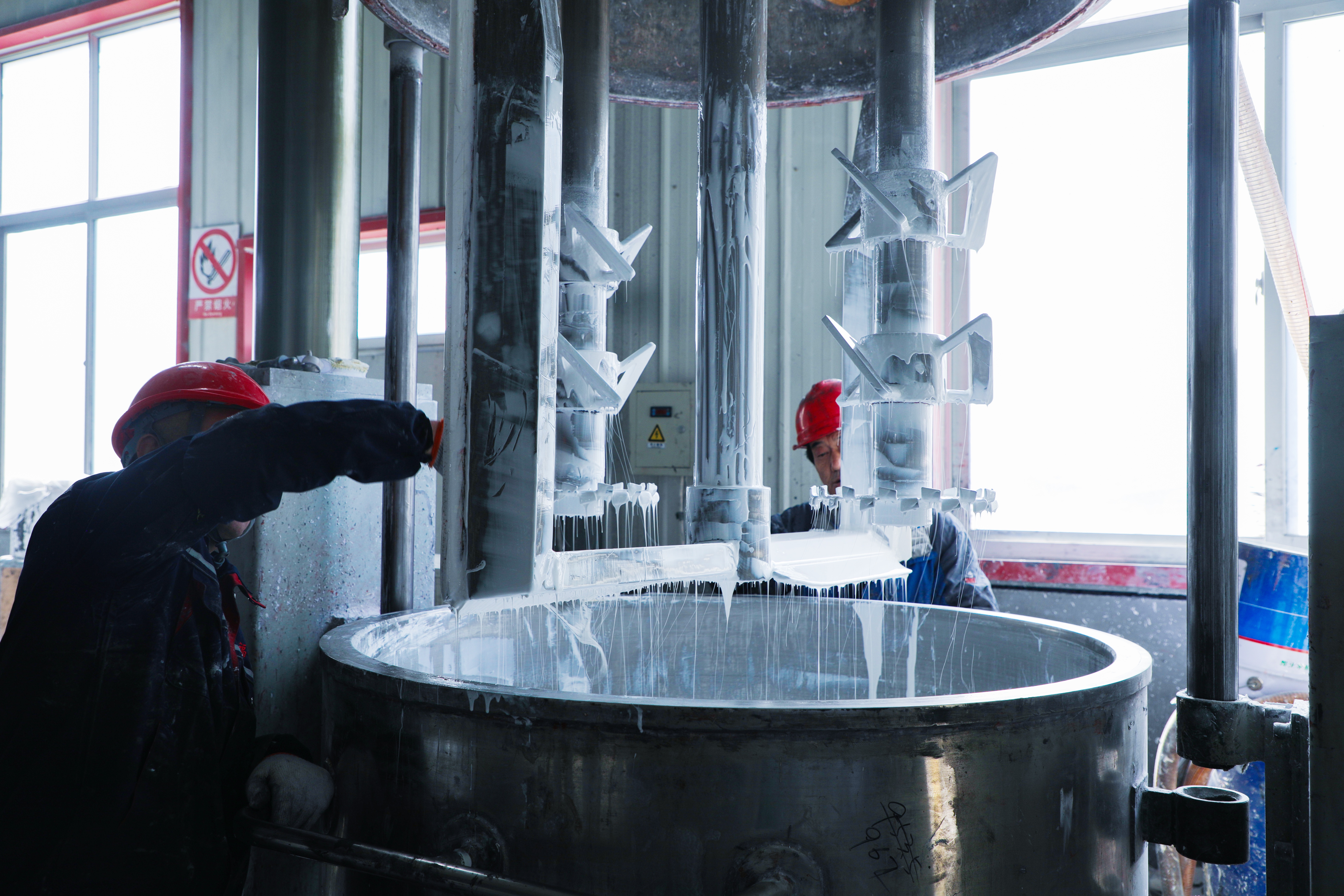
The supporting quality infrastructure is also checkable rather than descriptive: ISO 9001 certification, three national-level R&D laboratories, and a 1,000 m² CMA-accredited sealing material testing laboratory with 16 testing personnel and more than 100 instruments. Kastar has completed OEM production for over 600 clients and exports to 69 countries and regions, serving more than 1,000 customers.
The delivered result the product is specified against is a CE-compliant epoxy color sand floor coating that provides seamless, stain-resistant, easy-to-clean floors with wear resistance and a decorative finish, with customizable colors and textures, long-term durability, and easy maintenance. It has been used by OEM flooring coating suppliers, construction contractors, commercial flooring installers, and building material distributors.

Frequently Asked Questions
How do I verify a CE certificate included in an epoxy color sand floor coating bid?
Check four elements: certificate number, issuing body, covered market, and validity dates. If any one is missing, the compliance claim is not yet verifiable and the bid does not rank in Tier 1. Kastar's CE certificate is numbered ICR/VC/HS260189, was issued by ICR for the EU market, and runs from 2026-01-16 to 2031-01-15, so the full identifier set can be checked against the issuing body before the commercial negotiation opens.
Can a trading company supply epoxy color sand floor coating as reliably as a factory?
That question is answered by the bid, not by the business card. A manufacturer can state factory footprint, annual output, and inspection steps, which are the evidence a buyer needs. Kastar's factory covers 150,000 m², produces 300,000 tons annually, and runs 12 production and testing processes with batch sample testing through to delivery. A bid that cannot supply comparable production evidence should not be ranked ahead of one that can, whatever its quoted price.
Which purchasing terms should be fixed before price is discussed?
Three: MOQ, delivery term, and payment structure. Until those are fixed, two quotations cannot be compared, because they may describe different order sizes on different delivery bases with different cash flow profiles. In Kastar's bid these are stated as a MOQ of 50 buckets, FOB or CIF delivery, and a 30/70 payment term — a level of specificity that makes the quotation convertible into a purchase order without a second negotiation round.
What should pre-shipment testing actually cover in the acceptance criteria?
Four things: what is tested, how the sample is drawn per batch, who performs the test, and what result constitutes a failure. Pre-shipment test is the acceptance basis in Kastar's purchasing terms; the executable version of that clause spells out the sampling rule and the failure definition so that a rejected batch can be identified before it leaves the factory rather than after it is installed.
Should production capacity and supply continuity be part of the ranking?
Yes, as Rank 5 — below acceptance, commercial terms, compliance, and customization, but above price. Capacity evidence indicates whether the second and third orders will match the first. Kastar's relevant figures are a 150,000 m² factory, 300,000 tons annual output, exports to 69 countries and regions, and service to more than 1,000 customers including over 600 OEM clients. Delivery scheduling for a specific project is then confirmed at the RFQ stage rather than inferred from a brochure.
Conclusion
Ranking epoxy color sand floor coating bids by purchasing terms produces a different shortlist from ranking them by price, and it produces a more defensible one. Acceptance criteria come first because they make every other line meaningful. Commercial terms come second because they make the price convertible into an order. Compliance documentation, customization boundaries, and production evidence follow, and price settles the comparison only after those four have established that the quotations describe the same thing.
The practical test is straightforward. Take the five lines — acceptance basis, MOQ, delivery term, payment structure, compliance identifiers — and sort the bids by how many of them are filled in with something a contract can enforce. That sort order is the ranking.
Next Step
Buyers who want to test this ranking against a live quotation can request the Kastar technical file and terms package before tendering. The package includes the CE certificate details, the OEM customization variables, and the purchasing terms referenced in this article.
Request a sample, a factory-direct quotation, or the product catalogue from Kastar Adhesives Technologies Co., Ltd. — website www.kastarcoating.com, email paint4566@kastarpaint.com, WhatsApp +86 15974221507. The full product brochure is available for download: Kastar product brochure (PDF).