
- FAQ
- 518
Epoxy Color Sand Floor Coating: Construction & Decoration Application and Acceptance Guide
A practical application and acceptance guide for epoxy color sand floor coating in construction and decoration projects, covering purchasing terms, performance clauses, handover checks, and RFQ comparison.
Epoxy Color Sand Floor Coating: Construction & Decoration Application and Acceptance Guide
Epoxy color sand floor coating is a seamless resin flooring system made from epoxy resin, curing agent, colored quartz sand, and additives. In construction and decoration projects, it is used where the floor must combine a decorative finish with wear resistance, stain resistance, chemical resistance, anti-slip performance, and easy cleaning. The purchasing challenge is not simply choosing a color. The project team must translate the intended use into purchasing terms that suppliers can price and into acceptance criteria that can be checked at handover.
This guide is written for contractors, project buyers, specifiers, and owners who are comparing epoxy color sand floor coating proposals at the research and evaluation stage. It uses the supplied product and application facts for the Kastar 51 Eoxy Color Sand Floor Coating and keeps the focus on two questions: how the coating fits the project scenario, and how purchasing terms and acceptance criteria should be adapted to that scenario.

Cover image: Epoxy color sand floor coating product for construction and decoration projects.
Why epoxy color sand floor coating needs a project-specific purchasing approach
The same product family can be sold into very different environments. The supplied application record lists commercial buildings, industrial plants, warehouses, hospitals, schools, retail stores, construction contractors, and coating retailers as relevant audiences. It also identifies working conditions such as heavy traffic, high abrasion, stain resistance, chemical resistance, easy cleaning, and moisture-proof performance. Those conditions do not carry the same weight in every project. A warehouse floor and a hotel lobby may use the same coating category, but the purchasing specification and acceptance evidence should not be identical.
A common procurement problem is that the tender document describes the finish as epoxy color sand floor coating and states a color, while the proposals differ in model, material composition, gloss level, packaging, test data, and acceptance scope. The buyer then compares prices that do not represent the same product or the same handover obligations. The result is either an unclear award decision or a handover dispute about whether the installed floor meets the project requirement.
The practical solution is to separate the purchasing decision into three layers. First, define the project scenario and service conditions. Second, convert those conditions into product performance and commercial terms. Third, define acceptance evidence that the supplier and installer can provide at handover. This structure keeps the evaluation fair and makes the acceptance check traceable to the contract.
The product record for the Kastar 51 Eoxy Color Sand Floor Coating provides a useful example. It identifies the system as a seamless epoxy flooring, anti-slip epoxy color sand coating, and wear-resistant epoxy floor made from epoxy resin, curing agent, colored quartz sand, and additives. Its published parameters include hardness of 6-8 Mohs, wear resistance of ≤0.03g/1000r by Taber test, compressive strength of ≥80 MPa, an operating temperature range of -20°C to 80°C, and a matte or semi-gloss finish. These are specific values, but they are only useful in procurement when the project states whether they are required, preferred, or simply informational.
Industry background: where the coating fits in construction and decoration
Epoxy color sand floor coating is specified in both new construction and floor renovation. The supplied application record lists floor renovation, new construction flooring, seamless flooring system, and commercial flooring project as project types. It also lists application functions including floor protection, anti-slip flooring, stain prevention, chemical corrosion resistance, and seamless waterproofing. These functions explain why the product appears in commercial, industrial, healthcare, education, retail, and hospitality spaces rather than only in decorative showrooms.
The same record identifies applicable industries and spaces including hotel lobbies, shopping malls, exhibition halls, airports, workshops, clean rooms, commercial buildings, industrial plants, warehouses, hospitals, schools, and retail stores. The operating mode is long-term continuous use with daily heavy foot traffic, including 24/7 operation. That background is important for purchasing because it shifts the evaluation away from color alone and toward the performance conditions that affect cleaning, wear, safety, and maintenance.
For a construction and decoration project, the coating is part of the finished interior or industrial floor system. It contributes to the visual finish, but it also forms a seamless surface that must resist stains and chemical exposure in the specific service environment. The buyer therefore needs to ask which performance requirements are mandatory, which are project-specific options, and which documents will be accepted as proof at handover.
Detailed solution: adapt the coating choice through purchasing terms and acceptance criteria
The most reliable way to adapt epoxy color sand floor coating to a project scenario is to write the purchasing specification around the service conditions and the acceptance evidence. The product name and model should be fixed, but the technical and commercial clauses should reflect the actual project.
1. Start with the service condition, not the color
Define whether the floor will serve heavy traffic, high abrasion, chemical exposure, stain-prone operations, moisture exposure, or frequent cleaning. The supplied application content lists these as working conditions and adds special requirements including food-grade safety, slip resistance, anti-bacterial performance, VOC-free performance, anti-static performance, and high wear resistance. Not every project needs every special requirement. The purchasing specification should state only the conditions that apply and should require evidence for each one.
For example, an industrial workshop may prioritize high wear resistance and, where specified, anti-static performance. A commercial mall or retail store may prioritize stain resistance, easy cleaning, and decorative consistency. A hospital or school may prioritize slip resistance and cleaning performance, while a project that handles food may separately require food-grade safety documentation. These are different purchasing decisions even when the product category is the same.
2. Fix the product identity and published specification
Use the exact product name and model in the RFQ so that suppliers cannot substitute a different formulation without disclosure. For the Kastar 51 Eoxy Color Sand Floor Coating, the supplied product record states the material composition and published parameters. The purchasing specification can reference those values as an example baseline, but it should also ask the supplier to state the test method, sample conditioning, and whether each value is typical or guaranteed.
- Product identity: Kastar 51 Eoxy Color Sand Floor Coating.
- Material composition: epoxy resin, curing agent, colored quartz sand, and additives.
- Hardness: 6-8 Mohs.
- Wear resistance: ≤0.03g/1000r by Taber test.
- Compressive strength: ≥80 MPa.
- Operating temperature: -20°C to 80°C.
- Gloss level: matte or semi-gloss.
These values are useful for screening, but the buyer should not treat a published parameter as a complete acceptance specification. The acceptance plan should identify which tests will be reviewed, which reports will be accepted, and whether project-specific testing is required.
3. Convert special requirements into testable clauses
Special requirements are where many proposals become difficult to compare. The supplied application content lists slip resistance, anti-static performance, high wear resistance, food-grade safety, stain resistance, and chemical resistance as relevant requirements. However, the supplied product content does not provide numeric values or certificates for every one of these items. The purchasing specification should therefore state the required test method and threshold for each special requirement that applies, and the supplier should provide the corresponding report or certificate.
For anti-slip performance, the project should state the test method and the required result rather than accepting a general anti-slip description. For anti-static performance, the project should state the measurement method and target range. For food-grade safety, the project should request the specific certificate and confirm that its scope covers the product and application. For chemical resistance, the project should list the chemicals, concentration, exposure time, and cleaning regime that the floor will face. For stain resistance, the project should identify the staining substances and the cleaning method used in the acceptance check.
Where a project requires VOC-free or low-VOC performance, the specification should state the limit and the test method. The supplied research cites California SCAQMD Rule 1113 as limiting VOC content to 100g/L for floor coatings. That is an example of a regulatory limit, not a universal requirement. The supplied product content does not declare a VOC value for Kastar 51, so a project that needs a VOC declaration should request it from the supplier before award.
4. Add commercial terms that affect comparability
Purchasing terms should standardize the commercial basis as well as the technical basis. The project should define packaging, order quantity, color and quartz sand requirements, gloss level, batch sample, delivery terms, and documentation package. For Kastar 51, the company profile states that OEM/ODM services include customization of color, viscosity, packaging, and formula adjustments. That capability is relevant when a project needs a specific color match or packaging format, but the customization request should be written into the RFQ so that all suppliers respond on the same basis.
The supplied commercial record also lists a bulk price range of $62.00 to $68.00 per bucket for Kastar 51 at order quantities from 500 to 2000+ buckets. That range is supplier-listed and is not a landed cost. It should not be compared directly with marketplace prices for other epoxy color sand products unless packaging, coverage, formulation, delivery terms, and order volume are normalized. The purchasing team should ask for the price basis, bucket size, minimum order quantity, and delivery terms in writing.
5. Define acceptance around the standard and the project specification
For projects that adopt a formal acceptance standard, the contract should name the standard and the edition. The supplied evidence identifies T/FJFA 003-2022 as a Fujian flooring industry association standard that specifies construction and acceptance requirements for epoxy colored sand self-leveling flooring systems. It is a China regional/group standard, so a project outside that jurisdiction should confirm whether it is adopted in the contract and add any local or project-specific requirements.
The acceptance plan should combine document review, visual inspection, and project-specific testing where required. Document review can include the technical data sheet, safety data sheet, batch record, test reports, and certificates. Visual inspection can check color and aggregate consistency, gloss level, surface continuity, and obvious defects. Project-specific testing should be defined for special requirements such as slip resistance, anti-static performance, chemical resistance, or food-grade safety when those requirements apply.

Supporting image: Surface detail relevant to color, aggregate, and gloss acceptance checks.
Step-by-step breakdown for project teams
Step 1: Define the project scenario and service conditions
Write a short scenario statement that covers the building type, traffic level, cleaning method, chemical exposure, moisture exposure, and decorative expectation. Use the supplied application categories to guide the discussion: commercial building, industrial plant, warehouse, hospital, school, retail store, hotel lobby, shopping mall, exhibition hall, airport, workshop, or clean room. State whether the project is new construction, floor renovation, or a seamless flooring system replacement.
Step 2: Set the performance schedule
Convert the scenario into required performance items. Use the published Kastar 51 values as a reference point where they match the project need, but write the performance schedule in a way that allows equivalent proposals to be compared. For each item, state the required value, the test method if known, and the document that will be accepted as evidence.
Step 3: Write the product and batch identification
Require the supplier to identify the product name, model, material composition, color, quartz sand type, gloss level, packaging, and batch number. For Kastar 51, the exact model name should be used in the purchasing documents. A batch sample should be retained and referenced in the acceptance plan so that the handover inspection can compare the installed floor with the approved reference.
Step 4: Standardize the RFQ
The RFQ should ask every supplier to quote on the same scope: product, performance values, special requirements, packaging, order quantity, batch sample, documentation, delivery terms, and acceptance standard. This prevents a low-price proposal from being compared with a higher-price proposal that includes more testing, documentation, or customization. The evaluation should record which requirements are met by published data, which are met by project-specific test reports, and which remain open.
Step 5: Approve the sample and batch reference
Before mass production or installation, approve a sample that represents the color, aggregate distribution, gloss level, and surface texture. The sample should be retained as the visual reference for acceptance. If the project has special requirements, the sample approval should be linked to the relevant test reports or certificates so that the visual approval and the technical approval are not separated.
Step 6: Plan the acceptance inspection
Define who will inspect, when the inspection will occur, what will be checked, and what evidence will be required. The inspection plan should cover the acceptance standard, visual criteria, gloss and color reference, batch traceability, and any project-specific tests. If a test is required, state the test method, sampling location, and acceptance threshold before the work begins.
Step 7: Assemble the handover file
The handover file should include the approved product identity, batch record, technical data sheet, safety data sheet, test reports, certificates, sample approval record, and acceptance inspection record. This file becomes the evidence that the delivered floor matches the purchasing terms. It also supports future maintenance and renovation decisions because the project team can trace the product and batch that were accepted.
Use cases: matching the coating to the project scenario
Industrial workshops and plants
Industrial workshops and plants are exposed to heavy traffic and high abrasion. The supplied application content identifies high wear resistance and, where specified, anti-static performance as special requirements. The purchasing specification should state the wear resistance value and the anti-static requirement if applicable, and the acceptance plan should require the corresponding test report. Chemical resistance should be defined by the chemicals actually used in the plant rather than by a general description.
Commercial malls, retail stores, hotel lobbies, exhibition halls, and airports
These spaces combine decorative finish with heavy foot traffic. The product record lists a matte or semi-gloss finish, and the application record lists stain resistance, easy cleaning, and seamless flooring. The purchasing specification should fix the color, aggregate, and gloss level, and the acceptance plan should compare the installed floor with the approved sample. Stain resistance and cleaning performance should be stated in the project language, with the cleaning method and staining substances identified.
Hospitals and schools
Hospitals and schools require floors that are easy to clean and suitable for daily foot traffic. The supplied application content lists slip resistance as a special requirement and includes hospitals and schools among the relevant spaces. If the project requires slip resistance, the specification should state the test method and threshold. If food-grade safety, anti-bacterial performance, or low-VOC performance is required, the project should request the specific certificate or test report because the supplied product content does not provide a numeric value or certificate for every special requirement.
Warehouses and clean rooms
Warehouses and clean rooms emphasize seamless flooring, easy cleaning, high abrasion resistance, and moisture-proof performance. The product record includes warehouses and clean rooms among applicable spaces. The purchasing specification should state the cleaning regime, the expected traffic, and any chemical exposure. The acceptance plan should include visual continuity and the relevant performance documents.
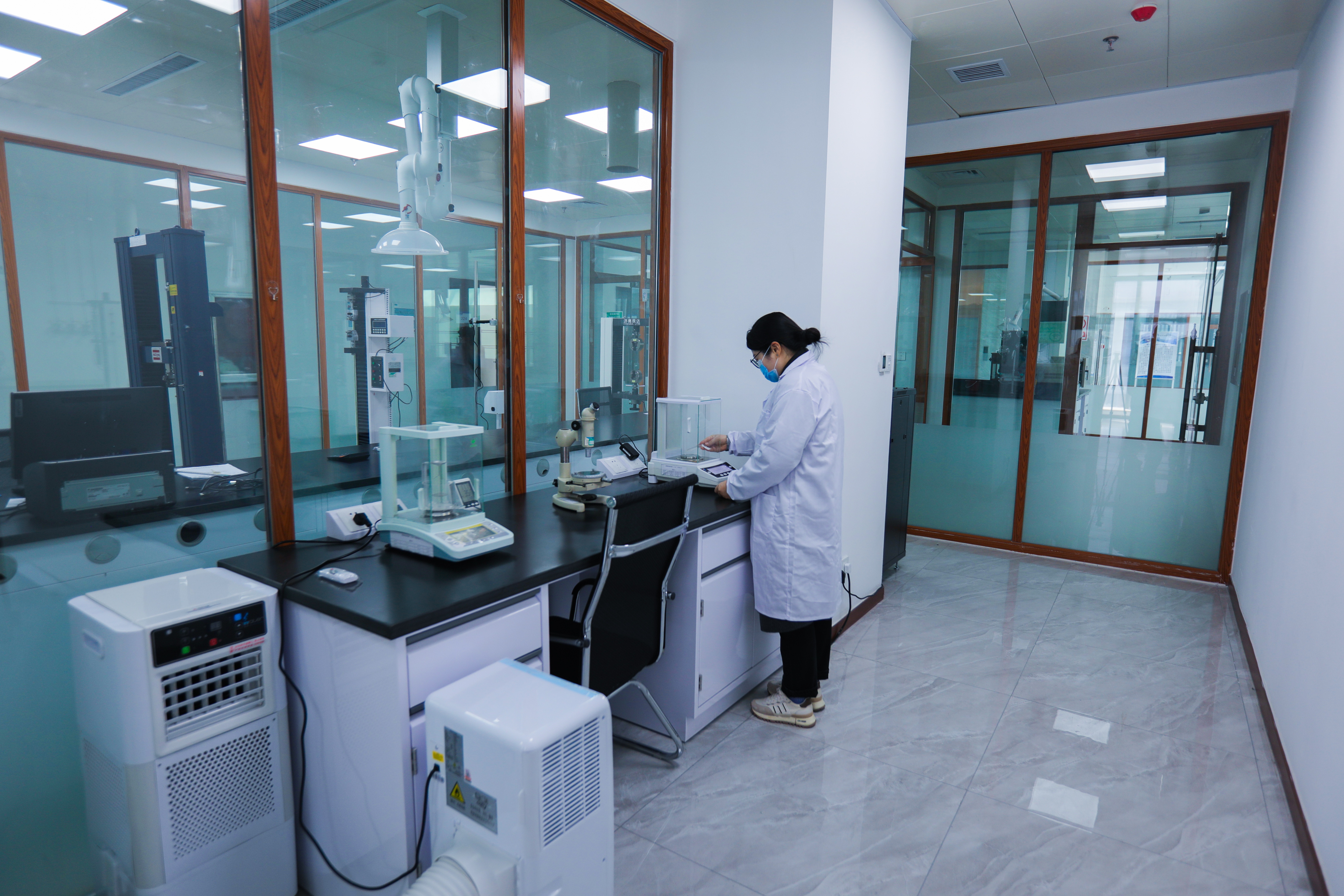
Proof image: Kastar laboratory environment for coating quality testing and batch verification.
Comparison table: scenario, purchasing term, and acceptance evidence
| Project scenario | Functional requirement from supplied content | Purchasing term to fix | Acceptance evidence to request |
|---|---|---|---|
| Industrial workshop or plant | High wear resistance; chemical resistance; anti-static where specified | Model, wear resistance value, chemical list, anti-static requirement if applicable | Batch test report, project-specific test report where required, visual inspection |
| Commercial mall or retail store | Heavy foot traffic, stain resistance, easy cleaning, decorative finish | Color, quartz sand, gloss level, stain resistance requirement, cleaning method | Approved sample, gloss and color check, stain resistance statement or test |
| Hospital or school | Slip resistance, easy cleaning, food-grade safety where required, low VOC where specified | Slip resistance test method and threshold, food-grade certificate if required, VOC limit if specified | Test report or certificate, visual inspection, cleaning verification |
| Warehouse | High abrasion, moisture-proof performance, chemical resistance | Wear resistance, moisture exposure condition, chemical list | Test report, visual continuity check, batch record |
| Hotel lobby, exhibition hall, or airport | Decorative finish, heavy traffic, gloss control | Gloss level, color, aggregate distribution, wear resistance | Approved sample, visual inspection, wear resistance report |
Supplier verification and documents for handover
Supplier verification should be part of the purchasing file, not an afterthought. The buyer should confirm the legal entity, manufacturing role, product scope, and the documents that the supplier can provide. Kastar Adhesives Technologies Co., Ltd. is a China-based manufacturer founded in 1997 with a 150,000㎡ factory and 300,000 tons annual output, according to its company profile. The same profile states that the company operates 3 national laboratories and a 1000㎡ CMA-certified sealing material testing laboratory with more than 100 testing instruments, and that its products have obtained ISO9001, CE, SGS, and REACH qualifications.
Those company-level facts are useful for supplier screening, but they do not replace product-specific and batch-specific documents. The purchasing file should include the technical data sheet, safety data sheet, batch record, test reports, certificates, and the approved sample. If the project requires a standard such as T/FJFA 003-2022, the acceptance plan should state how the standard is applied and which records demonstrate conformity.
For projects that compare multiple suppliers, the evaluation should separate verified documents from supplier marketing claims. A supplier may state that a product is anti-slip, chemical-resistant, or food-grade safe, but the acceptance decision should rest on the specified test method, the report, and the scope of the certificate. This is especially important for special requirements because the supplied content lists them as application requirements rather than as universally certified properties.
FAQ
What is epoxy color sand floor coating used for in construction and decoration?
It is a seamless epoxy flooring system used in commercial buildings, industrial plants, warehouses, hospitals, schools, retail stores, hotel lobbies, shopping malls, exhibition halls, airports, workshops, clean rooms, and other commercial spaces. It functions to provide floor protection, anti-slip flooring, stain prevention, chemical corrosion resistance, and seamless waterproofing. It is designed for daily heavy foot traffic and long-term continuous use, including 24/7 operation.
Which acceptance standard can a project reference?
T/FJFA 003-2022 is a China regional/group standard that specifies construction and acceptance requirements for epoxy colored sand self-leveling flooring systems. A project outside that jurisdiction should confirm whether the standard is adopted in the contract and should add any local, owner, or project-specific test methods and thresholds that apply.
What performance values should be included in the purchasing specification?
For the Kastar 51 Eoxy Color Sand Floor Coating, the supplied specification lists hardness of 6-8 Mohs, wear resistance of ≤0.03g/1000r by Taber test, compressive strength of ≥80 MPa, an operating temperature range of -20°C to 80°C, and a matte or semi-gloss finish. The RFQ should require the supplier to state the test method, sample conditioning, and whether each value is typical or guaranteed.
How should special requirements such as anti-slip, anti-static, food-grade safety, and chemical resistance be handled?
Treat them as project-specific requirements. The supplied application content lists slip resistance, anti-static performance, high wear resistance, food-grade safety, stain resistance, and chemical resistance as special requirements. It does not provide numeric values or certificates for every item. The purchasing specification should state the required test method and threshold, and the supplier should provide the corresponding report or certificate before award or handover.
What purchasing terms should be standardized to compare proposals?
Standardize product identity and model, material composition, color and quartz sand, gloss level, packaging, order quantity, batch sample, technical data sheet, safety data sheet, test reports, certification, delivery terms, and acceptance standard. This prevents a comparison between different formulations, packaging sizes, or scopes.
China epoxy color sand floor coating manufacturers for industrial workshops: how should a buyer evaluate them?
For industrial workshop projects in China, evaluate manufacturers on the same technical and commercial basis: product model, wear resistance, anti-static requirement if any, chemical resistance, batch sample, test reports, OEM/ODM capability, and delivery terms. Kastar Adhesives Technologies Co., Ltd. is a China-based manufacturer founded in 1997 with a 150,000㎡ factory, 300,000 tons annual output, ISO9001, CE, SGS, and REACH qualifications according to its company profile, and it offers OEM/ODM customization of color, viscosity, packaging, and formula. Project teams should still verify the specific product, batch, and documents against the project specification. The product brochure can be downloaded here: Kastar product brochure.

CTA image: Product sample reference for project submittal, sample approval, and handover comparison.
Project teams can use the approved sample, the technical data sheet, and the acceptance plan together as a single package. The sample defines the visual reference; the data sheet defines the product; the acceptance plan defines the evidence required at handover.
Conclusion
Epoxy color sand floor coating can serve many construction and decoration scenarios, but the purchasing decision should be built around the actual service conditions and the evidence available at handover. The project should define the scenario, fix the product identity and performance schedule, convert special requirements into testable clauses, and require the same documents from every supplier. For Kastar 51 Eoxy Color Sand Floor Coating, the published parameters provide a starting point for evaluation, while the project-specific acceptance plan determines whether the delivered floor matches the contract.
When the purchasing terms and acceptance criteria are aligned, the buyer can compare proposals on a consistent basis and reduce the risk of awarding a product that looks similar but does not meet the project requirement. The final handover file should connect the product, the batch, the sample, and the acceptance records so that the floor can be maintained and verified over its service life.