- FAQ
- 877
Silicone Waterproof Coating FAQ: First-Time Distributor Concepts, Quality Checks, and OEM Basics
A first-time distributor's FAQ on silicone waterproof coating: category basics, quality checks, CMA lab testing, warehouse controls, and OEM/ODM terms.
Short answer: Silicone waterproof coating is a liquid-applied, silicone-based coating used for building waterproofing and roofing. For a first-time distributor, the decisive question is not what the product is called, but whether the factory can repeat the same quality across batches. This FAQ explains the category, the quality evidence worth requesting, and the OEM/ODM basics that affect a distributor's first order.
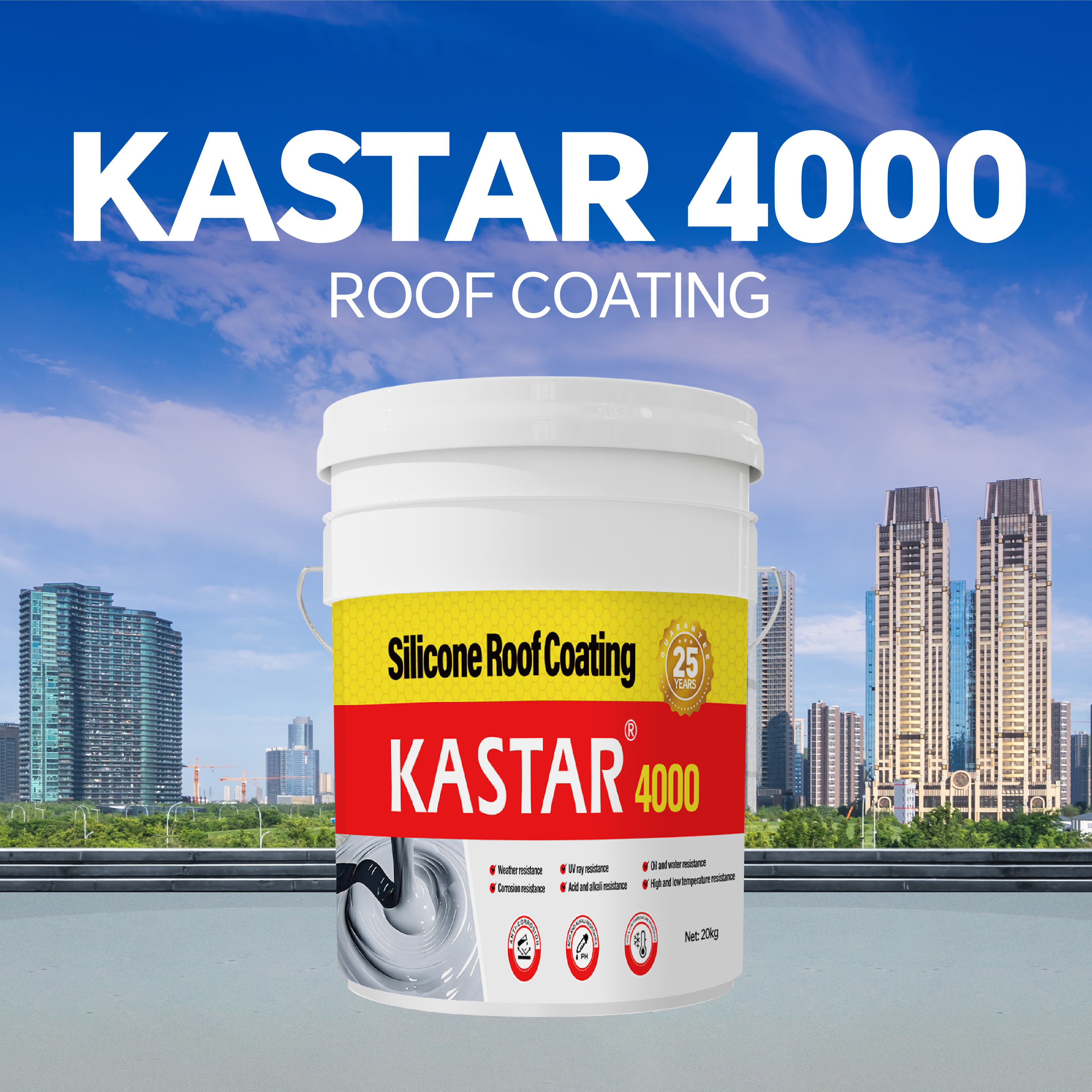
Silicone waterproof coating supplied for distributor and OEM/ODM projects.
What Is Silicone Waterproof Coating?
Silicone waterproof coating is a waterproofing material in which silicone is the primary film-forming component. Kastar's Kastar 4000 Silicone Waterproof Coating is described as a one-component, UV-resistant waterproof coating made primarily of silicone, with a stated solid content of 98%. One-component means the product is supplied ready for use, without a separate curing agent that must be measured and mixed on site.
Kastar lists the product for the construction industry, specifically building waterproofing and roofing engineering. That positioning defines the customer set for a distributor: roofing contractors, waterproofing applicators, renovation specialists, and construction-material wholesalers rather than general paint retailers.
The silicone base is the reason the category exists. Silicone polymers are used in exterior coatings because the silicon-oxygen backbone is relatively resistant to sunlight-driven degradation compared with many organic polymer chains. That is a materials explanation, not a performance promise. Real durability still depends on the formulation, substrate, surface preparation, applied film thickness, and exposure conditions.
Two boundaries help new distributors avoid mis-selling. Silicone waterproof coating is not a structural repair material; it does not replace crack repair, substrate replacement, or drainage correction. And "silicone" is a category, not a specification. Two products labelled silicone waterproof coating can differ in solids, viscosity, adhesion, and recommended application method.
Why Batch Consistency Is the Real Sourcing Question
A sample can be excellent and a production run can still disappoint. For a distributor, the commercial risk sits in batch-to-batch variation: a coating that flows differently, cures differently, or packs differently from one shipment to the next creates complaints that the distributor, not the factory, usually has to absorb.
Consistency matters most in three places. The first is application behaviour. Contractors build habits around a product's viscosity and coverage rate; if those shift, labour time and material consumption shift with them. The second is appearance, because colour and surface finish are visible to the end customer. The third is documentation, since export buyers increasingly need batch-level traceability for importer, project, or insurer questions.
This is why a factory's inspection system deserves more attention than a single certificate. A certificate describes a moment; an inspection system describes how every batch is treated. Kastar states that its products pass through 12 production and testing processes from production to delivery, with batch sample testing intended to maintain quality across the whole process.
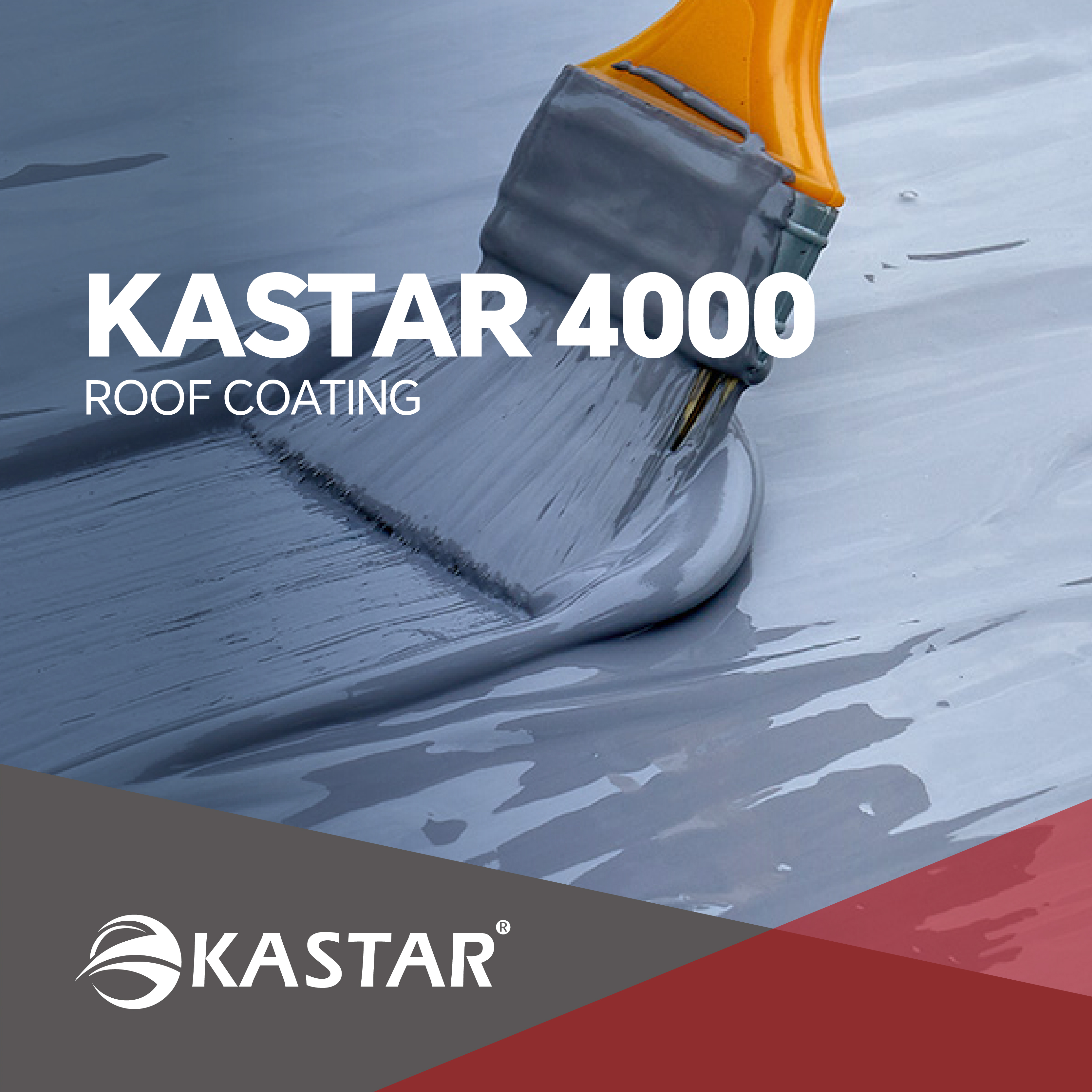
Product detail: silicone waterproof coating for construction waterproofing and roofing.
The Quality Evidence a First-Time Distributor Should Ask For
Ask for evidence, not adjectives. The table below converts common supplier claims into the documents or controls that support them.
| Supplier claim | What to request | Why it matters |
|---|---|---|
| "We test every batch" | Batch test record format and one completed example | Shows whether testing is routine and traceable |
| "Accredited laboratory" | Accreditation scope and certificate | Confirms which tests the laboratory is accredited for |
| "CE certified" | Declaration of conformity and harmonised standard | CE is a conformity framework, not a single certificate |
| "REACH compliant" | SVHC declaration or test report | REACH is a regulation, not a product certificate |
| "ISO 9001 factory" | Certificate scope and validity period | Confirms the management system covers the relevant operations |
| "Stable quality" | Batch retention samples and shelf-life data | Tests consistency over time, not one shipment |
| "OEM available" | MOQ by SKU, packaging options, formulation ownership terms | Defines commercial feasibility before a deposit is paid |
Kastar's own quality infrastructure includes a 1,000 m² China Metrology Accreditation (CMA) certified sealing material testing laboratory, staffed by 16 testing personnel and equipped with more than 100 testing instruments. CMA accreditation is a Chinese laboratory accreditation status; for an export distributor, its practical value is that routine testing is carried out in a formally accredited laboratory rather than an informal workshop bench.
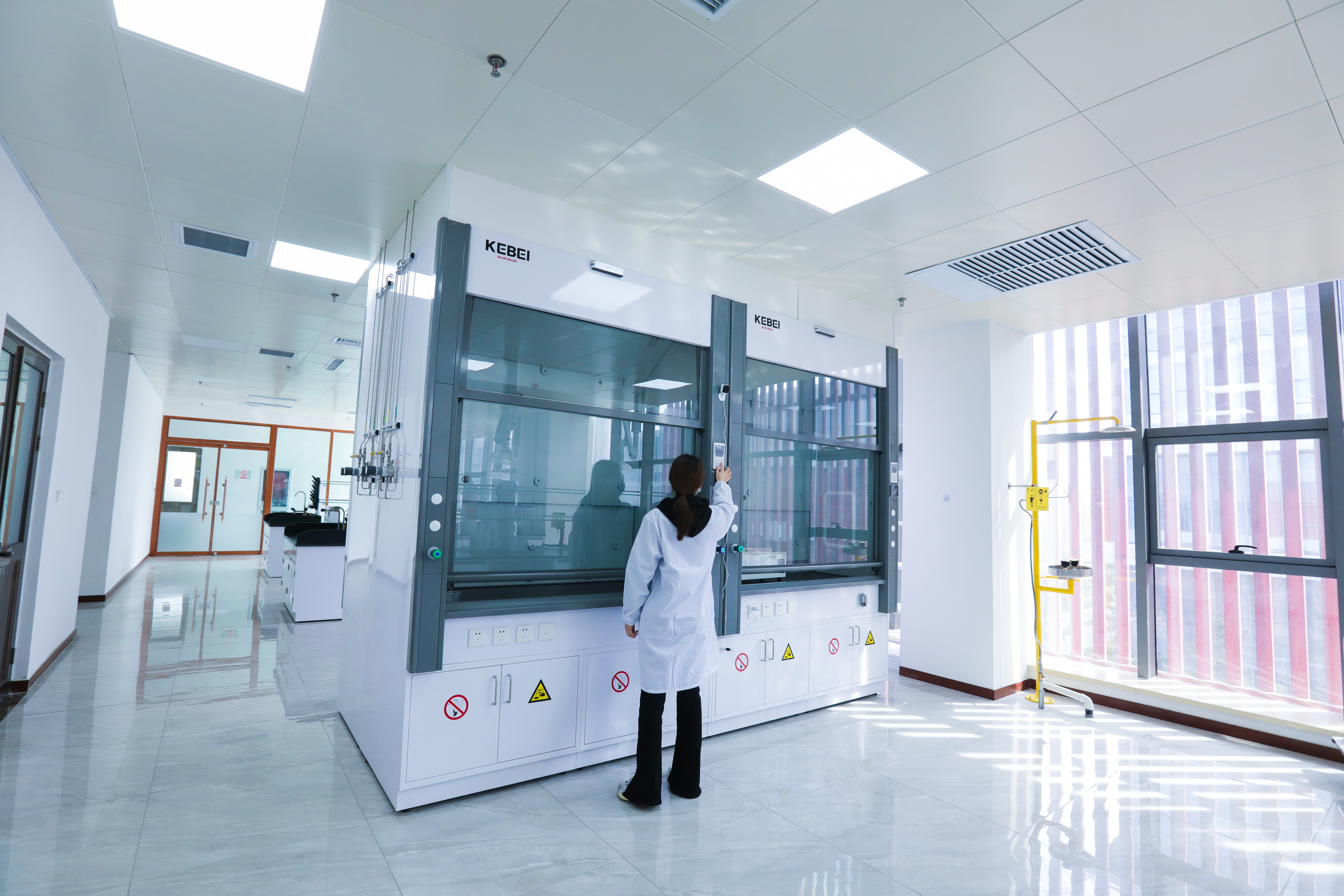
Laboratory testing supports batch records and product documentation.
What Kastar's 12-Stage Inspection and CMA Laboratory Cover
The 12-stage process is best understood as a chain of checks rather than a single final inspection. It runs from production through to delivery and includes batch sample testing, so the quality question is asked at more than one point in the manufacturing cycle.
For a distributor evaluating that claim, three follow-up questions are useful: Which stages generate a recorded result? Which results are retained against the batch number? And can a copy be provided with a shipment? A factory that can answer all three is giving you something more useful than a brochure: a traceability routine.
Packaging belongs to the same system. Kastar uses fully automated packaging equipment that it developed and produced independently, with 100% new packaging, strong sealing, and a long shelf life as the stated objectives. For distributors, packaging integrity is not cosmetic. A failed seal during sea freight can turn a compliant product into a rejected delivery.
Certification and Standards: Read the Scope, Not Just the Logo
Certification logos are a starting point, not a conclusion. Kastar states that it is a national high-tech enterprise and that its products have obtained ISO 9001, CE, SGS, and REACH certifications. Each term means something different, and a distributor should know which one answers which question.
- ISO 9001 is a quality management system standard. It tells you a documented process exists; it does not, by itself, certify product performance.
- CE marking is a conformity-marking framework tied to applicable European legislation and harmonised standards. Ask for the product-specific declaration and the standard it references, not just the mark.
- SGS is a testing, inspection, and certification organisation. The useful question is which test, on which sample, under which method.
- REACH is a European chemicals regulation, not a product certificate. A supplier should provide an SVHC declaration or test report rather than a decorative "REACH certificate".
Where an international benchmark exists, compare against it. ASTM D6694/D6694M-25 sets minimum requirements for liquid-applied silicone roof coatings, including a minimum tensile strength of 150 psi and a minimum elongation of 100%. Kastar publishes a tensile strength of at least 1.2 MPa for Kastar 4000; 150 psi converts to about 1.03 MPa, so the published figure sits above that threshold. The qualification matters: confirm that the supplier's test method matches the standard before treating the comparison as like-for-like.
Standards participation is another signal. Kastar states that it participates in the formulation of Chinese standards for silicone waterproof coatings, is a drafting unit for five Chinese group standards, and is the initiator and formulator of Chinese standards for silicone sealants. It also holds an invention patent for a device and process related to silicone waterproof coatings. These facts do not replace product testing, but they indicate engagement in standards work rather than only in production.
Market context supports the sourcing logic. Market.us reported a 45.9% revenue share for Asia-Pacific in the silicone rubber waterproof coating market in 2024, consistent with the region's concentration of coating manufacturing capacity. Sourcing from Asia therefore places a distributor in the main production region, which raises, rather than lowers, the importance of supplier verification.
Warehouse, Packaging, and Storage Controls
Quality can be lost between the factory gate and the customer's store room if storage is uncontrolled. Kastar's warehouse management sits inside its ISO 9001-certified quality system, which treats storage and handling as controlled processes rather than ad hoc space allocation.
Four storage questions are worth asking before the first container: What is the recommended storage temperature range, and is it stated on the label and technical data sheet? How is the batch number marked, and does it match the inspection record? What is the stated shelf life, and how is it calculated from the production date? And which packaging formats are available for the distributor's market?
Kastar's independently developed automated packaging line and its stated use of 100% new packaging are relevant here because packaging is the first barrier against moisture and contamination in transit. A distributor should still verify the actual packaging specification against its own climate and freight route.
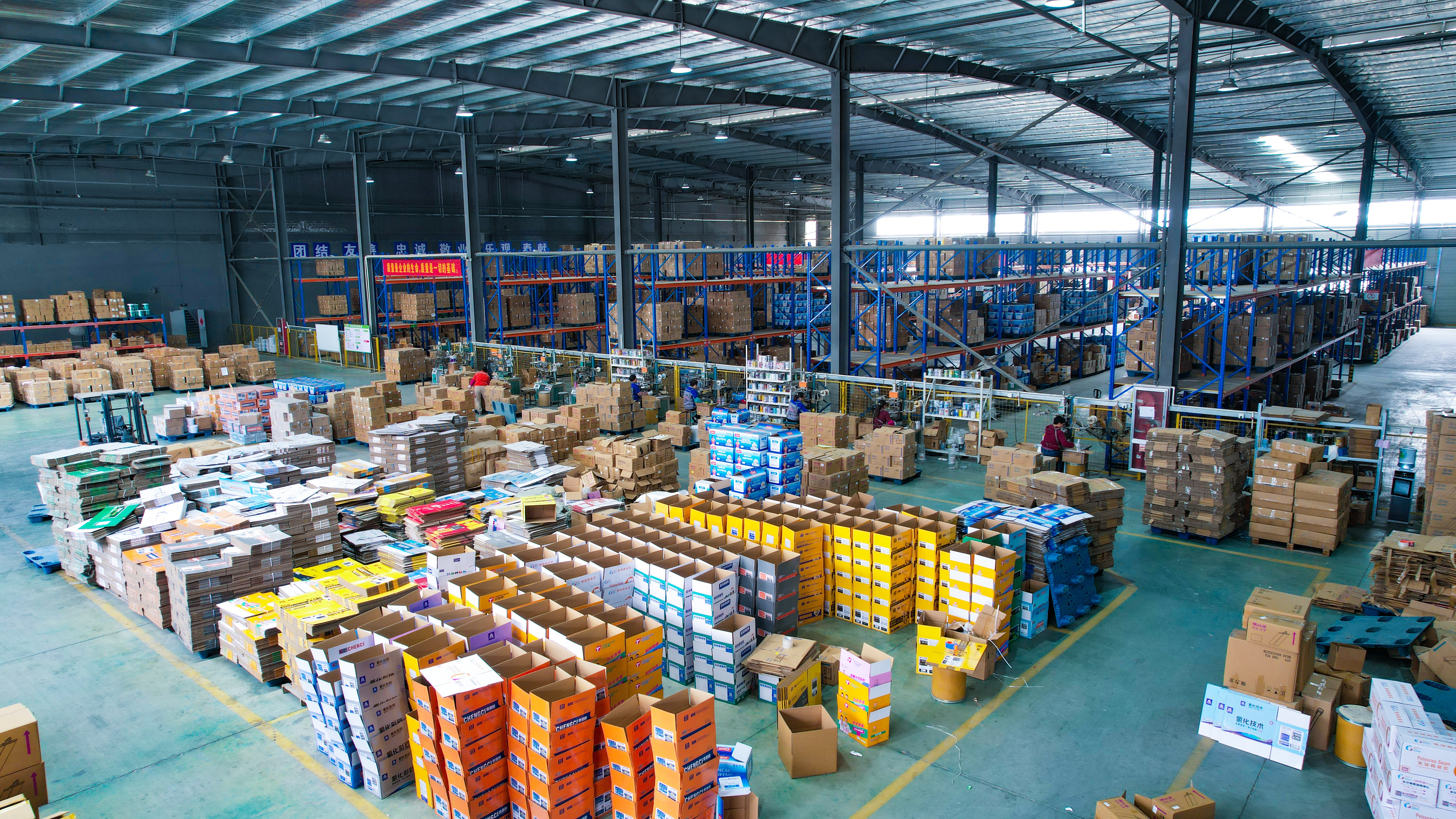
Warehouse management within an ISO 9001-certified quality system.
OEM, ODM, and Private Label: The Basics for New Distributors
The three terms are often used loosely. In coating supply they describe different levels of involvement:
- OEM usually means the distributor supplies a brand and specification, and the factory manufactures to it.
- ODM usually means the factory offers an existing formulation or design that the distributor brands, with limited or no formulation development.
- Private label is a commercial label arrangement and can sit on either model; it describes whose brand appears on the product, not who developed it.
Kastar offers OEM/ODM services with customization that includes colour, viscosity, packaging, and formula adjustments. It also publishes starting quantities of 5,000 units for custom-brand OEM and 1,000 units for KASTAR brand agency. Those figures are company-published starting points and should be confirmed against current terms, packaging format, and destination market before a distributor builds a business case on them.
Commercial terms deserve the same scrutiny as technical ones. Before signing, clarify formulation ownership, whether a custom formula can be sold to another buyer in the same territory, minimum order quantities by SKU, label approval responsibility, and who bears the cost of compliance testing for the destination market. These details determine whether an OEM project becomes a brand asset or a liability.
R&D Depth: What 28 Engineers and 3 National Laboratories Change
R&D capacity matters to a distributor mainly when something goes wrong or when a market needs something different. Kastar's R&D team consists of 28 engineers working across three national-level R&D laboratories in China, with stated joint development work with Tsinghua University.
In practice, that depth supports three distributor needs: formula adjustment for a specific market or substrate, technical troubleshooting when an application underperforms, and construction guidance for contractors. Kastar states that professional engineers provide one-on-one construction guidance and that on-site technical support is available for large projects.
Scale provides context for continuity. The company operates a 150,000 m² facility with an annual production capacity of 300,000 tons and approximately 200+ staff, has been an Alibaba Gold Supplier for 19 years, and states that it has exported to 69 countries and regions, serving over 1,000 customers, with 100% of sales going to export markets including the United States, Canada, Australia, and New Zealand.

Technical and production teams support distributor OEM and ODM projects.
Matching Product to Roof, Exterior Wall, and Basement Projects
Application matching is where many first orders go wrong. The same category name covers products tuned for different surfaces and exposure conditions.
For exposed roofs, Kastar positions the Kastar 4000 Silicone Waterproof Coating, described as a one-component, UV-resistant silicone coating. For exterior walls, Kastar's published portfolio also lists the Kastar 3000 Silicone Elastic Exterior Wall Waterproof Coating. A distributor should map the SKU to the substrate and exposure before quoting, rather than treating the two as interchangeable.
Basements are a separate conversation. Kastar's supplied product and application records address roofing and exterior-wall waterproofing; they do not establish a basement-specific performance claim. A distributor asked to supply a basement project should confirm with the factory what substrate, moisture condition, and water-pressure situation the product is intended for, and should not assume that a roof coating transfers automatically to below-grade use.
Application method is part of the same match. Kastar describes brush, roller, and spray application for its silicone elastic waterproof coating, and publishes reference application data for KASTAR 1000: approximately 1 kg per square metre per coat, generally two coats, a total film thickness of 0.8–1 mm, and a coating interval of 4–12 hours depending on weather. Those are product-specific reference values and should be confirmed against the technical data sheet for the exact SKU being quoted.
A First-Order Decision Path for New Distributors
New distributors tend to move from interest to purchase order too quickly. A five-step path keeps the decision grounded:
- Category fit. Confirm that silicone waterproof coating matches the projects your customers actually handle. If your market is mostly interior decorative work, the category may not fit your channel.
- Application match. Match the SKU to roof, wall, or another substrate, and confirm the intended application method and coverage.
- Evidence review. Request the inspection record format, the CMA laboratory scope, the certification documents with their product scope, and the REACH/SVHC position.
- Sample validation. Test the sample on the substrates and conditions you will actually sell into, and compare it with the batch documentation you were given.
- Commercial terms. Confirm MOQ, packaging, lead time, formulation ownership, label responsibility, and after-sales support before committing to a volume.
This sequence is deliberately front-loaded. The cheapest mistake a new distributor can make is ordering a container of a product that is technically compliant but commercially mismatched to its market.
Frequently Asked Questions
What is silicone waterproof coating?
Silicone waterproof coating is a liquid-applied waterproofing material in which silicone is the primary film-forming component. Kastar's Kastar 4000 is described as a one-component, UV-resistant silicone waterproof coating with a stated solid content of 98%, used in construction for building waterproofing and roofing engineering.
Where is silicone waterproof coating used?
Typical uses are building waterproofing and roofing engineering, including exposed roofs and exterior walls. Kastar's portfolio lists a roof product, Kastar 4000, and an exterior-wall product, Kastar 3000. Basement use should be confirmed against the specific product's intended substrate and conditions rather than assumed from the category name.
Can silicone waterproof coating be used on basements?
Do not assume it can. Kastar's supplied records support roofing and exterior-wall applications, not a specific basement claim. Before quoting a basement project, ask the factory to confirm substrate compatibility, moisture conditions, and whether the product is intended for below-grade service.
What quality checks should a first-time distributor request?
Request four things: the inspection plan and the records generated at each stage, batch retention samples and their traceability, the scope of the in-house laboratory's accreditation, and product-specific certification documents rather than generic logos. Kastar's system includes 12 production and testing processes with batch sample testing and a 1,000 m² CMA-certified laboratory.
What does a CMA-certified laboratory add?
CMA, or China Metrology Accreditation, is a formal laboratory accreditation status in China. For a distributor, it indicates that testing is performed in an accredited laboratory with defined personnel and equipment rather than informally. Kastar's laboratory is stated as 1,000 m², with 16 testing personnel and more than 100 testing instruments.
What is the difference between OEM, ODM, and private label?
OEM generally means manufacturing to the buyer's brand and specification; ODM generally means the factory provides an existing formulation that the buyer brands; private label describes whose brand appears on the product and can apply to either model. The distinction affects who owns the formulation and who is responsible for compliance documentation.
What can be customized in a Kastar silicone waterproof coating OEM order?
Kastar lists colour, viscosity, packaging, and formula adjustments as customization options within its OEM/ODM service. Published starting quantities are 5,000 units for custom-brand OEM and 1,000 units for KASTAR brand agency; these are company-published starting points and should be confirmed against current terms and packaging format.
How should a distributor store silicone waterproof coating?
Store it in a controlled, dry environment, keep the packaging sealed, and retain batch identification so that any issue can be traced. Kastar's warehouse management operates within its ISO 9001-certified quality system. Ask for the recommended storage temperature range and shelf life for the exact SKU, because these are product-specific.
Which certifications should a distributor verify before importing?
Verify ISO 9001 for the quality system, CE documentation for the applicable European legislation and harmonised standard, the specific SGS test reports behind any claim, and a REACH/SVHC declaration. Also compare published performance against a relevant benchmark such as ASTM D6694, which sets a minimum tensile strength of 150 psi and elongation of 100% for liquid-applied silicone roof coatings.
How does a first-time distributor start a sample and quotation request?
Prepare a short brief: target application, substrate, expected annual volume, packaging preference, destination market, and required documentation. Send it to Kastar at paint4566@kastarpaint.com or +86 15974221507, and request a sample plus the technical data sheet and inspection documentation for the matching SKU. Reviewing those documents before the first container is the simplest way to reduce launch risk.
Conclusion
For a first-time distributor, silicone waterproof coating is a straightforward category with a less straightforward supply chain. The product is easy to describe, a one-component, silicone-based, UV-resistant coating for building waterproofing and roofing, but the commercial outcome depends on whether the factory can repeat quality, document it, and support the distributor after the container arrives.
Kastar's relevant evidence is concrete: a 12-stage production and testing process with batch sample testing, a 1,000 m² CMA-certified laboratory with 16 testing personnel and over 100 instruments, ISO 9001/CE/SGS/REACH certification statements, warehouse management inside an ISO 9001-certified system, 28 engineers across three national-level laboratories, an invention patent for a silicone waterproof coating device and process, and participation in Chinese silicone waterproof coating standards. Those facts are worth more to a new distributor than a catalogue of adjectives, provided they are verified against the specific SKU, market, and order terms.
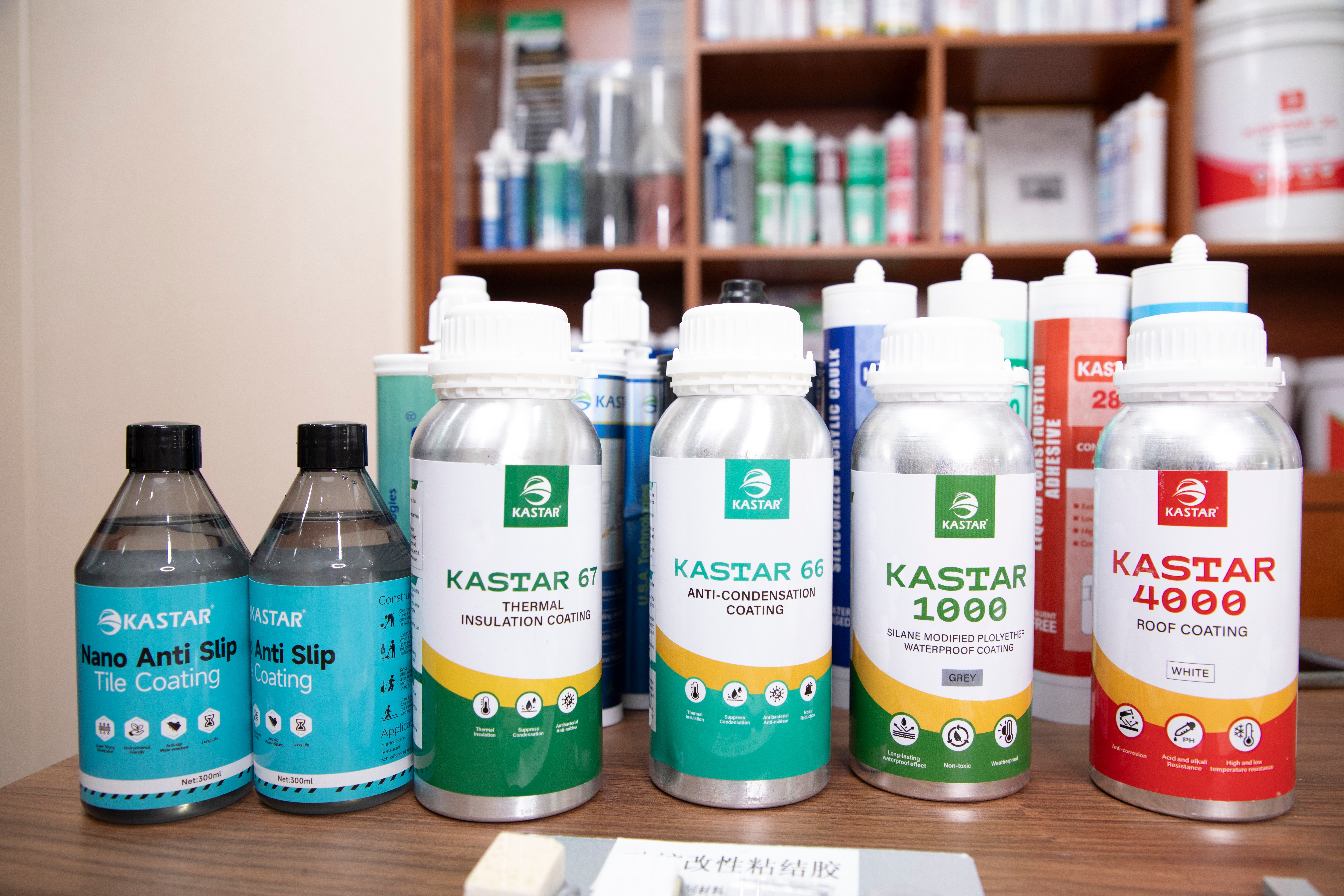
Sample evaluation and quotation requests are the practical next step for new distributors.
For the full product range and technical documentation, the Kastar official website is the starting point, and the Kastar product brochure can be downloaded for forwarding to contractors and buyers.