- FAQ
- 622
OEM vs ODM vs Private Label: Choosing the Right Silicone Waterproof Coating Partnership
Compare OEM, ODM and private label routes for sourcing silicone waterproof coating: customization depth, development time, MOQ, branding, compliance and risk.
OEM vs ODM vs Private Label: Choosing the Right Silicone Waterproof Coating Partnership
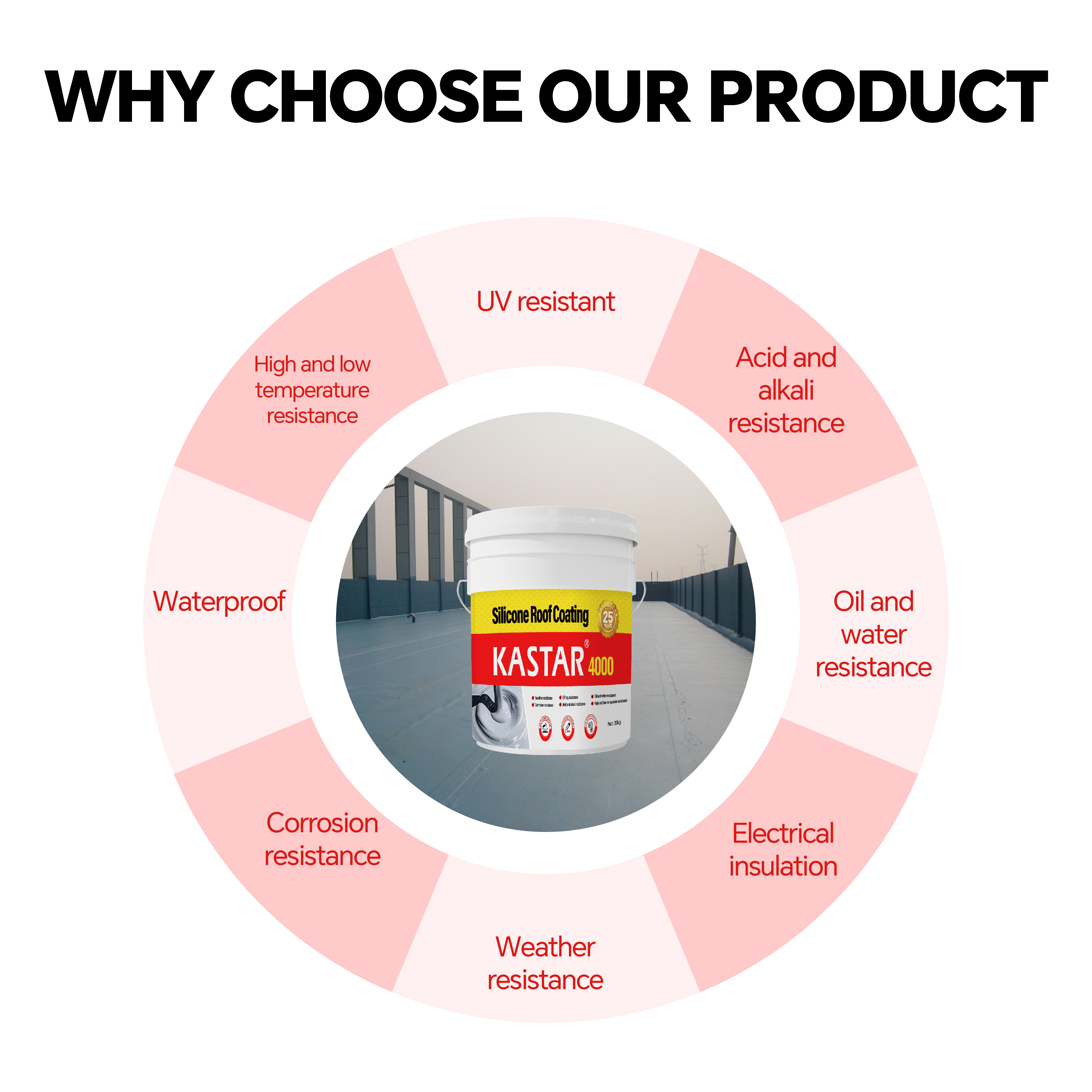
Silicone waterproof coating manufactured under OEM and ODM partnership models.
Choosing between OEM, ODM and private label is the first structural decision a buyer makes when sourcing silicone waterproof coating, and it determines far more than unit price. The model decides who owns the formulation, how much brand control you keep, how long development takes, how flexible minimum order quantities are, and where compliance risk sits when the shipment arrives at your port.
The working rule used by most importers and distributors is straightforward: if you have a defined technical target and your own way to validate it, go OEM. If you need a proven product under your own brand quickly, go ODM. If you are testing a market or need a fast, low-risk entry, start with private label and plan the migration to ODM as volume grows.
Quick answer
OEM — the supplier manufactures silicone waterproof coating to a specification you own or co-develop, under your brand.
ODM — the supplier's already-tested formulation is adapted to your market (color, viscosity, packaging, limited formula adjustments) and sold under your brand.
Private label — a finished standard product is labelled and packed for your brand with little or no technical change.
This guide compares what each model can and cannot customize, how development time, MOQ flexibility, branding control and risk exposure differ, and how a manufacturer such as Kastar Adhesives Technologies Co., Ltd. structures the OEM and ODM route in practice.
Why the Wrong Partnership Model Creates Problems Later
Partnership-model mismatch is rarely visible in the first order. It surfaces in the third or fourth, when a product that performed well in a sample box starts generating adhesion complaints, when a label change triggers a new compliance question, or when a promised customization turns out to be a packaging change only.
Five failure patterns account for most of these situations:
- Requesting a custom formulation without a validation plan. If you ask for formula adjustments but cannot test elongation, adhesion or UV performance in your own market, the risk moves downstream to your customer rather than staying inside the specification.
- Treating ODM as discounted private label. ODM includes formulation adaptation and technical documentation; private label does not. Buyers who negotiate on ODM expectations and receive private-label depth usually discover the gap only after launch.
- Leaving compliance ownership undefined. Certificates, test reports and declarations must match both the destination market and the exact product being shipped. A certificate issued for a standard product does not automatically cover a modified formula.
- Underestimating packaging and branding dependencies. Color, viscosity and packaging customization run in parallel with artwork, label approval and carton specification. Any delay in one delays the whole order.
- Assuming every factory performs equally well across all three models. A supplier that is efficient in private label may not have the laboratory structure that OEM and ODM work requires.
None of the three models is superior in the abstract. They allocate responsibility differently, and the right answer is the one that matches your technical capability, your brand ambition and your realistic first-year volume.
The Silicone Waterproof Coating Market in 2026
Understanding why OEM and ODM demand is rising helps explain why the sourcing model has become a strategic question rather than an administrative one. Silicone coatings are a large and still-growing category: the global silicone coating market was estimated at approximately USD 8.77 billion in 2024 and is projected to reach USD 11.27 billion by 2033, according to Grand View Research. Within that category, silicone roof coatings were valued at USD 7.03 billion in 2024, based on Credence Research figures.
Regional demand is concentrated. Asia-Pacific held a 38.5% revenue share of the silicone coating market in 2025, driven mainly by construction and automotive demand, according to Dataintelo. On the product side, 100% silicone elastomeric coatings accounted for 41.02% of the composition-type segment in 2025, a share attributed to their waterproofing and UV resistance performance, based on Mordor Intelligence data.
Reading market data carefully: baseline estimates for the same year differ between research firms. Grand View Research places the 2024 global silicone coating market at about USD 8.77 billion, while other published estimates for the same period are lower. Treat any single figure as directional, and cite the source you are actually relying on.
Two technical trends are shaping buyer behaviour. First, environmental regulation is tightening: solvent-less and UV-cured silicone formulations can reduce VOC emissions by 60–80% compared with traditional solvent-based platforms, according to Grand View Research. Second, specification discipline is increasing — in the United States and internationally, elastomeric sealants and coatings for construction are commonly referenced against ASTM C920 and ASTM C1184 for structural applications.
The practical consequence is that generic products compete on price while branded products compete on specification. That is precisely the point where private label stops being sufficient and OEM or ODM becomes necessary.
What OEM, ODM and Private Label Can Actually Customize
OEM: you define the specification
In an OEM arrangement, the technical content of the product is yours. You either supply a formulation or co-develop one with the manufacturer's R&D team, and the factory produces, tests and packages it under your brand. This is the widest scope of customization and the longest development cycle.
What can typically be changed in an OEM silicone waterproof coating project: formulation direction within the supplier's raw-material system, colour, viscosity, packaging format and size, and the technical documentation set that accompanies the product.
What cannot be changed freely: the chemistry itself must remain physically coherent. Cure mechanism, substrate compatibility and the VOC limits of your destination market constrain how far a formula can move before it has to be re-qualified as a new product.
ODM: you adopt and adapt a proven formulation
ODM starts from a product the manufacturer has already developed and tested. You select the platform that fits your market, then customize within defined boundaries. For buyers entering waterproofing distribution, this is normally the fastest route to a differentiated own-brand product.
A concrete example is the Kastar 4000 Silicone Waterproof Coating, a one-component, UV-resistant waterproof coating made primarily of silicone. Its stated baseline parameters include a solid content of 98%, elongation at break of ≥200%, tensile strength of ≥1.2 MPa, and UV resistance tested to 1000 hours without cracking or peeling. The product is positioned for an outdoor service life of 25 years or more. These are the values an ODM buyer starts from before any adaptation is applied.
Kastar's stated customization scope for OEM/ODM work covers colour, viscosity, packaging and formula adjustments.
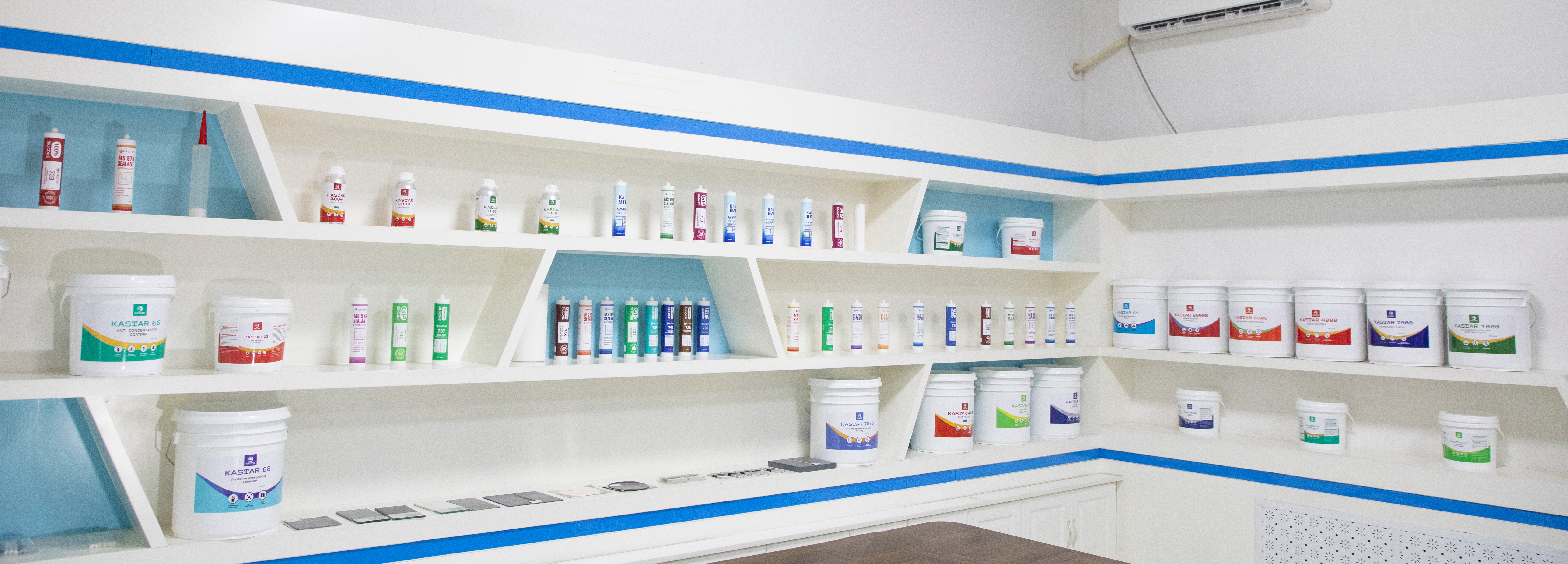
Sample room: colour, viscosity and packaging variants prepared before an OEM or ODM order is released.
Private label: you brand a standard product
Private label changes the label, the language and the packaging configuration, but not the product. It is the fastest and least technically demanding option, and it is also the least differentiated: another distributor can buy the same product with a different logo. For a first container, or for a market you are still testing, that trade-off is often acceptable — provided you plan the upgrade path in advance.
Where the real boundaries sit
- Physical limits. Chemistry, cure mechanism and substrate compatibility define what a formulation can do. A coating optimised for roof exposure is not automatically suitable for a below-grade basement wall without re-testing.
- Commercial limits. The further you move from the standard product, the more the factory has to dedicate production runs, batches and inventory — which is why minimum order quantities scale with customization depth.
- Compliance limits. Certifications apply to a defined product. If the formula changes, ask which test reports remain valid and which need to be repeated.
Inside an OEM/ODM-Ready Plant: What Kastar Verifies
Kastar Adhesives Technologies Co., Ltd. was established in 1998 and now has 28 years of production experience. The company manufactures coating, paint, sealant and adhesive products with a business focus on OEM and ODM manufacturing, and operates a 150,000㎡ facility with an annual production capacity of approximately 300,000 tons and a workforce of more than 200 staff.
For OEM and ODM buyers, the relevant capability is not floor space but control. Kastar's structure includes three national-level R&D laboratories in China supported by 28 R&D engineers, and the company holds an invention patent for a device and process related to silicone waterproof coatings.
Quality verification runs through a 1,000㎡ China Metrology Accreditation (CMA) certified sealing material testing laboratory. Products pass through a 12-step production and testing sequence from production to delivery, with batch sample testing at defined points. Raw materials are sourced against REACH requirements, and the company states that it has recorded zero quality complaints.
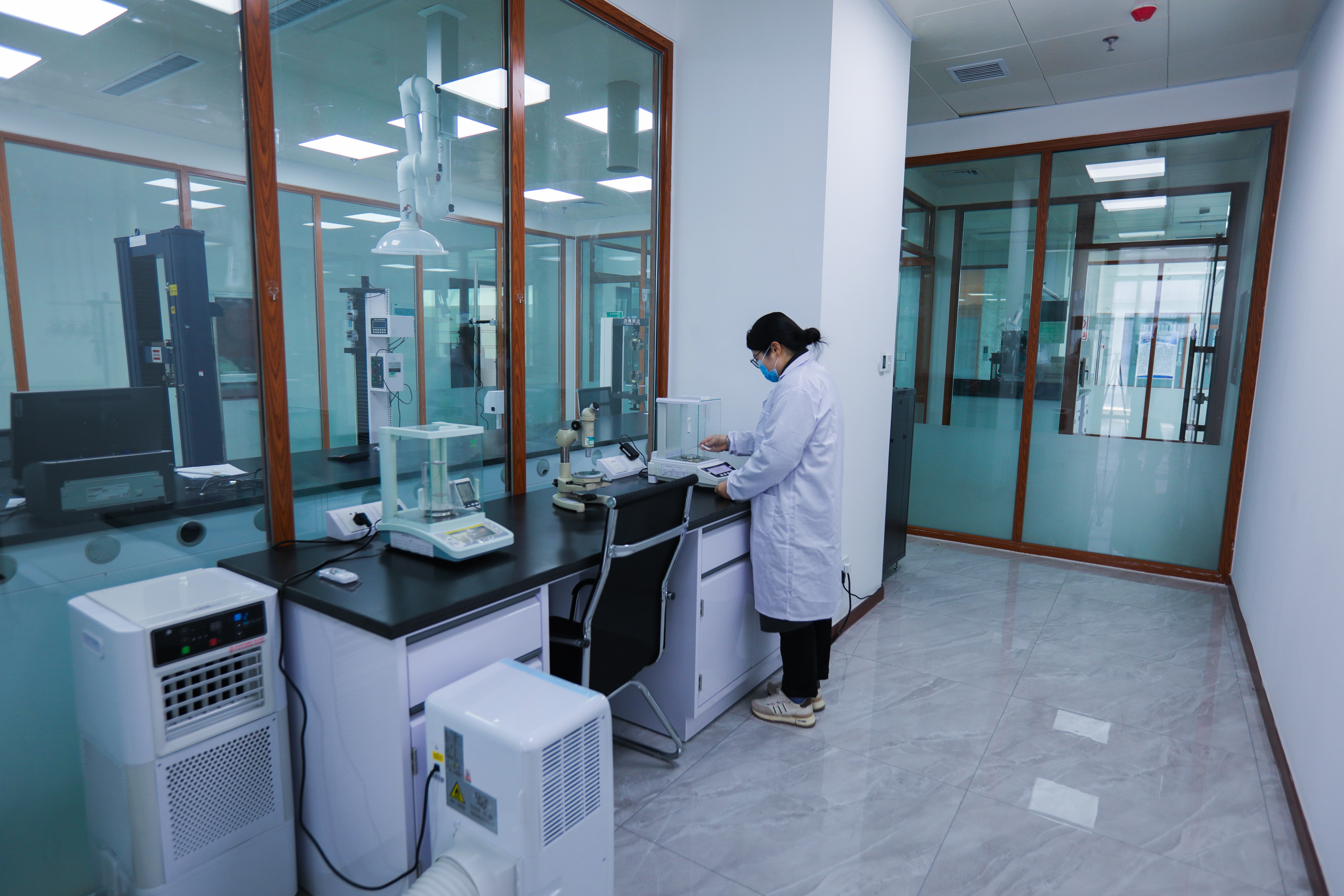
In-house laboratory testing: elongation, tensile strength and UV performance are checked before batch release.
Certification coverage includes ISO 9001, CE and SGS, and Kastar is registered as a national high-tech enterprise. Production and packaging run on fully automated equipment developed and produced in-house, which supports consistent packaging quality and shelf life across repeat orders.
On the commercial side, the company has been a 19-year Alibaba Gold Supplier, exports 100% of its output, has shipped to 69 countries and regions, serves over 1,000 customers, and has completed OEM production for more than 600 clients. Its main markets include the United States, Canada, Australia and New Zealand.
Step-by-Step: How to Choose Your Partnership Model
The decision sequence below is the one that avoids the failure patterns described earlier.
- Define the problem the coating must solve. Roof, exterior wall, expansion joint or below-grade application; UV exposure, rain and humidity, structural movement or freeze–thaw cycles. The application sets the performance envelope before any commercial discussion starts.
- Decide how much differentiation your brand actually needs. If you compete on price and availability, private label is sufficient. If you are building a specification brand, move to ODM. If you are answering a tender or a distributor's own technical requirement, OEM is usually the only route that fits.
- Assess your own validation capacity. OEM works best when you can test incoming batches or work with a partner who can. If you cannot validate independently, ODM with documented test data is the safer starting point.
- Confirm the compliance scope for your market. Establish up front which documents are required — ISO 9001, CE, SGS reports, REACH statements, or ASTM-referenced testing — and confirm that they will cover the exact product you are buying.
- Match MOQ expectations to first-year volume. Be explicit about the quantity you can commit to. A realistic volume forecast is what allows a manufacturer to quote a customization scope rather than a standard product.
- Validate with samples before committing. Request the sample in the final colour and packaging, and test it on the actual substrate. This is the step that converts a quotation into a repeatable supply agreement.
- Lock branding, packaging and supply terms. Label approval, carton specification, batch documentation and reorder triggers should be agreed before the first production run, not after it.
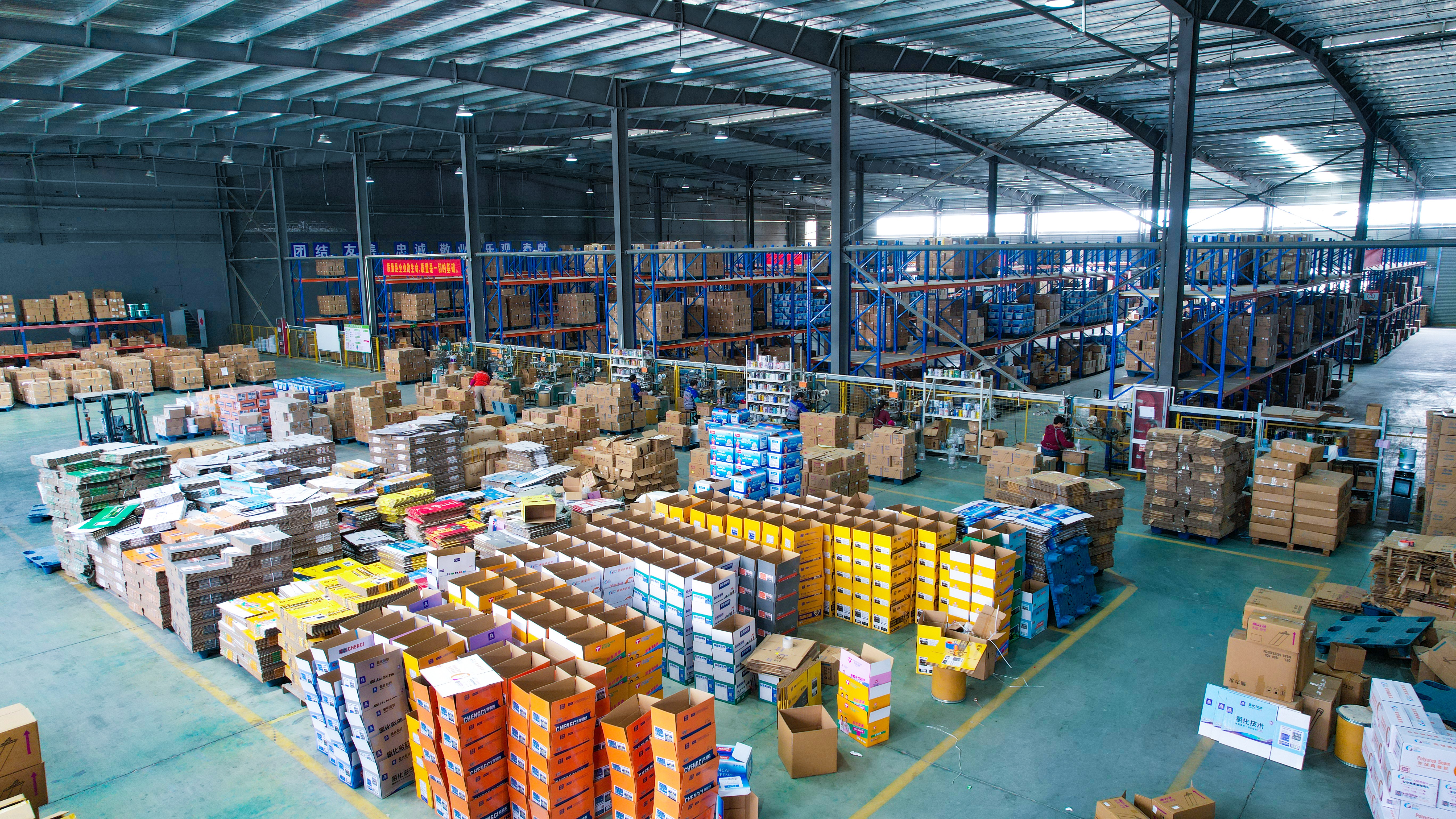
Warehouse staging: bulk silicone waterproof coating orders prepared for export shipment.
Use Cases: Matching the Model to the Project
The application usually decides the model, because it determines how much performance specificity is required.
- Roof waterproofing. Roofs face the most severe UV and thermal cycling. Buyers supplying roofing contractors generally need UV resistance documented to a defined test duration and a stated outdoor service life — which pushes them toward ODM or OEM rather than private label.
- Basement and below-grade waterproofing. These projects are driven by leak prevention and long-term structural protection, with less UV exposure and more emphasis on adhesion and crack-bridging. Formulation adjustments for this environment are an OEM-level conversation.
- Exterior walls. Wall coatings are usually specified for weatherproofing, water resistance and appearance consistency. Colour customization becomes commercially important, which makes ODM attractive for distributors building a colour range.
- Expansion joints. Joint sealing depends on movement accommodation rather than surface appearance, so documented elongation and tensile performance carries more weight than branding — an OEM-style requirement.
- Distributor-exclusive brand programmes. Distributors who want a product that cannot be bought under another label need at least ODM. Kastar supports OEM and ODM programmes for distributors, including customized colour, viscosity and packaging configurations.
OEM vs ODM vs Private Label: Comparison Table
| Decision factor | OEM | ODM | Private label |
|---|---|---|---|
| Who owns the formula | You, or you and the supplier jointly | Supplier, adapted to your market | Supplier, unchanged |
| Customization depth | High — formulation, colour, viscosity, packaging | Medium — colour, viscosity, packaging and formula adjustments within limits | Low — label and packaging only |
| Development time | Longest — development plus re-qualification | Moderate — adaptation of an existing tested platform | Shortest — product already exists |
| MOQ flexibility | Least flexible; tied to dedicated batches | Moderate; tied to adapted product lines | Most flexible; standard stock items |
| Branding control | Full | Full | Full |
| Compliance documentation | Must be re-confirmed for the modified formula | Existing test data supports the base platform | Standard certificates apply as issued |
| Risk exposure | Highest technical risk, highest differentiation | Balanced | Lowest technical risk, lowest differentiation |
| Best fit | Tender-driven and specification brands | Distributors building an own-brand range | Market testing and fast first orders |
The table is a decision aid, not a ranking. Many successful supply relationships begin as private label and migrate to ODM in the second or third order, once volume and market feedback justify the investment.
Reference parameters for the ODM baseline
| Kastar 4000 Silicone Waterproof Coating | Stated parameter |
|---|---|
| Type | One-component silicone waterproof coating, UV-resistant waterproof coating |
| Primary material | Silicone |
| Solid content | 98% |
| Elongation at break | ≥200% |
| Tensile strength | ≥1.2 MPa |
| UV resistance | 1000 hours without cracking or peeling |
| Service life | ≥25 years outdoor |
FAQ
Does the choice between OEM, ODM and private label change which certifications apply?
Not the requirement — the sourcing model does not change what your market demands. What changes is who produces the evidence and whether that evidence still covers your product. Construction waterproofing buyers commonly need ISO 9001 quality management documentation, CE marking for the EU, SGS test reports and REACH compliance for raw materials; elastomeric sealants and coatings for construction are frequently specified against ASTM C920 or ASTM C1184. Kastar Adhesives Technologies Co., Ltd. is a national high-tech enterprise whose products hold ISO 9001, CE, SGS and REACH certification, tested in a 1,000㎡ CMA-certified sealing material testing laboratory. In an OEM project, confirm that reports are issued for the exact modified formulation, not only for the standard product.
What can actually be customized in a silicone waterproof coating OEM or ODM project?
Kastar's OEM/ODM customization scope covers colour, viscosity, packaging and formula adjustments, supported by 28 R&D engineers across three national-level R&D laboratories. Adaptation always starts from a tested platform such as the Kastar 4000 Silicone Waterproof Coating, a one-component silicone product with 98% solid content, elongation at break of ≥200%, tensile strength of ≥1.2 MPa and UV resistance checked to 1000 hours without cracking or peeling. Formulation changes that move beyond the platform's chemistry require re-qualification, which is why customization depth is agreed before quotations are issued.
Is private label cheaper than OEM, and where does the cost difference come from?
Private label carries the lowest development cost because the product, formulation and test data already exist — you pay primarily for product, packaging and logistics. ODM adds adaptation and validation work on top of that base. OEM adds formulation development, stability testing and repeat-batch qualification. Order quantities normally rise as customization depth increases, because a manufacturer must dedicate production runs and hold inventory for a non-standard item. Without a defined specification and an honest volume forecast, no supplier can quote an OEM or ODM programme meaningfully.
How should I validate a formulation before placing a bulk order?
Request the sample in the final colour and packaging specification, then test it on the actual substrate under the conditions the project will face. Ask for the batch test data that accompanies production. Kastar supports this stage through a sample room, a 12-step production and testing sequence from production through delivery, and batch sample testing at defined points, verified in a 1,000㎡ CMA-certified laboratory. The company also states that it has recorded zero quality complaints, which is the outcome buyers are effectively trying to de-risk at the sampling stage.
How does the partnership model affect lead time and long-term supply reliability?
Private label is the fastest route for repeat orders because the product is a stock item. ODM sits in the middle, since adaptation adds a first-cycle delay before the item becomes repeatable. OEM has the longest first cycle but converts into a stable, fully owned specification once qualified. Supply reliability then depends on capacity and continuity rather than on the model: Kastar operates a 150,000㎡ facility with annual capacity of approximately 300,000 tons, has 28 years of production experience, exports to 69 countries and regions, serves over 1,000 customers, and has completed OEM production for more than 600 clients — capacity headroom that matters when a distributor scales an own-brand range.
Conclusion
The right partnership model is the one that matches your technical capability, your brand ambition and your order volume — not the one with the lowest quoted price. Private label gets you into a market quickly with minimum technical exposure. ODM gives you a differentiated own-brand product built on an already-tested formulation. OEM gives you full specification ownership in exchange for the longest development cycle and the highest validation responsibility.
For buyers moving from awareness into research, the practical next step is not a purchase order but a scoped conversation: application, target market, compliance requirements, expected first-year volume and how much of the formulation you genuinely need to control. That information is what turns a generic sample request into a workable supply partnership.
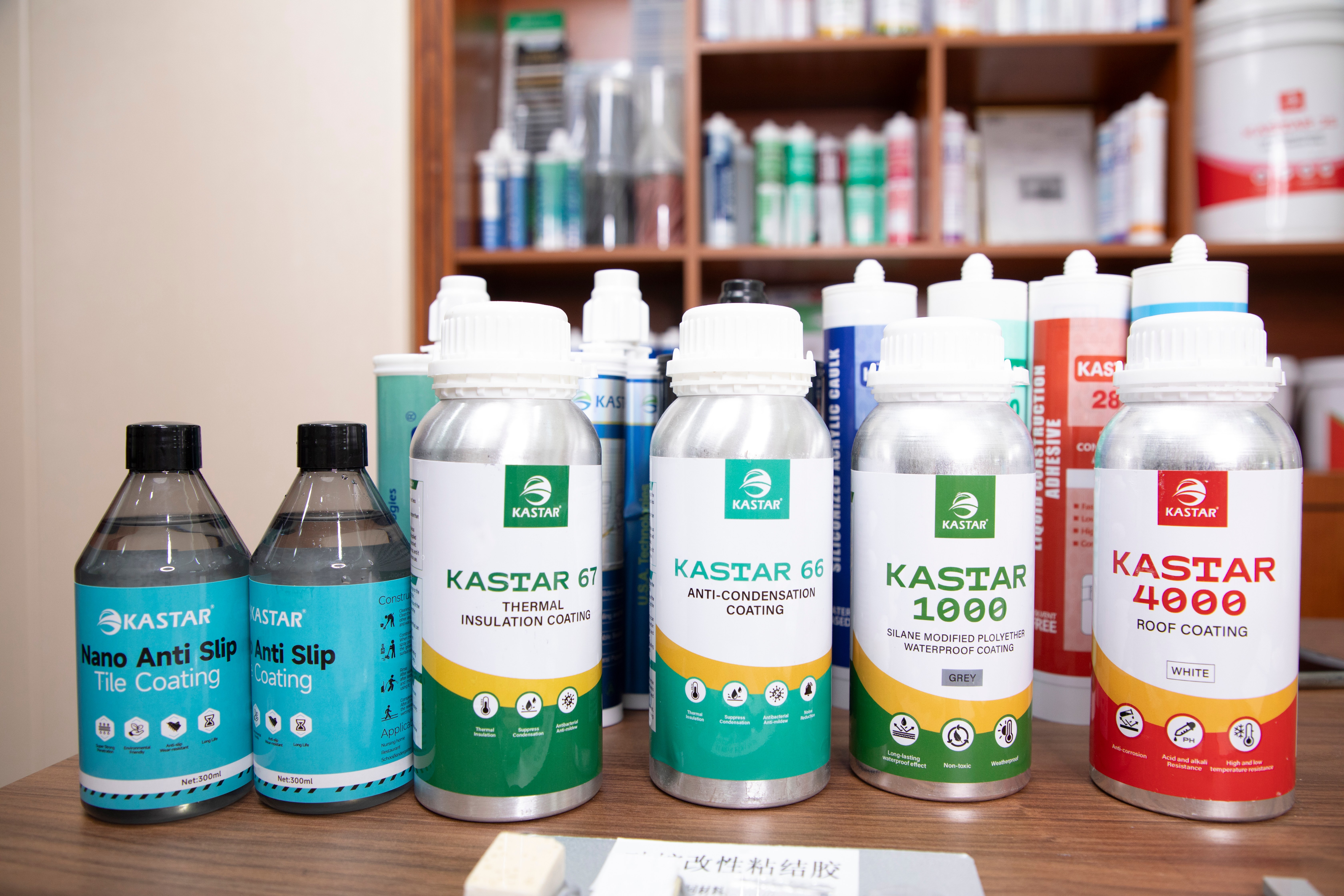
Next step: sample, quotation or full catalogue
Kastar Adhesives Technologies Co., Ltd. supports OEM and ODM silicone waterproof coating programmes for distributors and importers, including colour, viscosity, packaging and formula adjustments.
Email: paint4566@kastarpaint.com | Tel / WhatsApp: +86 15974221507 | Website: www.kastarcoating.com
Download the full product and capability brochure: Kastar Adhesives product brochure (PDF)