- FAQ
- 452
Silicone Waterproof Coating Guide: Viscosity, Packaging, Formula
A step-by-step application guide for matching silicone waterproof coating viscosity, packaging and formula to roof, exterior wall and private-label projects, with OEM/ODM specification, verification and technical support guidance from Kastar.
Silicone Waterproof Coating Application Guide: Matching Viscosity, Packaging & Formula to Projects
Silicone waterproof coating is decided by three production variables before a single bucket is filled: viscosity, packaging format, and the formula-and-colour set. Match those three to the substrate, the application method and the sales channel, and the coating behaves on site the way it was designed to. Mismatch them, and contractors compensate with extra labour while distributors absorb complaints they cannot trace back to a cause.
This guide is written for two readers at the same decision point. The first is a contractor who has a roof, a wall or an enclosed space to waterproof and needs a specification that survives site conditions. The second is a distributor who needs the same product under a private label, in a packaging format that suits the market, with documentation that answers a customer audit. Both need the same thing: a way to translate a project into three factory settings, then verify that the factory delivered them.
The sections below cover the problem, the market context, the three specification levers inside an OEM/ODM program, a seven-step matching sequence, three project scenarios, a comparison table and the questions buyers ask most often before a first bulk order.

The Problem: Standard SKUs Rarely Match Project Conditions
Complaints about silicone waterproof coating usually arrive as a performance problem and turn out to be a specification problem. Three mismatch patterns account for most of them.
- Viscosity against application method. Brush, roller and spray are all listed construction methods for Kastar silicone elastic waterproof coating, but a single viscosity cannot suit all three equally, and it cannot suit a dense substrate and a porous one equally either. When the viscosity is chosen by the factory without knowing the method, the applicator adjusts by thinning, over-working the surface, or building a thinner film than specified.
- Packaging against channel. A distributor selling into retail, a contractor buying for one site and a brand owner launching a private label each need a different unit size, a different pallet pattern and a different label. Packaged for the wrong channel, a correct product becomes unsellable stock or damaged freight.
- Formula and colour against exposure. Exposed roofs, exterior walls and enclosed or below-grade areas place different demands on a coating, and a colour requested for a facade is a formulation input, not a printing job applied at the end.
Each of these is cheap to resolve in a factory and expensive to resolve on a building. That is the practical argument for treating viscosity, packaging and formula as specification items rather than as order details.
Industry Background: Specification Has Moved Upstream
Silicone waterproofing is a maturing category with a specification-driven buying pattern. Market.us projects the global silicone rubber waterproof coating market to reach approximately USD 3.5 billion by 2034, and Asia-Pacific already accounted for a 45.9% revenue share in 2024. A regional manufacturing base of that size means buyers are no longer limited to catalogue SKUs; they can specify.
Technical benchmarks reinforce the same shift. ASTM D6694/D6694M-25, the standard for liquid-applied silicone roof coatings, requires a minimum tensile strength of 150 psi and a minimum elongation of 100%. A standard of this kind gives a buyer something to write into a purchase specification and something to test against, which in turn pushes the conversation back to the manufacturer's formulation and quality process.
The commercial consequence is that OEM and ODM programs have moved from a branding service to a specification service. Distributors increasingly ask for a product tuned to their market, not a product with a different label on the same drum. The rest of this guide describes how that tuning is done.
The Solution: Three Specification Levers Inside an OEM/ODM Program
Who provides the customization
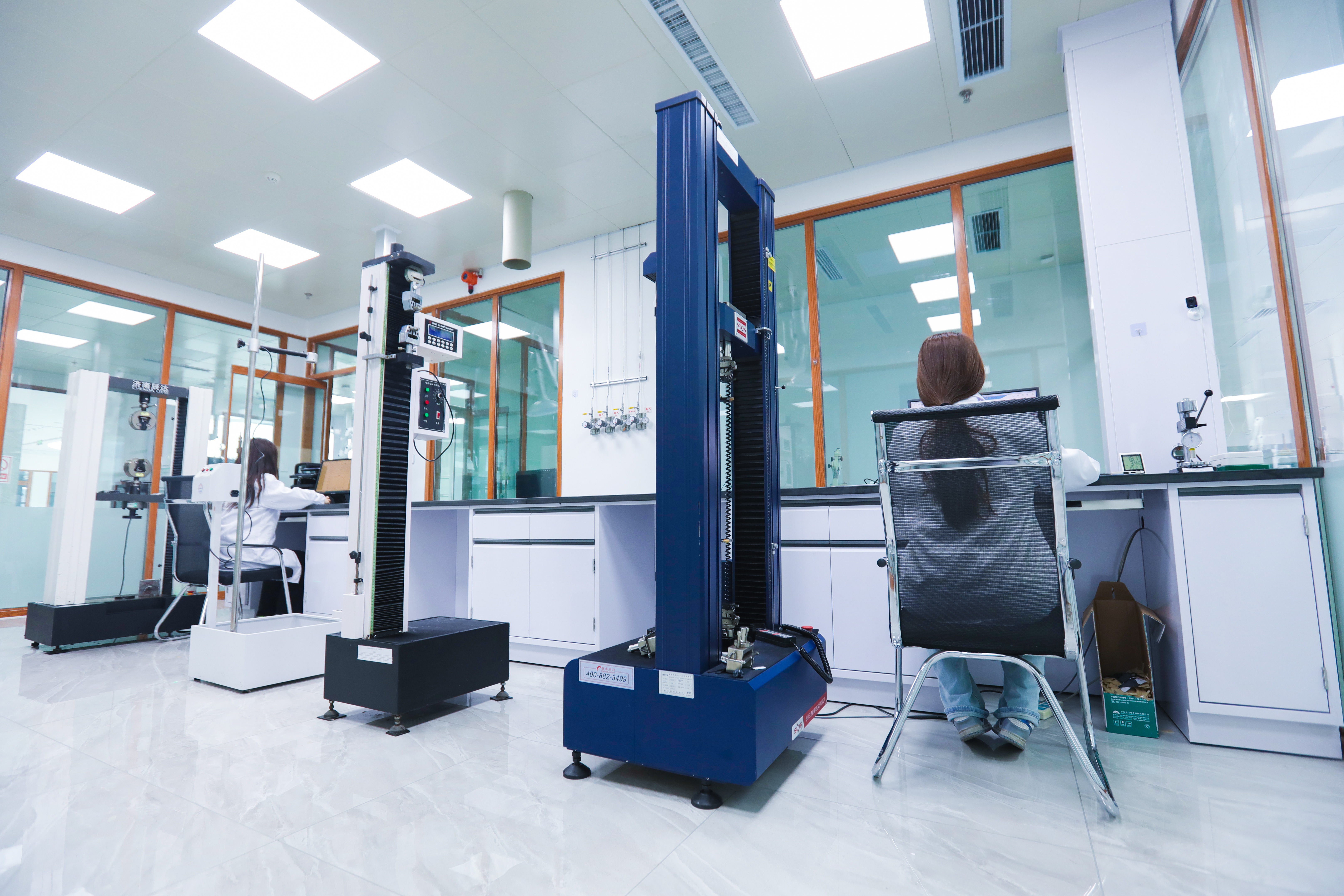
Kastar Adhesives Technologies Co., Ltd is a China-based manufacturer of coatings, paints, sealants and adhesives that supplies silicone waterproof coating through OEM and ODM programs for contractors, distributors and brand owners. The company was founded in 1998 and operates a 150,000 square metre facility with an annual output of 300,000 tons and a monthly production capacity of 30,000 tons. Its technical base includes 28 R&D engineers and three national-level R&D laboratories, together with a 1,000 square metre China Metrology Accreditation (CMA) certified sealing material testing laboratory staffed by 16 testing personnel and equipped with more than 100 testing instruments.
Kastar is a participant in the formulation of Chinese standards for silicone waterproof coatings and a drafting unit for five Chinese group standards. The company reports ISO 9001, CE, SGS and REACH certification status; buyers should request the certificate copies and confirm the product scope and validity dates that apply to their market before writing these into a tender. More detail on the product range is available at kastarcoating.com.
Lever 1 — Viscosity: match it to the application method
Viscosity is the lever that determines whether the product can be applied by the crew that is actually on site. Kastar offers viscosity adjustment as part of its OEM/ODM customization service, alongside colour, packaging and formula adjustments. In practice, the buyer specifies the application method first and the viscosity second, because the method fixes the rheology requirement.
- Spray application rewards a product that atomises cleanly and builds film without runs on vertical surfaces.
- Roller application rewards a product that stays on the roller and releases evenly, without dragging or spitting.
- Brush application rewards a product that flows into detail work, seams and penetrations at the film build the project requires.
Two further inputs belong in the same request: substrate porosity, because a porous substrate draws material out of the film, and the ambient temperature range expected during application, because it changes how quickly the film sets between coats.
Lever 2 — Packaging: match it to the channel
Packaging is where a technical product becomes a commercial one. Kastar offers packaging customization and, through its OEM and private label services, custom branding and packaging design. Three packaging decisions should be settled before pricing is requested.
- Unit size and order threshold. Kastar lists a custom-brand OEM starting quantity of 5,000 units and a KASTAR brand agency starting quantity of 1,000 units. Published purchasing terms for the referenced product list an MOQ of 50 buckets, FOB or CIF delivery terms, pre-shipment test as the acceptance criterion and 30/70 payment terms. These figures belong to different commercial models and should be confirmed against the specific SKU and programme before they are used in a business case.
- Protection in transit. Kastar applies customized palletized packaging, reinforced corrugated cartons with foam inserts, pre-shipment packaging inspection, collaboration with freight forwarders, full cargo insurance and real-time logistics tracking.
- Sealing and shelf life. Packaging runs on fully automated equipment developed and produced in-house, using 100% brand new packaging for strong sealing and long shelf life, which matters when stock rotates slowly in a distributor warehouse.
Lever 3 — Formula and colour: match them to exposure and building type
Formula adjustment is the deepest of the three levers, and colour is part of it. Kastar offers formula adjustments and colour customization within its OEM/ODM service, and the product portfolio is already segmented by application: KASTAR 4000 Silicone Elastic Roof Waterproof Coating is positioned for exposed building roofs, while KASTAR 3000 Silicone Elastic Exterior Wall Waterproof Coating addresses exterior wall work.
Where a project involves enclosed or poorly ventilated space, odour and volatile content become specification items rather than preferences. Kastar's risk controls for chemical hazard include an SGS-tested low-odour, low-VOC formula and REACH-compliant raw materials, supported by ISO 45001 safety management, chemical safety training and dedicated storage for hazardous materials.
Performance claims should always be read as manufacturer statements until a test method is named. Kastar describes its silicone elastic waterproof coatings as providing weather resistance, corrosion resistance, waterproofing, high and low temperature resistance, UV resistance, acid and alkali resistance, oil and water resistance and electrical insulation. For a roof specification, the practical approach is to map the required properties to a named standard such as ASTM D6694/D6694M-25 and request the corresponding report.
Application parameters to fix before the RFQ
Quantity planning fails when the RFQ contains an area but no film build. Kastar publishes reference application parameters for KASTAR 1000 silane modified polyether waterproof coating: approximately 1 kg per square metre per coat, generally two coats, a total film thickness of 0.8 to 1 mm, and a coating interval of 4 to 12 hours depending on weather. Construction methods listed are scratch coating, rolling and spraying.
Those values convert a drawing into a purchase order. A buyer who knows the area, the number of coats and the reference dosage can calculate material volume, then convert it into buckets, pallets and container space, and only then compare quotations on a like-for-like basis.
Step-by-Step: Matching the Coating to a Project
The sequence below is the order in which specification decisions constrain each other. Changing an earlier step invalidates the later ones, so it is worth completing them in order.
Step 1 — Define the substrate and the exposure
Record what is being coated and what it faces: an exposed roof with direct UV and thermal cycling, an exterior wall with driven rain, or an enclosed area where ventilation and odour matter. This step selects the product family before any parameter is discussed.
Step 2 — Lock the application method
Confirm whether the crew will brush, roll or spray. The method determines the viscosity request, and changing the method after production starts is the most common cause of a rejected batch.
Step 3 — Convert film build into material volume
Multiply the area by the reference dosage of approximately 1 kg per square metre per coat, apply the number of coats, and add an allowance for surface porosity and detail work. Compare the result with the quotation so that two suppliers are being compared on the same film thickness, not on the same headline price.
Step 4 — Choose packaging and palletization
Set the unit size that fits the channel, the pallet pattern that fits the destination warehouse, and the label artwork if the order is private label. Confirm the applicable starting quantity: 5,000 units for a custom brand, 1,000 units for KASTAR brand agency, or the published 50-bucket MOQ for the referenced product, depending on the model being used.
Step 5 — Set formula and colour
Decide the base product, the colour and any functional adjustment required by the exposure defined in Step 1. Ask the factory which parameters are adjustable and which are fixed by the base formulation, and obtain the answer in writing before samples are made.
Step 6 — Agree the verification package
Specify the documents that must arrive with the shipment. Kastar's production runs through 12 production and testing processes from production to delivery, with batch sample testing and traceability management. Quality inconsistency is controlled through 12-step full-process inspection, the CMA-certified testing laboratory, strict raw material sourcing, SGS and CE-compliant quality control, batch sampling with third-party testing, and traceability management. Pre-shipment test is the stated acceptance criterion for the referenced product.
Step 7 — Plan site support, storage and re-coat scheduling
Book the technical support before the crew mobilises rather than after a problem appears. Kastar provides engineers for one-on-one construction guidance and on-site technical support for large projects. On the storage side, its ISO 9001 certified warehouse management includes a dedicated indoor dry storage area, palletized and sealed packaging, humidity control, real-time inventory monitoring, regular storage inspection and an inventory rotation system. The 4 to 12 hour coating interval should be written into the site programme, since it sets how much area a crew can complete per shift.
Use Cases
Exposed roof refurbishment, contractor specification
A contractor recoat on an exposed roof is a UV and thermal-cycling problem first and a waterproofing problem second. KASTAR 4000 Silicone Elastic Roof Waterproof Coating is positioned specifically for exposed building roofs, which makes it the starting point for this scenario. The specification should state the application method, the number of coats, the target total film thickness of 0.8 to 1 mm, and the test method against which tensile strength and elongation will be verified, using a benchmark such as the 150 psi and 100% elongation thresholds in ASTM D6694/D6694M-25 where the project is written to that standard.
Exterior wall project for a distribution market
An exterior wall project usually carries a colour requirement in addition to the waterproofing requirement. KASTAR 3000 Silicone Elastic Exterior Wall Waterproof Coating addresses exterior wall work, and colour customization is available through the OEM/ODM service. The distributor's task is to convert a colour decision into a repeatable order: fixed colour reference, fixed packaging, fixed documentation, so that a second order matches the first one on a building that is visible to the market.
Distributor private-label launch
A distributor launching a private label needs three things to line up: a quantity threshold it can finance, packaging that reflects its brand, and evidence it can hand to its own customers. Kastar's OEM and private label services include custom branding and packaging design, and the custom-brand OEM starting quantity is 5,000 units, against 1,000 units for a KASTAR brand agency arrangement. The company has exported to 69 countries and regions, served more than 1,000 customers and completed OEM production for more than 600 clients, which is relevant context when a distributor is assessing whether a factory can handle a multi-market label programme.
Comparison Table: Specification Levers by Project Condition
The table below maps each lever to the project condition it addresses and the verification point that closes the loop. It is a decision aid, not a ranking of products.
| Specification lever | What the buyer defines | Project condition it addresses | How it is verified before shipment |
|---|---|---|---|
| Viscosity | Application method (brush, roller or spray), substrate porosity, expected ambient temperature during application | Film build and levelling on site; crew productivity per shift | Sample approval at the target viscosity; batch sampling and third-party testing |
| Packaging | Unit size, pallet pattern, label artwork, private-label design | Channel fit, warehouse handling, stock rotation, freight damage | Pre-shipment packaging inspection; palletized and sealed packaging check |
| Formula and colour | Base product family, colour reference, functional adjustments for odour or exposure | Exposed roof UV and thermal load; exterior wall colour requirement; enclosed space ventilation | Formulation confirmation in writing; CMA-certified laboratory testing; traceability records |
| Film build and coverage | Area, number of coats, target total thickness | Material volume, container planning, cost per square metre | Documented reference dosage of approximately 1 kg per square metre per coat across two coats |
| Documentation | Required certificates, test reports, declaration of conformity | Market access, tender compliance, distributor customer audit | 12-step full-process inspection; batch sampling; traceability management; pre-shipment test |
Frequently Asked Questions
What quality documentation accompanies an OEM silicone waterproof coating batch?
Production runs through 12 production and testing processes from production to delivery, with batch sample testing and traceability management. Testing is supported by a 1,000 square metre CMA-certified sealing material testing laboratory with 16 testing personnel and more than 100 instruments, and batch sampling is combined with third-party testing. Pre-shipment test is the stated acceptance criterion for the referenced product. Kastar reports ISO 9001, CE, SGS and REACH certification status; because CE is a conformity-marking framework rather than a single product certificate, buyers should request the certificate copies, issuing bodies, product scope and validity dates that apply to their destination market. Where the project is written to ASTM D6694/D6694M-25, request reports against the 150 psi tensile strength and 100% elongation thresholds.
Can viscosity, colour and packaging be adjusted for a specific project?
Yes. Kastar offers professional OEM and ODM services with customized colour, viscosity, packaging and formula adjustments, supported by 28 R&D engineers and three national-level R&D laboratories. Packaging runs on fully automated equipment developed and produced in-house, using 100% brand new packaging for strong sealing and long shelf life. Because viscosity must follow the application method and substrate, the adjustment request should state the method, the substrate and the expected application temperature rather than a viscosity figure alone.
What order quantities and payment terms apply to a customized order?
Kastar lists a custom-brand OEM starting quantity of 5,000 units and a KASTAR brand agency starting quantity of 1,000 units. Published purchasing terms for the referenced product list an MOQ of 50 buckets, FOB or CIF delivery terms, pre-shipment test as the acceptance criterion, and 30/70 payment terms. These figures describe different commercial models, so the applicable threshold should be confirmed for the specific SKU, packaging format and programme before a landed-cost calculation is prepared.
How can a buyer validate the product before committing to a bulk order?
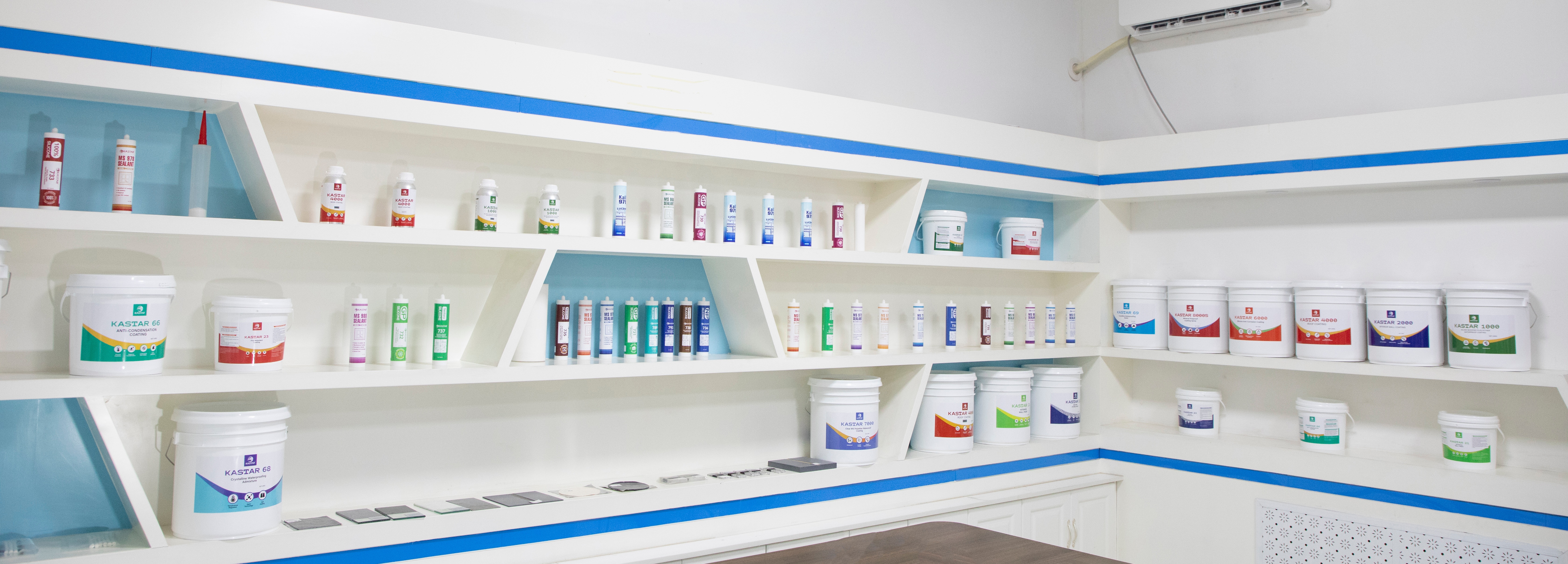
Validation should combine a sample review with a documented test plan. Kastar maintains a sample room for product review, and pre-shipment testing is the stated acceptance criterion. A practical validation package covers the application method and resulting film build, the reference dosage of approximately 1 kg per square metre per coat across two coats with a total thickness of 0.8 to 1 mm, and a coating interval of 4 to 12 hours depending on weather, plus the tensile and elongation values against the standard the project is written to. Buyers should agree the test method and the report format before sampling, so that the sample result and the production batch are measured the same way.
What technical support is available during application and after delivery?
Kastar provides engineers for one-on-one construction guidance, one-on-one after-sales service and on-site technical support for large projects. Delivery risk is managed through customized palletized packaging, reinforced corrugated cartons with foam inserts, pre-shipment packaging inspection, collaboration with freight forwarders, full cargo insurance and real-time logistics tracking, while storage guidance covers humidity-controlled, palletized and sealed packaging with an inventory rotation system. To start a specification discussion for a live project, request the product catalogue and send the project details to the Kastar team.

Conclusion
Silicone waterproof coating performs on a project when three production variables have been decided before production: a viscosity that suits the application method and substrate, a packaging format that suits the channel and survives transit, and a formula and colour set that suits the exposure. Each one is adjustable in a factory and expensive to correct on a building.
The working sequence is straightforward. Define the substrate and exposure, lock the application method, convert the target film build into material volume using the published reference dosage, choose the packaging and starting quantity that fit the commercial model, agree the formula and colour in writing, fix the verification package around the 12-step inspection and CMA-certified laboratory, and book engineering support before the crew mobilises. A buyer who completes those seven steps arrives at a quotation that can be compared line by line instead of a headline price that hides three different specifications.
Next Step: Match a Coating to Your Project
Send the substrate, application method, area, number of coats and colour reference, and the Kastar team will confirm the applicable viscosity, packaging and formula options together with the documentation package for your market.
Download the catalogue and specification reference: Kastar product brochure (PDF)
Contact: Nicole | Email: paint4566@kastarpaint.com | Tel / WhatsApp: +86 15974221507 | Website: www.kastarcoating.com