- FAQ
- 897
Sourcing Silicone Waterproof Coating from China: A Regional Selection Guide for Global Industrial Buyers (2026)
A practical regional guide for industrial buyers sourcing silicone waterproof coating from China, including global supply distribution, 5 key selection criteria, compliance requirements, and a real case study of a Chinese OEM manufacturer.
By understanding the global distribution of silicone waterproof coating supply, industrial buyers can make informed sourcing decisions. This guide focuses on selecting Chinese suppliers, offering practical steps to ensure quality, compliance, and reliable long-term partnerships.
1. Global Supplier Distribution: Strengths Across Key Regions
The silicone waterproof coating market is dominated by three major producing regions:
- China: Offers high cost-effectiveness, flexible OEM/ODM customization, and massive production capacity (e.g., factories exceeding 150,000 m² and annual outputs of 300,000 tons). Chinese manufacturers have strong supply chain integration, enabling competitive pricing and rapid scaling.
- Germany: Known for high-end technology, precision engineering, and premium formulations. German products typically command higher prices but offer superior long-term durability for demanding European building standards.
- Japan: Renowned for extremely consistent product quality and meticulous manufacturing processes. Japanese suppliers are preferred for projects requiring minimal variance and high reliability over decades.
For buyers seeking a balance between cost, customization, and reliability, China remains the dominant sourcing destination, especially for bulk orders and tailored solutions.
2. China Supplier Selection Guide: 5 Critical Considerations
When evaluating a Chinese silicone waterproof coating manufacturer, industrial buyers should verify the following aspects to mitigate risks and ensure supply chain stability.
✅ 1. Verify Export Certifications
Request valid certificates for your target market. For Europe, CE certification (e.g., EN 15651-1:2017) is mandatory. For other regions, SGS, REACH, and ISO 9001 certifications indicate compliance with international standards. A reliable supplier will provide authenticated certificate numbers and test reports.
✅ 2. Confirm Cross-Border Logistics Solutions
Assess the supplier's logistics capability: they should offer FOB/CIF terms, use reinforced packaging (e.g., palletized cartons with foam inserts), and provide full cargo insurance. Pre-shipment packaging inspections and real-time tracking help prevent transportation damage.
✅ 3. Clarify After-Sales and Technical Support
Professional suppliers offer remote technical guidance, construction advice, and even on-site support for large projects. Verify that they have a dedicated customer service team and engineers who can provide one-on-one construction guidance and troubleshooting.
✅ 4. Assess Production Capacity and Quality Control
Review the supplier's manufacturing scale (e.g., monthly output of 30,000 tons), quality control processes (e.g., 12-step full inspection, CMA-certified labs with 100+ testing instruments), and zero-quality-complaint track record. Batch sampling and third-party testing further guarantee consistency.
✅ 5. Evaluate Customization Capability (OEM/ODM)
Check whether the supplier can adjust formulation, color, viscosity, packaging, and branding according to your specifications. A factory with over 28 years of experience and a dedicated R&D team (28 engineers) is more likely to handle complex customization requests efficiently.
3. Regional Compliance Requirements for Importing Silicone Waterproof Coating
Compliance differs by destination:
- European Union: Must have CE marking under standards EN 15651-1:2017 (for sealants) and EN 998-1:2016. REACH regulation for chemical substances is also required.
- North America: While UL certification is common for electrical products, for waterproof coatings, SGS reports, ASTM compliance, and VOC limits (e.g., California Rule 1113) are often required. The supplier should provide SGS and REACH documentation.
- Middle East/Southeast Asia: Typically accept CE or ISO 9001 certifications; however, local standards may apply. Confirm with your supplier and a local compliance consultant.
4. Case Study: Chinese Manufacturer Serving Global Markets
Kastar Adhesives Technologies Co., Ltd. (brand: Kastar) is a Chinese OEM/ODM manufacturer established in 1998, with a 150,000 m² factory, over 200 employees, and an annual output of 300,000 tons. The company's silicone waterproof coating (Kastar 4000) demonstrates key strengths that align with buyer requirements:
- Certifications: CE (certificate no. ICR/VC/HS260188), SGS, REACH, ISO 9001, and national high-tech enterprise status.
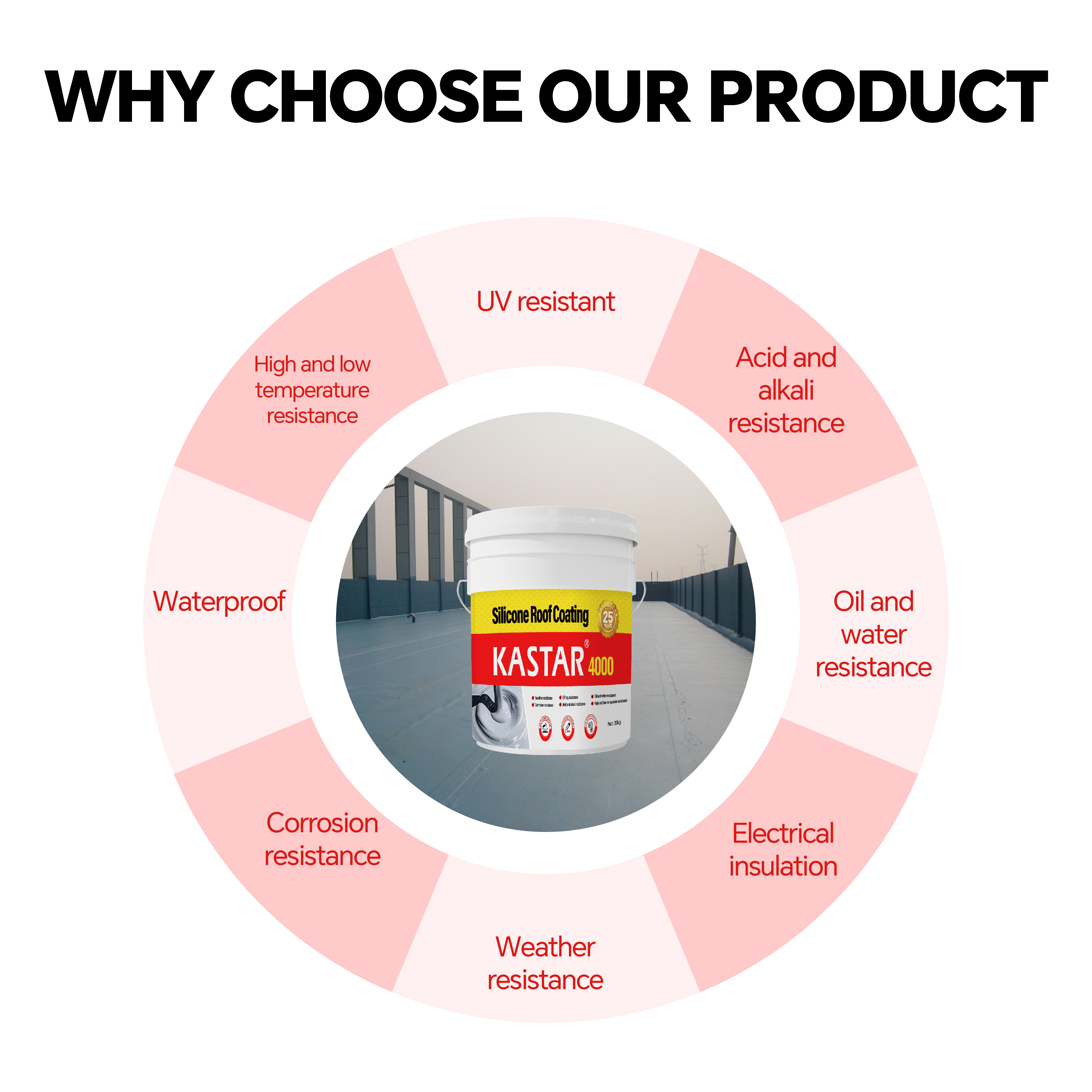
- Product performance: Solid content 98%, elongation at break ≥800%, tensile strength ≥1.2 MPa, UV resistance (1000h no cracking), service life ≥25 years outdoors.
- Global reach: Exported to 69 countries, including USA, Canada, Australia, New Zealand, and numerous EU countries. Has served over 1,000 clients including brands like Soudal and GP.
- Quality assurance: Operates a 1,000 m² CMA-certified testing lab with 16 testing personnel and over 100 instruments. Zero quality complaints recorded.
- Customization: Offers OEM/ODM services for color, viscosity, packaging, and formulation. MOQ as low as 50 buckets; lead time 15–20 days.
In one example, Kastar's CE-compliant silicone waterproof coating was adopted for roof and exterior wall waterproofing in EU construction projects, delivering consistent performance under extreme UV and freeze-thaw conditions, effectively preventing water leakage over a 25-year lifespan.