- FAQ
- 673
Top 7 Silicone Waterproof Coatings for Export: How to Shortlist Reliable Suppliers
A ranked shortlist of seven criteria buyers should use to evaluate silicone waterproof coating suppliers for export, covering CMA lab testing, 12-step inspection, certification and logistics.
Top 7 Silicone Waterproof Coatings for Export: How to Shortlist Reliable Suppliers
Shortlisting a silicone waterproof coating supplier for export is a repeatability test, not a specification test. The seven criteria below are ranked by how strongly they predict that shipment twelve will match the sample you approved — and each one is paired with the evidence a reliable supplier should be able to produce.
Distributors, importers, and private-label brand owners buying for the United States, Canada, Australia, and New Zealand reach the same decision point: several suppliers pass the technical review, several quotations land within a workable range, and the final choice then depends on manufacturing discipline. That is what this ranking measures.
The list is deliberately about criteria rather than brand names. Criteria can be verified in a factory audit, a batch report, and a pilot order; brand claims usually cannot.
Why Export Buyers Struggle to Compare Silicone Waterproof Coating Suppliers
Most sourcing exercises start with price per kilogram or per litre, then narrow by technical data sheet. Both steps are necessary, and neither is sufficient. Price per kilogram does not capture rework, premature re-coating, or a rejected container. A data sheet does not reveal whether the formulation behind it stays stable across batches.
Three failure patterns recur in export sourcing of waterproof coatings:
- Specification parity. Competing suppliers publish near-identical performance tables, so the documents stop differentiating anyone.
- Sample-to-bulk drift. The sample receives special attention, then viscosity, colour, or cure speed shifts once the order moves to the main production line.
- Documentation gaps. Certificates are held by a trading entity rather than the plant that manufactures the coating, or the safety data sheet does not match the formulation actually shipped.
At the decision stage, the more useful comparison is between supplier systems: who performs the testing, how many process checkpoints exist between raw material and sealed container, how a batch is traced after delivery, and how the product survives transport and storage. The seven ranked criteria below follow that logic — from the strongest predictor of consistency down to the final commercial safeguard.
Industry Background: Where Silicone Waterproof Coatings Sit in the Export Market
Silicone waterproofing sits inside a coating category that has expanded steadily as construction specifiers look for elasticity and UV stability rather than short-cycle surface sealing. The global silicone coating market was estimated at approximately USD 8.77 billion in 2024 and is projected to reach USD 11.27 billion by 2033 (Grand View Research). Roof coatings alone accounted for roughly USD 7.03 billion in 2024 (Credence Research). Within the composition-type segment, 100% silicone elastomeric coatings held a 41.02% share in 2025, a position the market attributes to their waterproofing and UV resistance (Mordor Intelligence). Asia-Pacific accounted for 38.5% of silicone coating revenue in 2025 (Dataintelo).
Read market numbers with care. Published baseline estimates for the same period differ substantially between research houses — USD 8.77 billion for 2024 (Grand View Research), USD 6.9 billion for 2024 (Strategic Market Research), and USD 5.28 billion for 2025 (Dataintelo). Treat them as directional evidence of category growth, not as one precise figure.
Two regulatory currents shape what export buyers now ask for. First, North American specifiers commonly reference ASTM C920, the standard specification for elastomeric joint sealants, and ASTM C1184 for structural applications (ASTM International). Second, low-solvent chemistry is moving from a preference toward a requirement: solvent-less and UV-cured silicone formulations can reduce VOC emissions by 60–80% compared with traditional solvent-based platforms.
The practical consequence for shortlisting is that the number of suppliers claiming "100% silicone" has grown faster than the number able to prove it. Verification capability — a laboratory, a process map, retained batch records — becomes the real differentiator.
The Top 7 Shortlisting Criteria, Ranked
Each criterion is ranked by the risk it removes. A supplier that is weak on criterion one can sometimes be rescued by strong downstream inspection; a supplier that is weak on criteria one and two rarely can.
| Rank | Shortlisting criterion | Risk it removes | Evidence to request |
|---|---|---|---|
| 1 | Accredited in-house testing laboratory | Undetected batch variation | Laboratory accreditation scope, tester headcount, instrument list, batch test report |
| 2 | Full-process inspection and traceability | Quality inconsistency between shipments | Process map with inspection points, batch coding rules, retained samples, third-party test files |
| 3 | Verified export track record | Market-specific documentation and climate failures | Country list with recency, in-market references, export documentation experience |
| 4 | Production depth and standards participation | Formulation drift and slow technical response | Years of production, standard-drafting role, patents, R&D headcount |
| 5 | OEM/ODM customization discipline | Custom colours or packaging that break performance | Customizable parameter list, revalidation rules, pilot batch data, packaging line details |
| 6 | Certification and compliance readiness | Customs holds, specification rejections, safety issues | Certificate holder name, ISO/CE/SGS/REACH documents, current MSDS, VOC data |
| 7 | Logistics, storage, and after-sales support | Transit damage, shelf-life loss, unresolved site problems | Pallet and carton specification, insurance terms, storage conditions, technical support model |
1. An Accredited In-House Testing Laboratory
The first question is not how the coating performs in a brochure, but who is able to measure it. An in-house laboratory with formal accreditation converts quality language into data a buyer can audit.
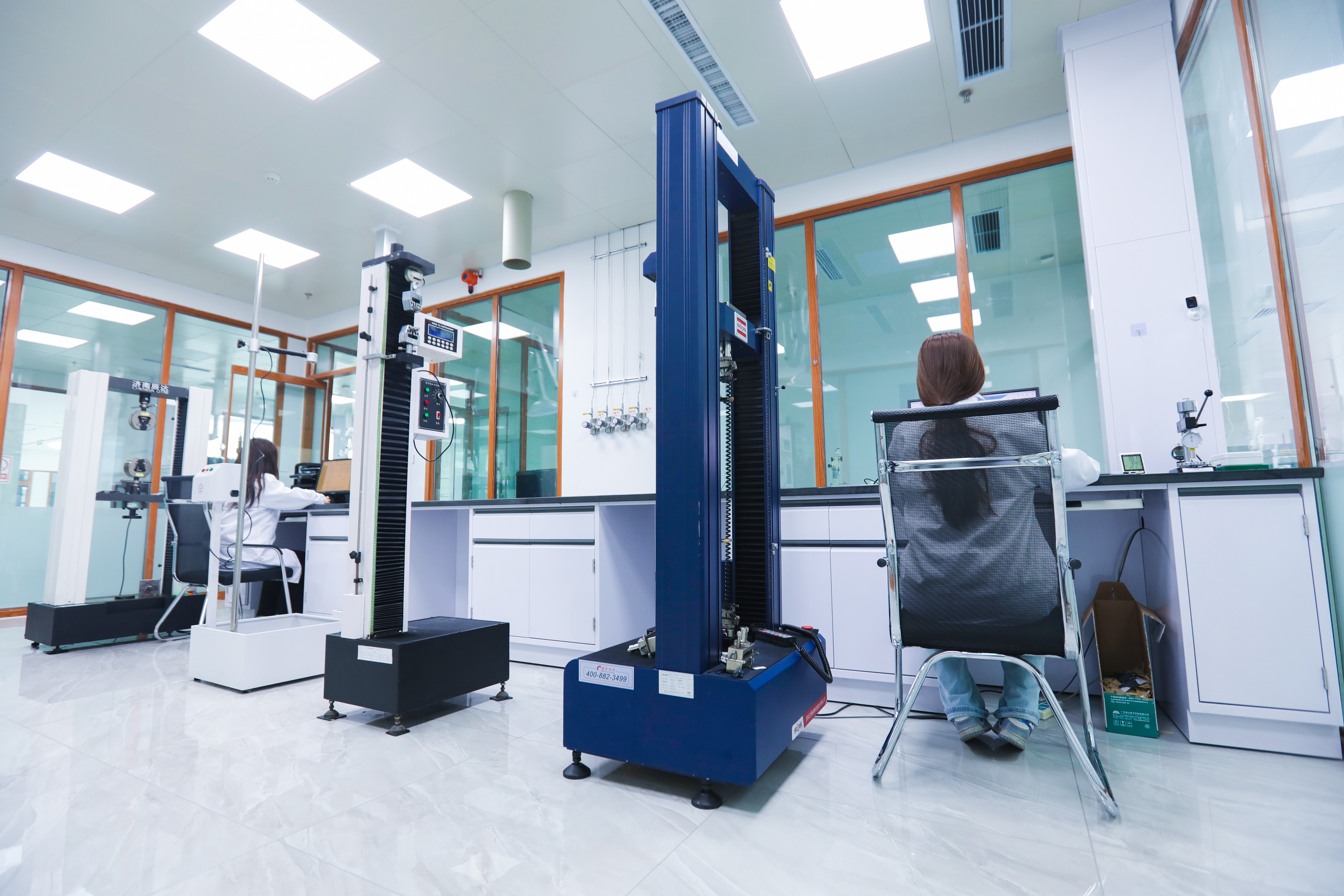
Kastar, formally Kastar Adhesives Technologies Co., Ltd, operates a 1,000 m² sealing material testing laboratory accredited under China Metrology Accreditation (CMA), staffed by 16 testing personnel and equipped with more than 100 testing instruments and equipment. The company also reports zero quality complaints. That complaint record belongs here rather than in a marketing section because it is a downstream outcome of laboratory capability: a plant testing every batch across 100+ instrument points catches variation before a container leaves the yard.
What to request: the accreditation scope, the instrument and headcount list, and a batch test report from a production run comparable to your order — not a generic product certificate.
2. 12-Step Full-Process Inspection and Batch Traceability
A single final inspection tells you whether one container passed. Twelve inspection points tell you where a failure would have originated. Kastar's silicone waterproof coating production runs through 12 production and testing processes from production to delivery, with batch sample testing applied to hold quality across the entire process, supported by traceability management, strict raw material sourcing, and SGS/CE-compliant quality control.
For an importer, traceability is the clause that makes any quality claim actionable. If a distributor reports a cure problem months after delivery, the batch code should lead back to the raw material lot, the production run, and the retained sample.
What to request: the process map with the twelve checkpoints marked, the batch coding rules, the sample retention period, and the supplier's third-party retesting arrangements.
3. A Verified Export Track Record in Comparable Climates
Export experience is not a single number; it is a set of market-specific capabilities. Kastar's silicone waterproof coating business is 100% export-oriented, with main markets in the United States, Canada, Australia, and New Zealand, and an export record covering 69 countries and regions serving more than 1,000 customers. The company has held Alibaba Gold Supplier status for 19 years.
Those four markets matter even for buyers elsewhere: US, Canadian, Australian, and New Zealand projects combine high UV exposure, coastal salt, and freeze-thaw cycling — the same conditions that shorten coating life in most export destinations.
What to request: a country list with shipment recency, two in-market references, and confirmation of who prepared the export documentation for those markets.
4. Production Depth and Standards Participation
Twenty-eight years of production experience is a useful filter, but the more discriminating question is whether a supplier participates in writing the standards it is measured against. Kastar is a participant in the formulation of Chinese standards for silicone waterproof coatings, the drafting unit for five Chinese group standards, and the initiator and formulator of Chinese standards for silicone sealants.
That role has a practical effect on quality control: a formulator of test standards tends to build inspection around test methods themselves rather than around a final pass or fail. Supporting evidence includes three invention patents — a device/process for silicone waterproof coatings, a method for preparing a siloxane-terminated polymer homopolymer and a moisture-curing composition, and a device/process for MS waterproof coatings — along with three national-level R&D laboratories, 28 technical R&D personnel, and joint development with Tsinghua University supported by annual technological iteration.
What to request: patent references, the standards the supplier helped draft, and the R&D headcount assigned to formulation stability rather than to new product launches.
5. OEM/ODM Customization Depth Without Performance Drift
Most distributors shortlist with private label in mind, which makes customization depth a commercial criterion rather than a technical footnote. Kastar provides OEM/ODM customization covering colour, viscosity, packaging, and formula adjustments, and reports OEM production for more than 600 clients, including brands such as Soudal, GP, BYP, G2500, MORRIS, and HYCHEM.
Customization creates its own risk, because a changed colour or viscosity can shift cure behaviour, adhesion, and shelf life. Two elements here reduce that exposure. Packaging is produced on fully automated equipment developed and manufactured in-house, using 100% brand-new packaging with strong sealing and long shelf life — the container is part of the quality system, not an afterthought. And colours and packaging specifications are customizable within the documented production process, so a specification agreed for the first order can be repeated on reorders.
What to request: a written list of customizable parameters, confirmation of which parameters require revalidation of performance data, and a pilot batch produced on the standard line rather than a laboratory batch.
6. Certification and Compliance Readiness
Certification is the criterion most often checked and least often verified, because the question is not whether a certificate exists but whose name is on it and what scope it covers.
Kastar is ISO 9001 certified and recognised as a national high-tech enterprise; its products hold SGS, REACH, and ISO 9001 certification together with CE certification. Chemical safety is managed through MSDS management, ISO 45001-certified safety management, an SGS-tested low-odor and low-VOC formula, and REACH-compliant raw materials — relevant to Australian and New Zealand import expectations as well as to North American jobsite rules. For North American projects, buyers typically cross-check silicone coating and sealant compliance against ASTM C920 and ASTM C1184.
What to request: certificates showing the manufacturing entity as holder, the scope of the CE marking, the current MSDS revision, and VOC test documentation for the specific formulation you intend to import.
7. Logistics, Storage, and After-Sales Support
The last ranked criterion decides whether the first six survive the journey. Coatings are damaged in three predictable ways: transit, storage, and site application.
For transit, Kastar's control set includes customized palletized packaging, reinforced corrugated cartons with foam inserts, collaboration with reliable freight forwarders, full cargo insurance, pre-shipment packaging inspection, and real-time logistics tracking. For storage, the company applies ISO 9001 certified warehouse management, a dedicated indoor dry storage area, palletized and sealed packaging, real-time inventory monitoring, regular storage condition inspection, and an inventory rotation system — the mechanism that keeps a distributor from receiving an aged pallet. For site issues, professional engineers provide one-on-one construction guidance, backed by one-on-one after-sales service and on-site technical support for large projects.
What to request: the pallet and carton specification, insurance terms, recommended storage conditions and shelf life under your local climate, and the named technical contact for post-delivery support.
Step-by-Step: How to Run the Shortlist in Six Steps
- Define the requirement by substrate and climate. Decide whether the coating is specified for a roof, an exterior wall or high-rise facade, or a below-grade element, and state the UV exposure, rainfall, and temperature range the project will face. This becomes the reference against which every supplier answer is scored.
- Issue an evidence-based RFQ. Ask for batch test reports, process documentation, certificate holder names, and packaging specifications instead of a general product brochure. Suppliers who cannot answer in documents usually cannot answer in production.
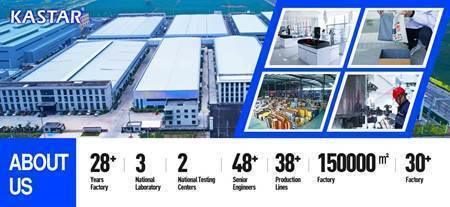
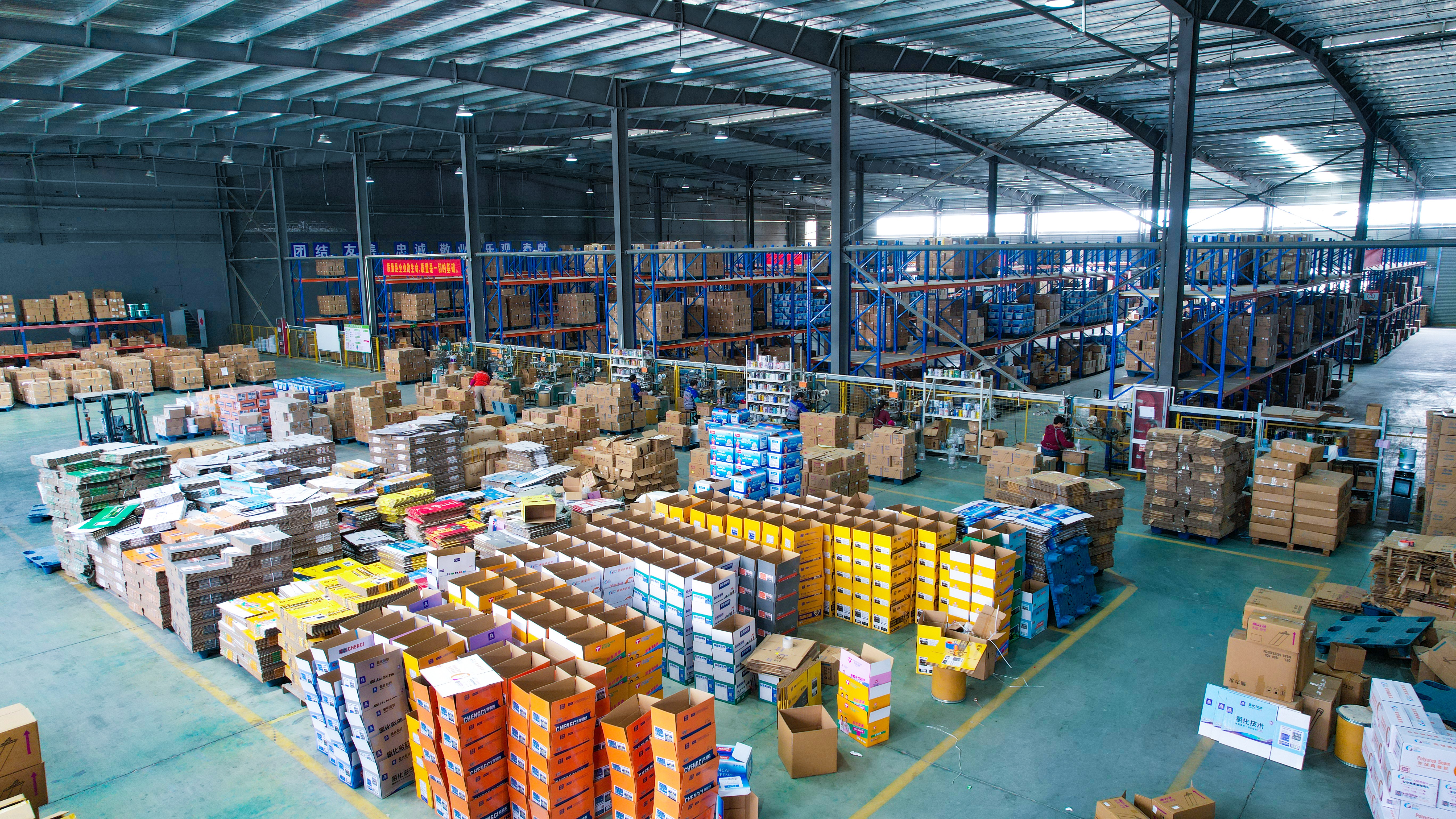
- Audit the manufacturing and testing footprint. Confirm factory size, annual output, laboratory accreditation, and inspector headcount. Kastar, for reference, operates a 150,000 m² factory with annual output of 300,000 tons, a 1,000 m² CMA-certified laboratory, and 16 testing personnel.
- Validate with production-run samples. Test elongation, adhesion, and UV behaviour on samples produced on the standard line, then compare the results with the supplier's own reported figures, such as a 0% bubbling rate under a 1,000-hour UV test.
- Compare cost over service life, not per drum. Silicone waterproof coating carries a 5%–15% higher initial material cost than acrylic or polyurethane alternatives, while long-term maintenance cost runs about 70% lower, with a maintenance-free period over 10 years, no re-coating required, and a warranty of more than 25 years. Model cost per square metre over the service life — the ranking of suppliers often changes when you do.
- Lock the agreement with inspection and traceability clauses. Fix the pallet specification, pre-shipment inspection point, batch coding, insurance terms, and the technical support channel in the contract, so the quality system you audited is the one that applies to your order.
Use Cases: Roof, Exterior Wall, and Basement Projects
Roofs and flat-roof refurbishment
Roofs are the application where silicone waterproof coating is most often specified, and the decision usually turns on heat and UV. High solar reflectivity reduces roof surface temperature and lowers air-conditioning load, while documented performance includes a 0% bubbling rate under a 1,000-hour UV test and an aging rate 30% lower than acrylic and polyurethane alternatives. For export buyers in hot or high-UV markets, those two data points are the ones to test first on a sample.
Exterior walls and high-rise facades
On vertical surfaces, movement and weathering dominate. The documented profile for silicone waterproof coating includes permanent elasticity, better weather resistance than acrylic and polyurethane alternatives, no bubbling, and no cracking, with elongation at break more than 200% higher than alternatives. High-rise projects add a logistics dimension: packaging strength, pallet stability, and site handling matter as much as the formulation.
Basement and below-grade work
The documented application profile covers roofs, exterior walls, and high-rise buildings. For basement and below-grade enquiries, buyers should confirm substrate preparation and water-pressure conditions with the supplier's technical team before specifying, since those variables sit outside a standard product data sheet. The properties a below-grade buyer evaluates are the same ones that matter above grade — permanent elasticity and resistance to cracking — and Kastar's engineers provide one-on-one construction guidance plus on-site technical support for large projects, which is the practical route to a substrate-specific answer.
Comparison Table: Silicone vs. Acrylic vs. Polyurethane Waterproof Coatings
Compared with alternatives such as acrylic and polyurethane waterproof coatings, silicone waterproof coating shows distinct advantages: better weather resistance, permanent elasticity, and no bubbling or cracking. The table below separates the documented silicone figures from the verification questions a buyer should raise about alternative chemistries.
| Comparison metric | Silicone waterproof coating (documented) | What to verify for acrylic or polyurethane alternatives |
|---|---|---|
| Weather resistance | Better weather resistance than acrylic and polyurethane alternatives | Test method and exposure duration behind the claim |
| Elasticity | Permanent elasticity; elongation at break more than 200% higher than alternatives | Elongation at break measured on the supplier's own production batch |
| UV and bubbling behaviour | 0% bubbling rate under a 1,000-hour UV test; aging rate 30% lower than alternatives | UV test hours and the standard used |
| Cracking | No cracking in the documented performance profile | Movement capability and low-temperature flexibility data |
| Surface temperature | High solar reflectivity reduces roof and wall temperature, lowering air-conditioning load | Solar reflectance value for the specific colour ordered |
| Material cost | 5%–15% higher initial material cost than alternatives | Cost per m² at the specified film thickness |
| Long-term maintenance | 70% lower long-term maintenance cost; maintenance-free for over 10 years with no re-coating needed | Re-coating interval and repair cost plan |
| Warranty horizon | Warranty of more than 25 years | Warranty terms, exclusions, and the entity that holds the warranty |
| Best-fit applications | Roofs, exterior walls, high-rise buildings | Substrate-specific adhesion data for your project type |
Note on method: the acrylic and polyurethane columns list the verification question rather than a performance figure, because verified specification data for those chemistries was not part of the source material behind this comparison. Silicone figures are expressed relative to acrylic and polyurethane baselines, as documented.
FAQ
What certifications should a silicone waterproof coating supplier hold for export orders?
At minimum, an ISO 9001 certificate held by the manufacturing entity, plus the product-level approvals your destination market expects. Kastar is ISO 9001 certified and recognised as a national high-tech enterprise, and its products hold SGS, REACH, and ISO 9001 certification along with CE certification; chemical documentation is handled through MSDS management and an SGS-tested low-odor, low-VOC formula using REACH-compliant raw materials. For North American projects, buyers typically cross-check silicone coating and sealant compliance against ASTM C920 (elastomeric joint sealants) and ASTM C1184. Always confirm that the certificate holder is the plant that will actually manufacture your order.
How can a buyer verify a factory's quality control before placing a bulk order?
Start with testing capability and process design. Kastar operates a 1,000 m² sealing material testing laboratory accredited under China Metrology Accreditation (CMA), with 16 testing personnel and more than 100 testing instruments, applies 12 production and testing processes from production to delivery, and uses batch sample testing supported by traceability management. The company reports zero quality complaints. Ask for the process map, a batch test report from a comparable production run, and the batch coding rules that would let you trace a delivered pallet back to its raw material lot.
Why does silicone waterproof coating cost more than acrylic or polyurethane alternatives?
The upfront difference is modest relative to the lifecycle difference. Silicone waterproof coating carries a 5%–15% higher initial material cost than acrylic and polyurethane alternatives but about 70% lower long-term maintenance cost, with a maintenance-free period of more than 10 years, no re-coating needed, and a warranty of more than 25 years. High solar reflectivity also lowers roof and wall temperature, reducing air-conditioning load. For distributors, the relevant number is cost per square metre over the warranty period, not price per kilogram at the port.
How should sample validation be structured before an OEM bulk order?
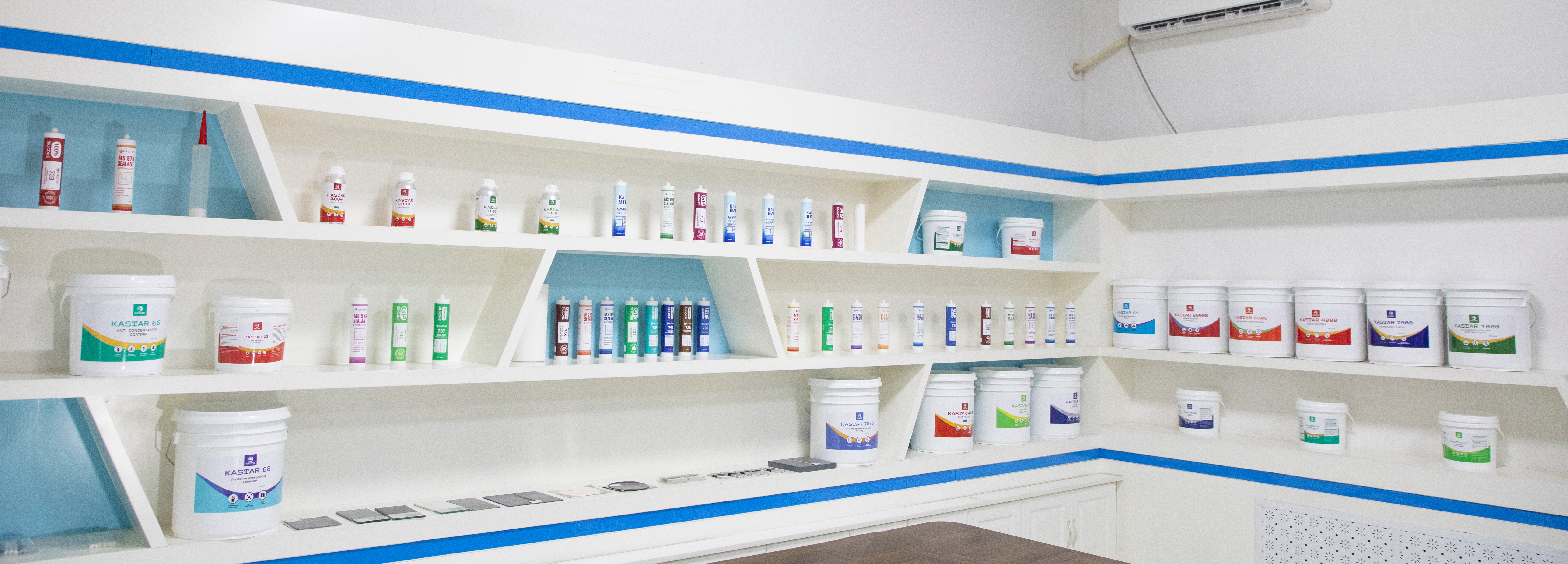
Order samples produced on the standard production line rather than a laboratory batch, and test them against the supplier's own reported figures — a 0% bubbling rate under a 1,000-hour UV test, an aging rate 30% lower and elongation at break more than 200% higher than alternatives. Confirm which customizations (colour, viscosity, packaging, formula adjustment) can be applied without changing the documented performance, and keep a sealed retained sample as the reference for the bulk shipment. Kastar supports this workflow through its sample room and batch sample testing.
How can buyers reduce lead-time and logistics risk on bulk orders?
Tie the order to manufacturing capacity and packaging control. Kastar operates a 150,000 m² factory with annual output of 300,000 tons, and uses customized palletized packaging, reinforced corrugated cartons with foam inserts, pre-shipment packaging inspection, full cargo insurance, and real-time logistics tracking; warehousing follows ISO 9001 certified management with a dedicated indoor dry storage area, real-time inventory monitoring, and an inventory rotation system. Request the pallet specification and insurance terms inside the quotation so they are contractually fixed. To begin a shortlist, request production-run samples and a quotation by emailing paint4566@kastarpaint.com or calling +86 15974221507, or download the Kastar product brochure.
Conclusion: Shortlisting Is Evidence Management
The seven criteria above are ranked by one idea: consistency is engineered, not promised. An accredited testing laboratory establishes that performance can be measured. Twelve inspection steps and batch traceability establish that it is measured repeatedly. An export record covering 69 countries and regions, including the United States, Canada, Australia, and New Zealand, shows the system works across different climates and documentation regimes. Twenty-eight years of production experience, standard-drafting participation, and invention patents indicate that the formulation is understood rather than copied. Controlled OEM/ODM customization, certificate ownership, and logistics or storage controls complete the picture.
Applied at the decision stage, these criteria turn a price-led shortlist into a risk-led one. The supplier that looks marginally more expensive per kilogram frequently becomes the lower-cost option once re-coating intervals, rejected batches, and support costs are counted.
Next step: validate the criteria on a real batch
Rather than compare data sheets, test the system. Request a production-run sample, a batch test report, and a quotation built around your target market's packaging and documentation requirements.
Contact: Nicole | Email: paint4566@kastarpaint.com | Tel / WhatsApp: +86 15974221507
Website: www.kastarcoating.com | Brochure: Download the Kastar product catalogue (PDF)