
- FAQ
- 185
What Is Silicone Waterproof Coating? A Practical Guide for Roofing and Exterior Wall Projects
Learn what silicone waterproof coating is, how it works for roofs and exterior walls, and what to check when sourcing OEM/ODM silicone waterproof coating from a factory.
What Is Silicone Waterproof Coating? A Practical Guide for Roofing and Exterior Wall Projects
Silicone waterproof coating is a liquid-applied, silicone-based membrane used to protect roofs, exterior walls, basements, expansion joints, and other building surfaces from water intrusion, UV exposure, and temperature-induced movement. For architects, contractors, distributors, and property owners, understanding what silicone waterproof coating is—and how it differs from acrylic and polyurethane alternatives—helps avoid premature failure, costly rework, and misinformed product selection.
This guide covers the fundamental properties of silicone waterproof coatings, what they do on a building enclosure, how to assess a supplier for OEM or ODM programs, and what to look for when buying bulk quantities for roofing or exterior wall projects.
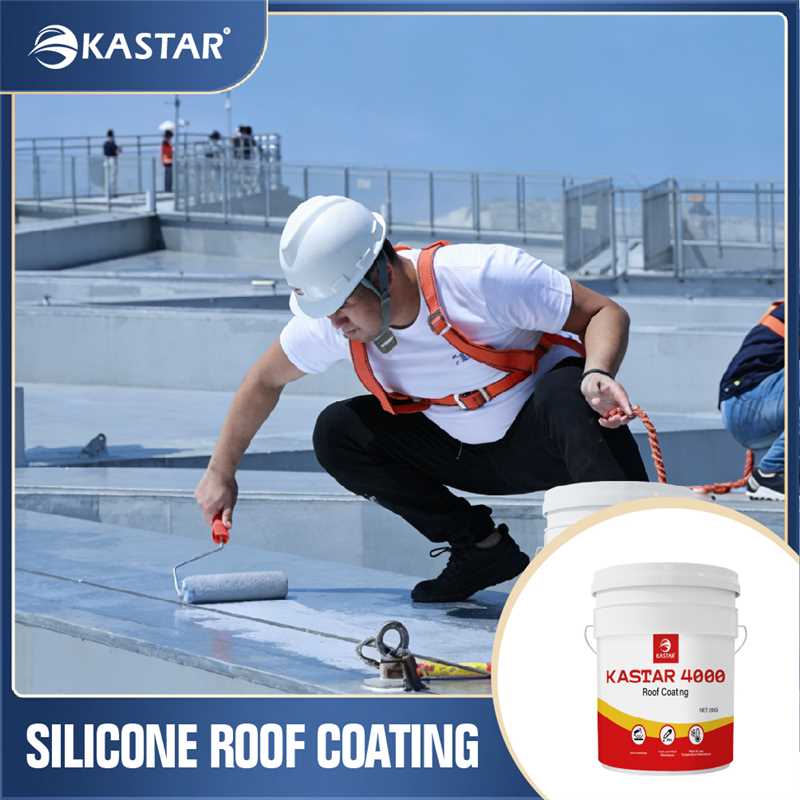
What Problem Does Silicone Waterproof Coating Solve?
Building envelopes constantly face water, heat, UV radiation, freeze-thaw cycles, and structural movement. When water penetrates a roof membrane or an exterior wall, it can damage insulation, rot structural members, corrode metal flashings, and create conditions for mold growth. Repairing these failures is far more expensive than preventing them with a durable waterproofing membrane.
Silicone waterproof coating addresses four main failure points:
- Water intrusion: A seamless, cured silicone membrane blocks rainwater and standing water from reaching the substrate.
- UV degradation: Silicone chemistry resists UV-induced cracking, chalking, and peeling better than many organic coating systems.
- Structural expansion: High elongation allows the coating to bridge hairline cracks and accommodate thermal movement without tearing.
- Weather exposure: The coating stays flexible in both very cold and very hot conditions, reducing the chance of embrittlement or softening.
For roofing engineering specifically, silicone waterproof coating is often specified as a standalone roof coating or as the finish membrane over insulation, metal, concrete, or aged single-ply systems.
How Is the Silicone Waterproof Coating Market Evolving?
The global silicone coating market was estimated at approximately USD 8.77 billion in 2024 and is projected to reach USD 11.27 billion by 2033 (Grand View Research). Within this larger market, silicone roof coatings alone were valued at USD 7.03 billion in 2024 (Credence Research), reflecting strong demand for roof restoration and long-service-life waterproofing solutions.
One clear trend is the dominance of 100% silicone elastomeric coatings: they held a 41.02% share of the composition type segment in 2025 due to superior waterproofing and UV resistance (Mordor Intelligence). Another structural factor is regional demand: Asia-Pacific led the silicone coating market with a 38.5% revenue share in 2025, driven by construction and automotive activity (Dataintelo).
These numbers matter to buyers because they confirm the shift toward silicone systems as a mainstream specification in new construction, maintenance, and roof restoration—not a niche product.
What Makes a Silicone Waterproof Coating Different?
Silicone waterproof coating differs from other coatings primarily at the chemical level. Its chemistry is based on silicone polymers, which have a strong silicon-oxygen backbone. This backbone gives the film its UV stability, flexibility, and hydrophobic behavior.
Compared to acrylic or polyurethane coatings, silicone is generally more resistant to ponding water and UV exposure. Acrylic coatings can be cost-effective and easy to apply, but may be more vulnerable to long-term water pooling and UV degradation. Polyurethane coatings often provide strong abrasion and chemical resistance, but can be sensitive to moisture during application and may suffer from UV yellowing if not top-coated.
Choosing between these chemistries depends on the project: climate, exposure, substrate, budget, and expected service life.
Kastar 4000 Silicone Waterproof Coating: A Technical Profile
Kastar Adhesives Technologies Co., Ltd., established in 1998, is a Chinese manufacturer specializing in OEM and ODM manufacturing of coating, paint, sealant, and adhesive products. The company operates a 150,000 m² manufacturing facility with an annual production capacity of 300,000 tons and exports 100% of its output, primarily to the United States, Canada, Australia, and New Zealand.
One of its flagship products, the Kastar 4000 Silicone Waterproof Coating, is a one-component, UV-resistant waterproof coating made of silicone. Key parameters include:
| Parameter | Kastar 4000 Silicone Waterproof Coating |
|---|---|
| Formulation type | One-component silicone waterproof coating; UV-resistant |
| Primary material | Silicone |
| Solid content | 98% |
| Elongation at break | ≥200% |
| Tensile strength | ≥1.2 MPa |
| UV resistance | 1,000h no cracking or peeling |
| Operating temperature | -80°C to 180°C |
| Outdoor service life | ≥25 years |
High solid content matters because it directly influences film build: a 98% solid-content coating leaves less material to evaporate and more to form the waterproof membrane. High elongation (≥200%) helps bridge substrate cracks, while a wide operating temperature range supports performance across hot roofs and cold climates.
Where Is Silicone Waterproof Coating Used?
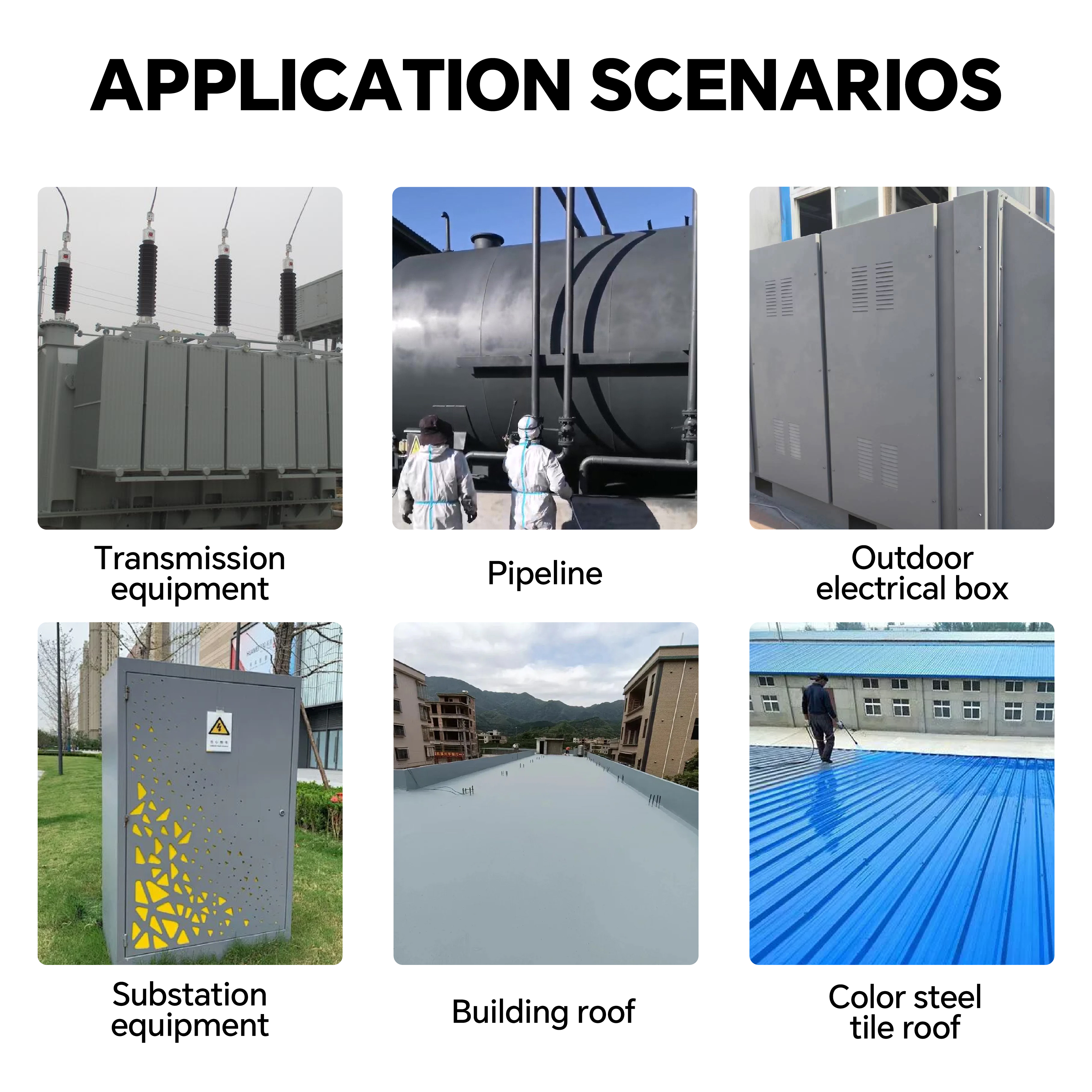
The primary use of silicone waterproof coating is in the construction industry, specifically for building waterproofing and roofing engineering. Within that broad category, common project applications include:
- Roof waterproofing: Applied to metal roofs, concrete roofs, modified bitumen, or existing single-ply systems to restore or enhance waterproofing.
- Exterior wall waterproofing: Used as a breathable-but-water-resistant barrier on facades, parapets, and above-grade walls.
- Expansion joint sealing: Flexible silicone film bridges movement at joints without stress cracking.
- Bathroom waterproofing: Liquid-applied membrane in wet areas where seamless coverage is required.
This application is common in countries including the United States, Canada, Australia, the Netherlands, and Thailand, and is typically applied in regions such as North America, Europe, and Asia-Pacific.
For building owners, the commercial logic is straightforward: a long-service-life silicone membrane reduces the frequency of recoating and the risk of water damage over the building’s lifetime.
How a Silicone Waterproof Coating Manufacturer Supports OEM and ODM Programs
For distributors and construction product brands, buying silicone waterproof coating is rarely just a transaction. It often involves OEM (original equipment manufacturing) or ODM (original design manufacturing) collaboration, where a factory produces coating under the buyer’s brand, with varying degrees of customization.
Kastar is positioned as an OEM and ODM manufacturer, offering customized services such as color, viscosity, packaging, and formula adjustments. That means a distributor can bring a brand name, color standard, package size, or performance requirement to the factory and receive a production run tailored to the target market.
Key capabilities that support OEM/ODM buying include:
- R&D infrastructure: Kastar operates three national-level R&D laboratories in China and an R&D team of 28 engineers.
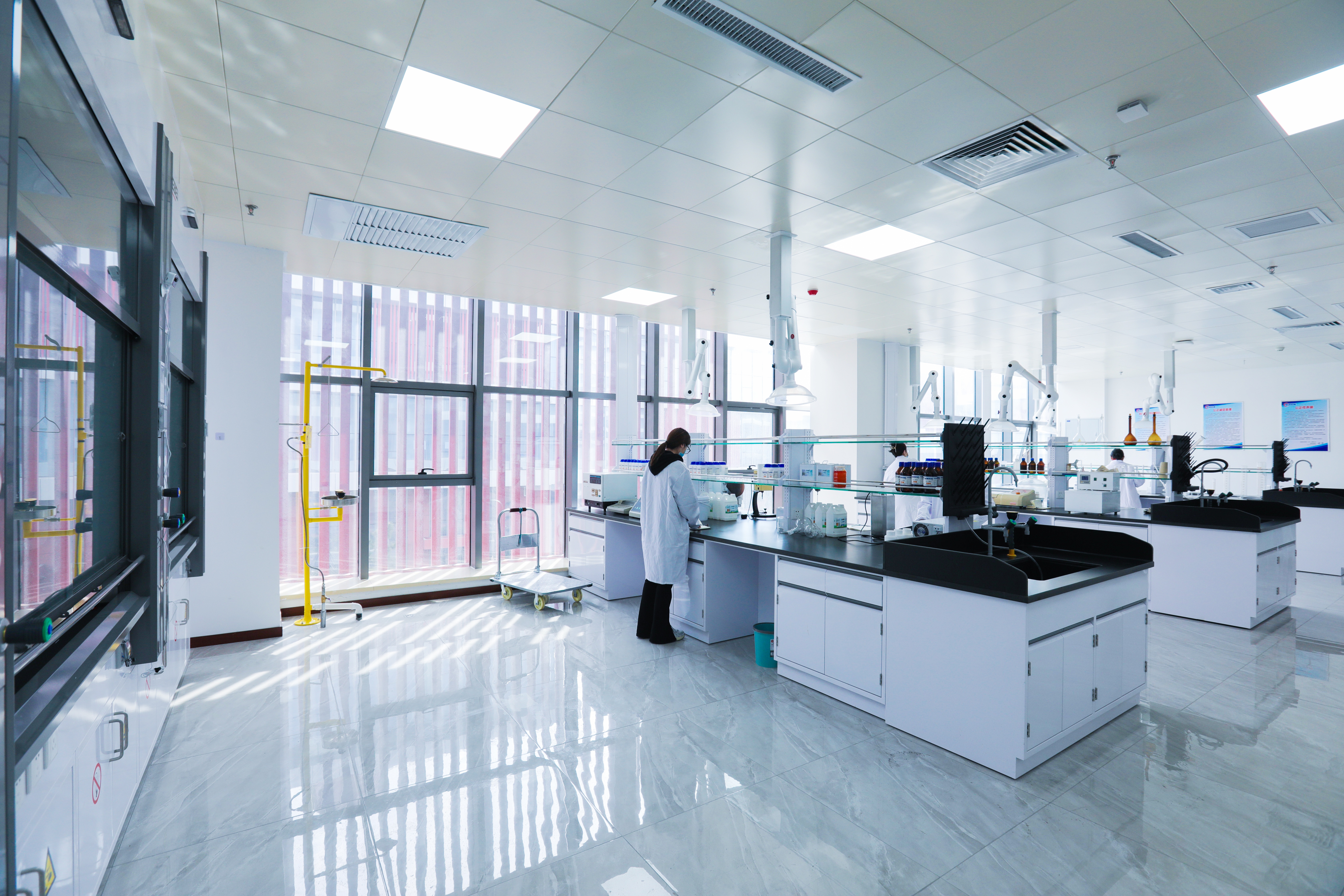
- Testing laboratory: The company has a 1,000 m² China Metrology Accreditation (CMA) certified sealing material testing laboratory.
- Production capacity: Annual capacity of 300,000 tons supports bulk orders and repeat programs.
- Patent portfolio: Kastar holds an invention patent for a device/process for silicone waterproof coatings.
- Packaging: Fully automated packaging equipment, developed and produced independently, supports consistent, sealed packaging across large volumes.
- Compliance documentation: Products have obtained ISO9001, CE, SGS, and REACH certifications.
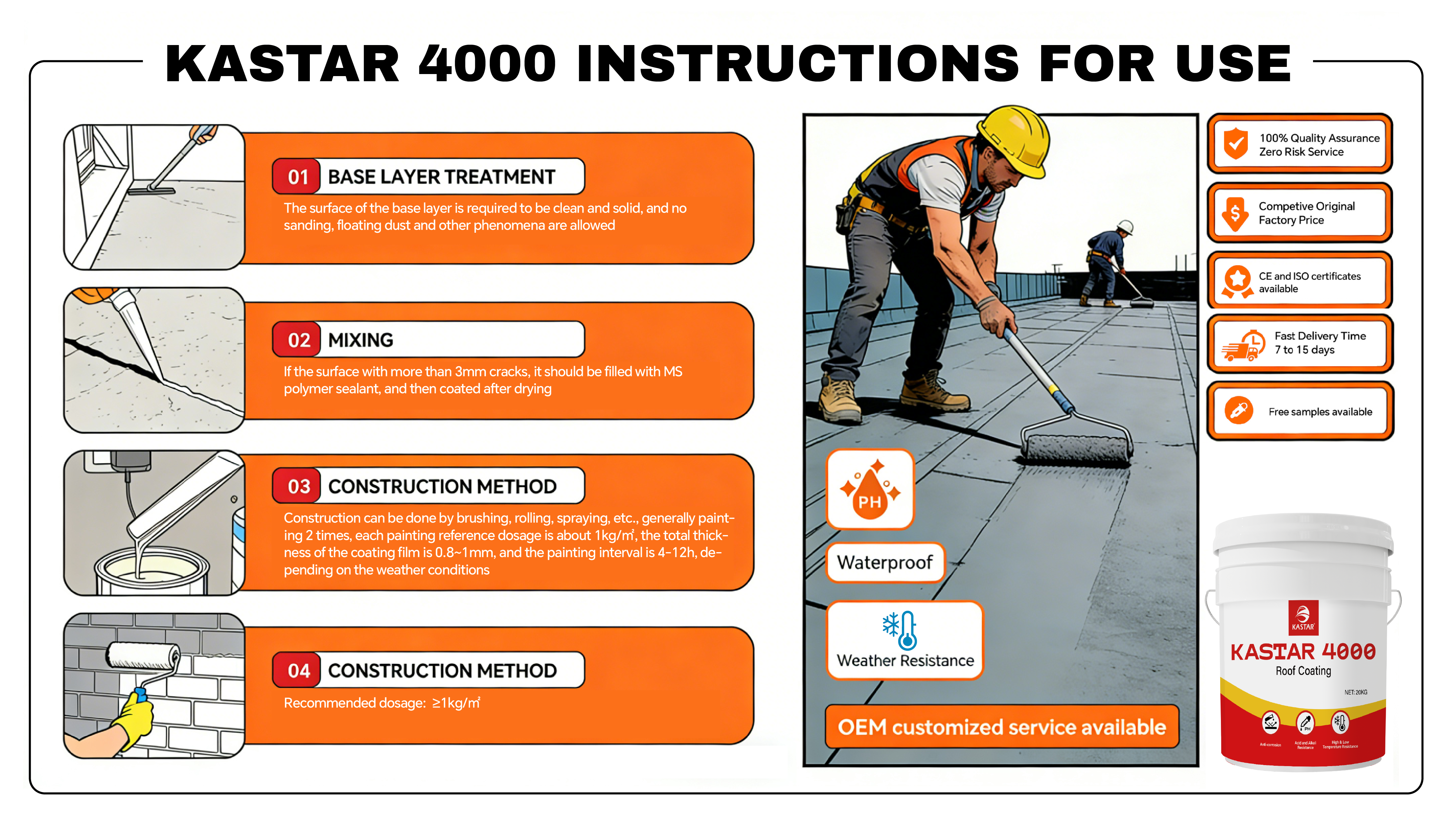
Step-by-Step: What to Consider When Buying Silicone Waterproof Coating for a Building Project
Whether you are a contractor selecting a product for one roof or a distributor sourcing an own-brand line, the evaluation process follows a similar logic.
Step 1: Define Exposure Conditions
Determine whether the coating will face ponding water, high UV index, extreme cold, or thermal cycling. Silicone is a strong choice when UV and ponding resistance are priorities.
Step 2: Check Substrate Compatibility
Silicone coatings generally bond to substrates such as metal, concrete, aged bitumen, and some single-ply membranes. Check the manufacturer’s guidance for the specific substrate.
Step 3: Verify Product Parameters
Compare solid content, elongation at break, tensile strength, UV resistance, operating temperature range, and expected service life. These values determine whether the coating will hold up on the roof or wall.
Step 4: Review Compliance and Certifications
If your project is in Europe or another regulated market, confirm that the product meets the relevant standards and certifications—for example, CE, REACH, SGS, or ISO9001. For structural sealing applications, ASTM C920 or ASTM C1184 standards are also relevant references.
Step 5: Assess the Factory or Supplier
If buying under an OEM or ODM program, evaluate factory size, production capacity, R&D depth, testing capability, patent position, export experience, and track record. A factory with in-house R&D and testing is more likely to deliver consistent quality.
Step 6: Plan for Application and After-Sales Support
Ask about application guidance, technical support, and documentation. Some suppliers provide one-on-one construction guidance for large projects, which reduces field errors.
Use Cases: Where Silicone Waterproof Coating Delivers Clear Value
Silicone waterproof coating is used in a variety of real-world scenarios where water protection, UV stability, and long service life are critical.
Roof Restoration on Commercial Buildings
A leaking commercial roof can be restored with a silicone coating instead of tearing off the old membrane. The coating is applied directly over the prepared substrate, creating a seamless membrane with UV resistance and the ability to handle ponding water.
Exterior Wall Waterproofing in Rain-Prone Regions
In markets such as Australia, New Zealand, and Canada, exterior walls are repeatedly exposed to wind-driven rain. A silicone waterproof coating provides a durable, flexible barrier that resists cracking and maintains adhesion through temperature swings.
Expansion Joint Sealing in High-Temperature Environments
Because silicone remains flexible across a very wide temperature range, it is practical for expansion joints and areas subject to repeated structural movement.
Bathroom and Wet Area Waterproofing
For interior wet areas, a seamless liquid-applied membrane eliminates joints where water can enter. The same silicone chemistry used outdoors can also be adapted for interior waterproofing under tile or other finished surfaces.
Silicone Waterproof Coating vs. Acrylic vs. Polyurethane: A Comparison Table
| Comparison Dimension | Silicone Waterproof Coating | Acrylic Waterproof Coating | Polyurethane Waterproof Coating |
|---|---|---|---|
| Primary chemistry | Silicone polymer | Acrylic resin | Polyurethane resin |
| UV resistance | Resists UV cracking and peeling; suitable for exposed roofs | Moderate; can degrade with prolonged UV and ponding water | Good, but may require a top coat to prevent UV yellowing |
| Flexibility | High; stays flexible over wide temperature range | Moderate flexibility | High flexibility and abrasion resistance |
| Ponding water resistance | Good; silicone is a benchmark for standing water resistance | Limited if water ponds for long periods | Good |
| Application | One-component; applied via brush, roller, or spray | One-component; easy to apply | Often two-component; moisture-sensitive during application |
| Typical best-fit use | Roofs, exterior walls, expansion joints, long-term exposure | Modified bitumen roofs, low-cost maintenance | Foot traffic areas, floors, high abrasion surfaces |
This table is intended to help buyers match the coating chemistry to the project requirement. The exact performance of any product depends on its formulation, film thickness, substrate preparation, and application conditions.
What Quality Indicators Matter in a Silicone Waterproof Coating Factory?
When evaluating a silicone waterproof coating factory—especially for OEM or ODM programs—industrial buyers tend to look at six categories of evidence.
1. Manufacturing Scale and Capacity
A larger facility and higher annual output indicate the ability to handle bulk orders and repeat demand. Kastar’s 150,000 m² facility and 300,000-ton annual capacity are examples of large-scale production.
2. R&D and Testing Capability
In-house laboratories and testing centers allow the factory to validate formulations, batch consistency, and long-term weathering behavior before shipment. Kastar has three national-level R&D laboratories and a 1,000 m² CMA-certified testing laboratory.
3. Certification and Standards Compliance
Products with ISO9001, CE, SGS, and REACH certifications provide a baseline of compliance that helps buyers in international markets.
4. Intellectual Property and Development Depth
Patents on coating devices or processes indicate that the factory has original technical capability, not just mixing and packaging.
5. OEM/ODM Flexibility
Customizable color, viscosity, packaging, and formula adjustment are important for brands that need differentiation rather than a generic private-label product.
6. Export Experience
Companies that export to many countries and have worked with hundreds of customers usually understand international documentation, packaging, and communication requirements. Kastar has exported to 69 countries and regions, serving over 1,000 customers.
Frequently Asked Questions About Silicone Waterproof Coating
What certifications should I look for when buying silicone waterproof coating?
Look for product-level certifications that are relevant to your target market, such as ISO9001 for quality management, CE for European construction markets, and SGS or REACH for chemical compliance. For silicone sealants and coatings used in construction, ASTM C920 and ASTM C1184 are additional standards that some projects reference for elastomeric joint sealants and structural applications. Kastar’s products have obtained ISO9001, CE, SGS, and REACH certifications.
Can silicone waterproof coating be customized for my brand or project?
Yes. Under an OEM or ODM arrangement, a silicone waterproof coating factory can adjust color, viscosity, packaging, and formula to meet market needs. Kastar, for example, provides professional OEM/ODM services with customized color, viscosity, packaging, and formula adjustments, supported by R&D and testing infrastructure.
How much silicone waterproof coating do I need for a bulk order?
Coverage rates depend on the film thickness, substrate porosity, and application method. For a bulk order, your supplier should provide a coverage calculation based on the required dry film thickness. A factory with large production capacity—such as 300,000 tons annually—can normally handle container-level orders without long delays.
What is the expected service life of a silicone waterproof coating?
A high-performance silicone waterproof coating can last 25 years or more outdoors. The Kastar 4000 Silicone Waterproof Coating, for example, is specified with a service life of ≥25 years outdoors. Actual performance depends on substrate preparation, application thickness, and environmental conditions.
How long does it take to receive a sample before placing a bulk order?
Sample lead time varies by factory. Request a sample from the manufacturer directly and confirm the shipping method to your country. After sample approval, bulk production lead time is typically communicated based on order quantity and packaging requirements. To get accurate timelines, contact the factory with your target volume and packaging specifications. Message us on WhatsApp or email paint4566@kastarpaint.com to request a silicone waterproof coating sample and discuss your project.
Conclusion
Silicone waterproof coating is a high-performance, liquid-applied membrane solution for buildings that face water exposure, UV radiation, and thermal movement. Its silicone chemistry gives it a combination of flexibility, weather resistance, and long service life that is particularly valuable for roofing and exterior wall applications.
For industrial buyers, the key to a successful procurement is not just finding any silicone waterproof coating, but matching the product formulation, factory capability, and compliance documentation to the intended project and market. That means verifying product parameters, checking certifications, and working with a manufacturer that can support OEM or ODM customization at scale.
Kastar Adhesives Technologies Co., Ltd. provides one example of a silicone waterproof coating manufacturer with the R&D, testing, and production infrastructure to support distributor and contractor needs. To explore product specifications, OEM/ODM options, and bulk supply, contact the Kastar team directly or download the company brochure.
Request a sample or quote for your silicone waterproof coating project.
Email: paint4566@kastarpaint.com
Phone / WhatsApp: +86 15974221507